

Phthalates in Candles: What They Are and How to Spot Them

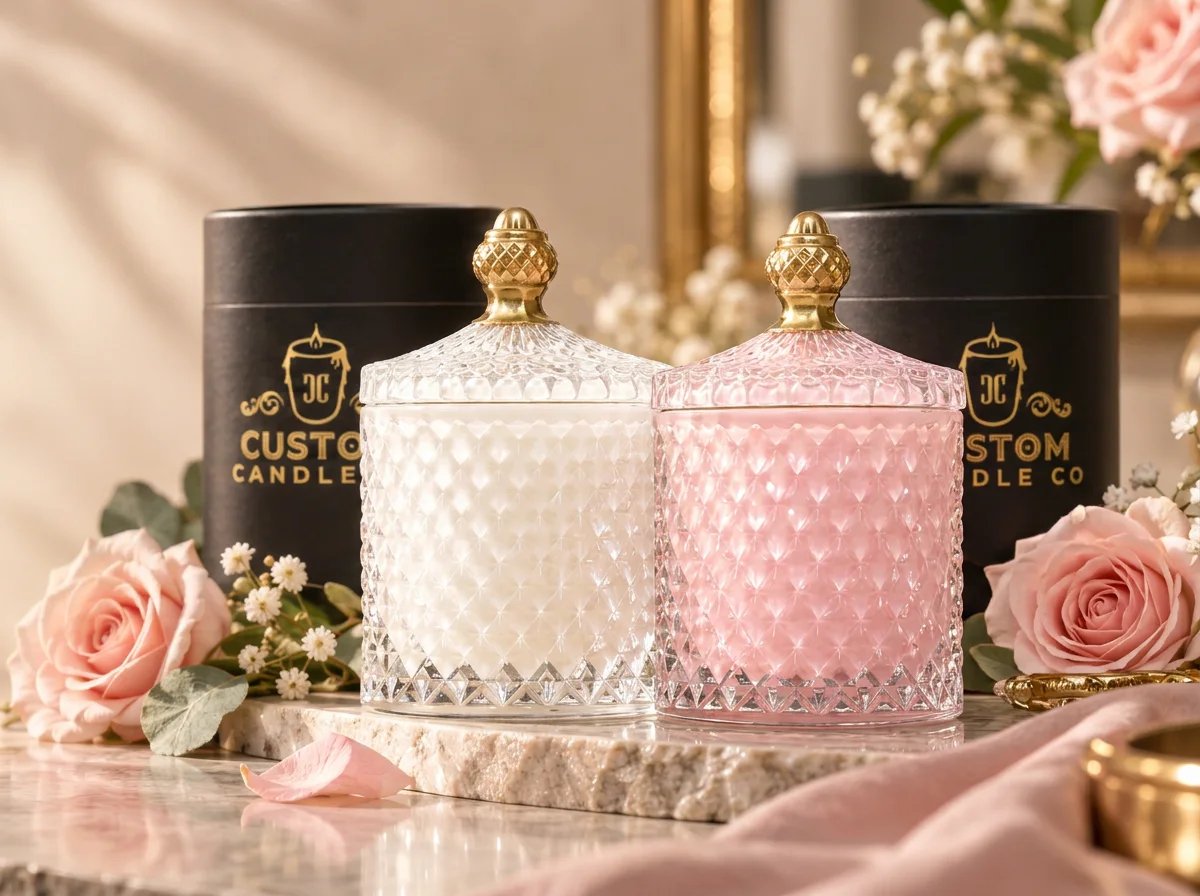
Phthalates are a family of chemicals that can show up in candles through the fragrance oil, where they work as a solvent or fixative. A candle is phthalate-free when its fragrance formula leaves them out entirely. You can’t see them on most labels, so the practical answer is to buy from a maker that states the fragrance is phthalate-free. At Custom Candle Co., every personalized candle is poured with phthalate-free fragrances and lead-free wicks, so the question is settled before you order.
TL;DR
- Phthalates are plasticizers. In fragrance, the one most often named is diethyl phthalate (DEP), used as a solvent and fixative.
- They enter candles through fragrance oil, not through the wax or the wick.
- “Fragrance” or “parfum” on a label does not list individual ingredients, so a clear “phthalate-free” statement from the maker is the useful signal.
- Regulators and scientific committees rate DEP’s general toxicity as low, and the biggest questions are about total exposure over time.
- Our candles use phthalate-free fragrances and lead-free wicks, and every order is proofed by hand before it ships within two days.
Table of Contents
- What phthalates are, in plain terms
- Are there phthalates in candles?
- What “phthalate-free fragrance” actually means
- Why you can’t just read the ingredient list
- Does burning a candle release phthalates into the air?
- Why shoppers still choose phthalate-free
- A short checklist for buying a phthalate-free candle
- Phthalate rules: US and EU
- A note on favors and gifting
- Where to find phthalate-free personalized candles
- What to remember
- FAQ
- Sources
What phthalates are, in plain terms
Phthalates are industrial chemicals best known as plasticizers, the additives that make plastics flexible. The FDA’s page on phthalates in cosmetics explains that historically a handful were used in personal care products: dibutyl phthalate in nail polish, dimethyl phthalate in hair sprays, and diethyl phthalate (DEP) as a solvent and fixative in fragrances.
That last role is the one that matters for candles. Fragrance oils are blends of many aroma materials. Some are powders or thick liquids that need a carrier to dissolve, and some evaporate too fast to stay noticeable. A solvent or fixative helps the scent blend evenly and linger. DEP has been used for that job because it is inexpensive and mixes well with other fragrance materials.
So when someone asks, “what are phthalates in fragrance?”, the short answer is a carrier ingredient, not a scent ingredient. The candle smells the same whether a phthalate is in the formula or not. A fragrance house can use other solvents and fixatives instead.
Are there phthalates in candles?
They can be. The wax is not the source. Soy wax, beeswax and paraffin do not contain phthalates as a part of their makeup. The route in is the scent: a candle maker buys a fragrance oil, and that oil’s formula may or may not include a phthalate solvent.
That is why the question has no single answer for “candles” as a category. It depends on the fragrance supplier’s formula and on what the candle maker decides to buy. Some makers specify phthalate-free oils. Others buy whatever is cheapest and never ask.
Candles without added fragrance, such as unscented ones, have no fragrance oil to carry a phthalate in the first place. For scented candles, the maker’s sourcing policy is what counts.
What “phthalate-free fragrance” actually means
A phthalate-free fragrance is one whose formula contains no phthalate ingredients. Nothing more, and nothing less. It is a specific, structural claim about composition, which is useful because it can be checked against a supplier’s documentation.
It is not the same as these things:
- Non-toxic. This is a broad marketing word with no fixed definition. Phthalate-free speaks only to one class of chemicals.
- Natural. A fragrance can be fully synthetic and phthalate-free.
- Essential oil only. Phthalate-free fragrance oils and essential oils are different ingredients. Our guide to fragrance oils vs essential oils walks through that difference.
- Paraben-free or paraffin-free. Those are separate questions, covered in our pieces on paraben-free candles and paraffin-free candles.
A maker backs up a phthalate-free claim with supplier disclosures for each fragrance, and the strongest versions come with batch documentation. That is the standard we hold ourselves to: we use phthalate-free fragrances across our personalized soy candles.
Why you can’t just read the ingredient list
In the United States, fragrance is treated as a single label item. The FDA notes that its labeling rules for cosmetics do not require listing the individual ingredients of a fragrance, so the word “fragrance” can stand in for dozens of components. Candles are not cosmetics, but the same habit carries over: the label rarely names what is inside the scent.
Europe handles it a little differently. Its cosmetics rules require disclosure of certain fragrance allergens by name, but a general “parfum” entry can still cover unlisted materials. Either way, a shopper cannot turn a bottle or jar over and see whether a solvent is DEP.
This is the reason the maker’s own statement matters. If a brand writes “phthalate-free fragrance” and says it specifically about its fragrance sourcing, it is making a claim you can hold it to. If a label says only “fragrance” or “scented with essential oils” and nothing else, it tells you very little.
Our breakdown of what clean fragrance labels really mean goes through the wording you will run into on shelves and product pages.

Does burning a candle release phthalates into the air?
Candle flames warm the wax pool, and scent compounds evaporate into the room. Phthalates are among the compounds that could, in principle, travel that way. The honest picture is about amounts, and the available evidence on DEP is reassuring in tone.
A European scientific committee reviewing air fresheners and fragrance emissions, the SCHER opinion of January 2006, recommended judging consumer exposure by comparing measured indoor air concentrations with guidance values from bodies such as the WHO and the US EPA. That method is useful for you as a reader too: the question is never “is the chemical present?” but “how much is in the air, and for how long?”
In the same opinion, the committee considered the general toxicity of DEP to be low, with irritation identified as the critical effect, and observed no reproductive or genotoxic potential in mice or rats. A toxicological profile of diethyl phthalate published in 2001 found no toxicological endpoints of concern, and compared estimated exposure with an accepted industrial exposure level of 5 mg/m3 in air.
For context on how the body handles these compounds, the NIEHS fact sheet on phthalates says phthalates are generally absorbed and converted to metabolites that are typically excreted quickly in urine and feces.
Put together: DEP is the phthalate most tied to fragrance, its general toxicity is rated low, and the body clears phthalates quickly. Still, many people prefer to skip an ingredient they don’t need, particularly in a home where a candle burns often, around infants, or around pets. Leaving it out costs nothing in how a candle smells, which is why we do.
Why shoppers still choose phthalate-free
People who search for this topic usually fall into a few groups:
- Parents of young children. Rooms are small, nurseries are closed up overnight, and parents tend to prefer fewer unnecessary ingredients.
- Pet owners. Animals spend their days close to the floor and near the candle, and they cannot tell you if a scent bothers them. Our page for cat owners covers soy, phthalate-free and lead-free choices in more detail, and we also point pet owners to verify essential oil content.
- People with sensitivities. Irritation is the effect identified for DEP, and many people with fragrance sensitivities want a short, controlled formula. See our guide to candles for allergies.
- Gift-givers. When you give a candle, you are choosing for someone else’s home. A phthalate-free statement is one less thing to wonder about.
The common thread is control. You may not need to worry about phthalates, but you can choose to remove the question.
A short checklist for buying a phthalate-free candle
- Look for the exact words. “Phthalate-free fragrance” on the product page or label is stronger than “clean” or “non-toxic”.
- Check that the claim is about the fragrance. The scent oil is where phthalates enter, so that is where the statement needs to apply.
- Look at the wick too. Lead-free wicks are a separate safety point, and a maker who cares about one usually states the other. Ours are lead-free.
- Check the wax. Soy is a plant-based wax. Our soy vs paraffin comparison explains what to look for in each.
- Read the maker’s transparency. A business that explains its sourcing in plain language is easier to trust than one that offers only adjectives.
- Burn it well. Trim the wick, keep the room ventilated and never leave a flame unattended. Our guide on ventilating first covers it for homes with pets and kids.
If you want the wider picture of what to look for beyond phthalates, our overview are candles toxic? takes it further.
Phthalate rules: US and EU
Rules differ by place, so it helps to keep them apart. In the US, the FDA oversees cosmetic labeling, and its page describes the historical use of DBP, DMP and DEP in personal care products. In the European Union, specific phthalates including DEHP, BBP, DBP and DIBP have been restricted in cosmetics and consumer products for years, while DEP remains permitted.

Industry also sets its own limits. The International Fragrance Association (IFRA) publishes standards that restrict or ban certain fragrance materials, based on safety assessments by RIFM, and fragrance houses build their formulas to those standards.
The takeaway for a shopper in the US is simple: no single rule sorts candles into “phthalate” and “no phthalate” for you. The choice is made in the maker’s sourcing, and that is what you are evaluating when you buy.
A note on favors and gifting
Wedding favors and client gifts put a candle in dozens of homes at once, some with babies and pets you will never meet. That raises the value of a clear fragrance statement. If you are choosing favors for a younger crowd, the age-based party favor safety rules are worth reading before you finalize what goes in the bag.
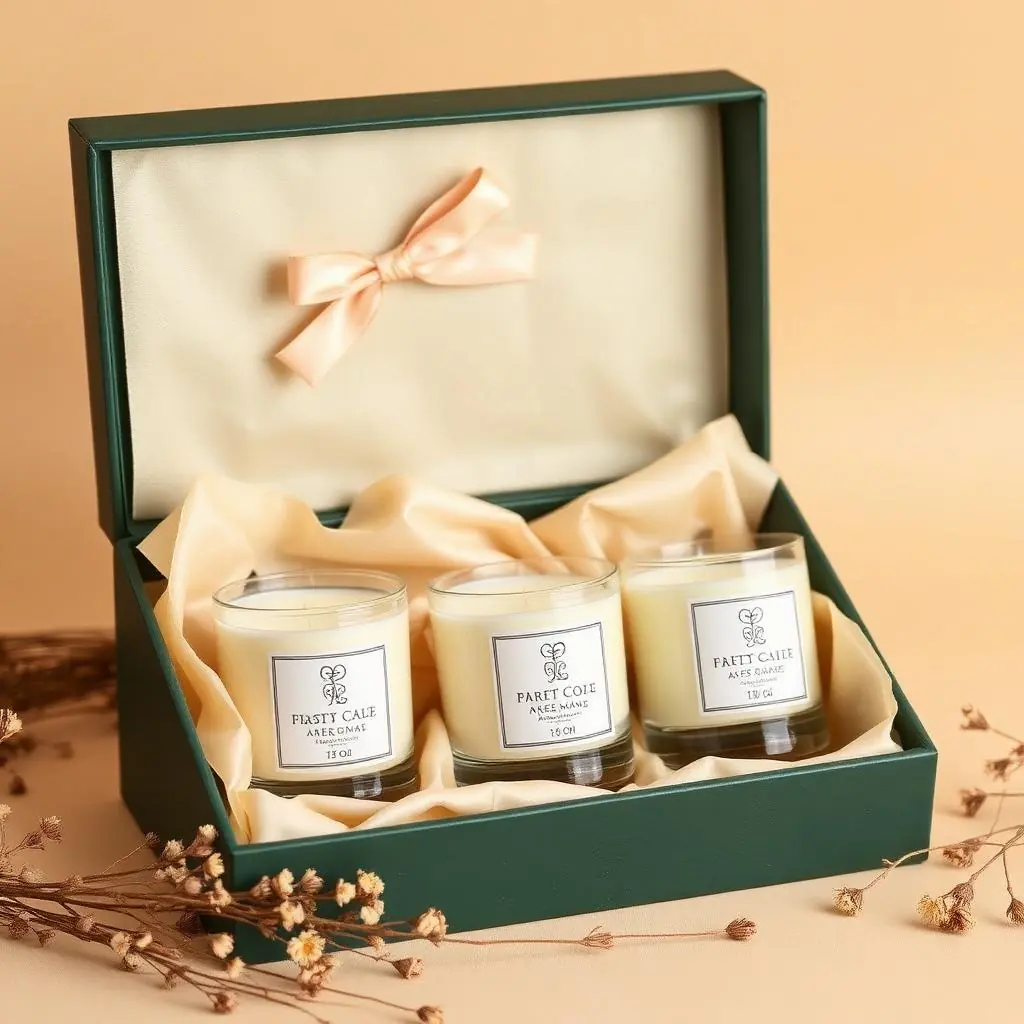
For candles, we offer weddings and favors from $18 per candle and corporate and client gifting from $22 per candle, and boxed gift sets start at $48. Each order is proofed by hand, and keepsake packaging and a handwritten card come standard.
Our view
We started from a simple idea: a personalized candle is a gift, and a gift should never leave the recipient wondering what is in it. So we made the fragrance decision once, for everyone. Our fragrances are phthalate-free and our wicks are lead-free, on every candle we pour.
The same goes for the print. A photo or a line of text on a label is personal, and we proof each one by hand for print and presentation before anything ships. Customers often tell us the print quality is what they notice first. The ingredients are what we hope they never have to think about.
We would rather answer the phthalate question in the formula than in a footnote. If you are shopping for a home with pets, kids or a sensitive nose, start with a candle that has the question already answered.
Jake
Where to find phthalate-free personalized candles
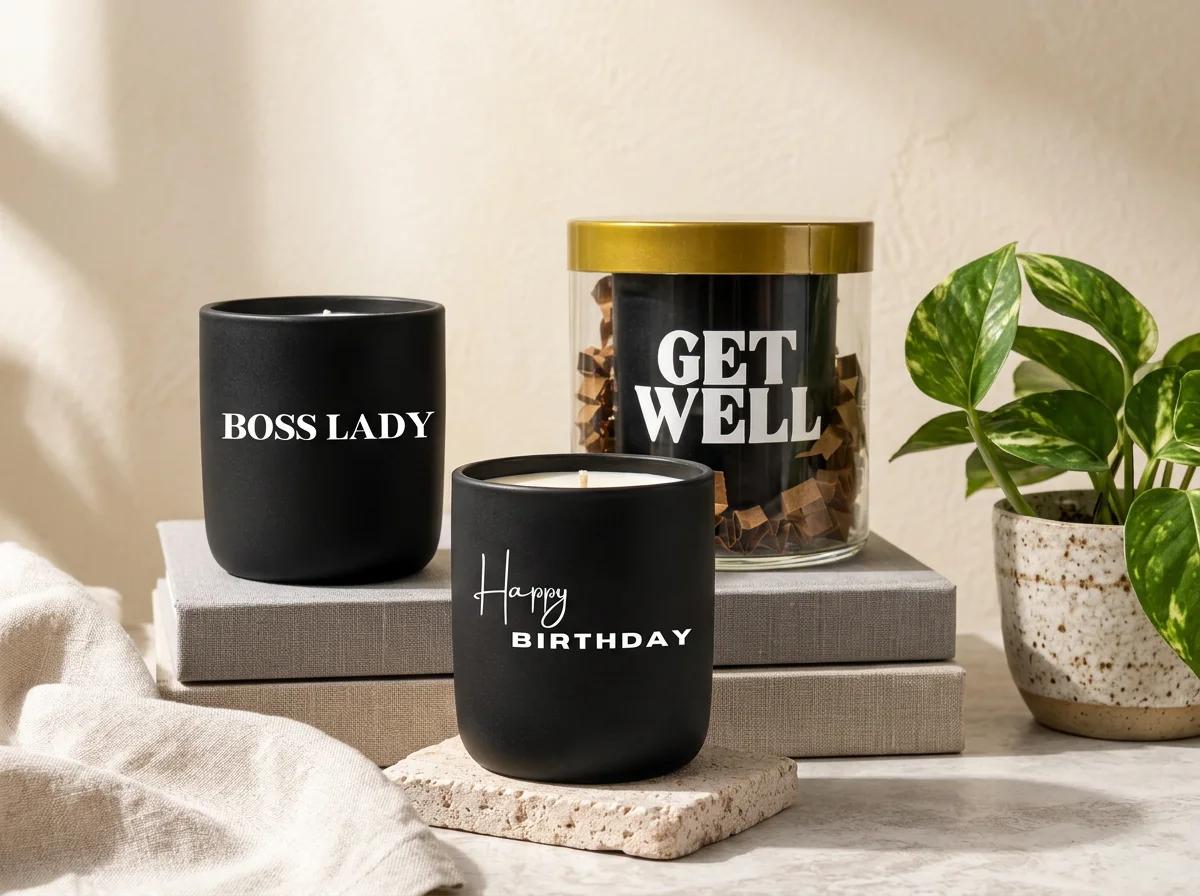
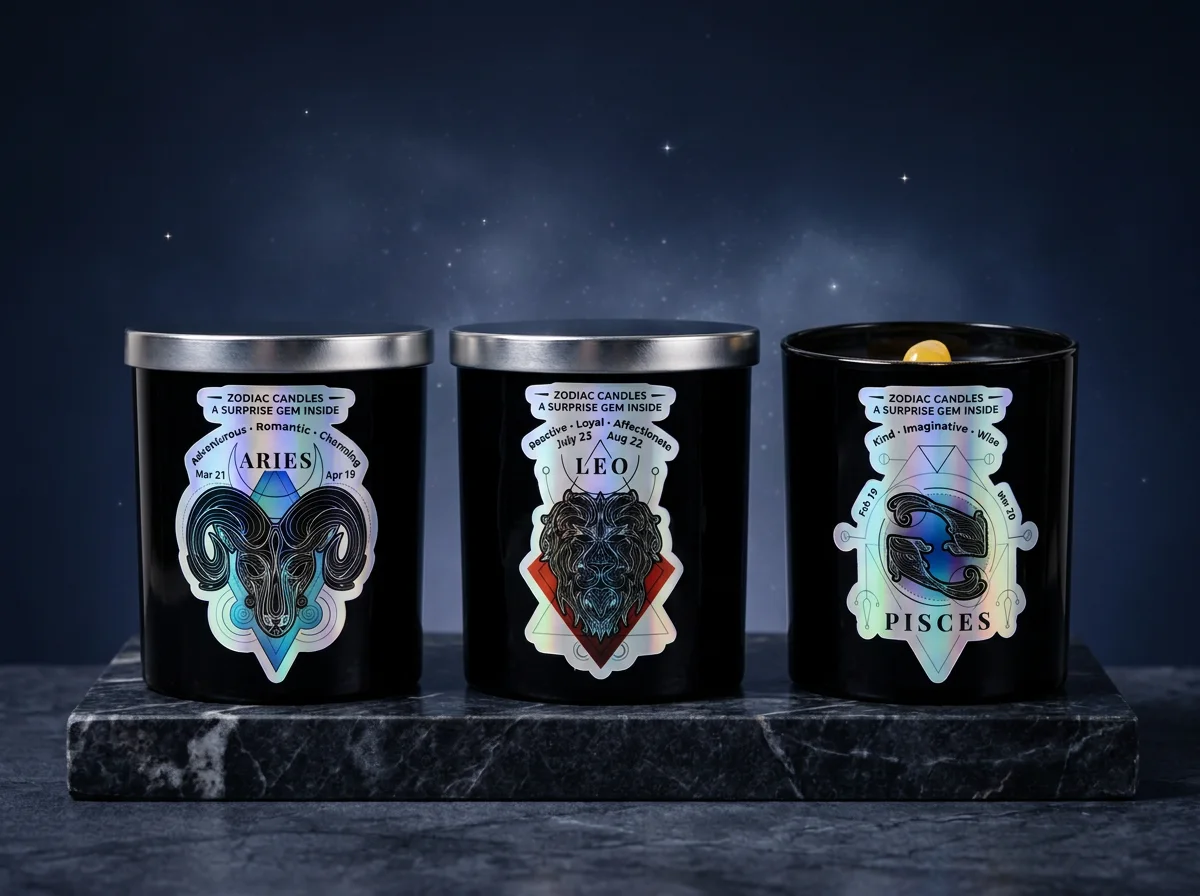
If you want a candle that carries a photo, a name or a short message, with the fragrance question settled, our Customize a Candle page lets you choose wax, scent, label and packaging. You can also browse personalized candles, photo candles and wedding candles, or look at boxed gift sets if you are buying in volume.
Personalized orders ship within two days of proofing, and each arrives in keepsake packaging with a handwritten gift card.
What to remember
Phthalates reach candles through fragrance oil, where DEP has been used as a solvent and fixative. Because labels rarely itemize fragrance, the meaningful signal is a maker’s clear statement that its fragrance is phthalate-free. Scientific reviews describe DEP’s general toxicity as low, and the sensible approach for a home is still to keep unneeded ingredients out, especially where children, pets or sensitivities are involved. Choose a maker who answers the question for you.
FAQ
Are phthalates in candles?
They can be, but only through the fragrance oil. Wax and wicks are not a source. Whether a given scented candle contains one depends on the maker’s fragrance formula, which is why a clear phthalate-free statement is the thing to look for.
What is phthalate-free fragrance?
It is a fragrance whose formula contains no phthalates, including DEP, the one most associated with fragrance as a solvent and fixative. It is a specific claim about composition, not a general promise that a product is natural or non-toxic. All of our candles use phthalate-free fragrances.
Is diethyl phthalate harmful to humans?
A 2006 European scientific committee opinion considered DEP’s general toxicity low, with irritation as the critical effect. A 2001 toxicological review found no endpoints of concern. People who are sensitive to fragrance, or who share a home with infants or pets, often prefer to avoid it anyway.
What are the safest candles to burn?
Start with how the candle is made and how you burn it. A phthalate-free fragrance, lead-free wick and plant-based soy wax address the ingredients. Then trim the wick, keep the room ventilated and never leave a flame unattended. For asthma or other respiratory conditions, ask your doctor before burning scented candles.
Sources
- Phthalates in Cosmetics, U.S. Food and Drug Administration
- Opinion on air fresheners, SCHER plenary, 27 January 2006
- Toxicological profile of diethyl phthalate
- Phthalates: The Everywhere Chemical, NIEHS