


Candle Makers & Shoppers: 5 Step Soy vs Paraffin Test and Emissions

For clean, gift-quality jar candles with a renewable source, soy is usually the smarter pick. For maximum immediate scent throw, deep color saturation, and lower material cost, paraffin often wins. The right choice depends on burn time expectations, how the wax carries fragrance, and whether petroleum or plant origin matters to you.
TL;DR:
- Paraffin generally provides a stronger initial scent throw and more predictable, glossy appearance but produces more soot and relies on petroleum refining.
- Soy requires higher fragrance loads and longer curing times to match paraffin’s hot throw, and it is prone to frosting with a softer, matte finish.
- Both waxes can emit volatile organic compounds and nanoparticles, making ventilation and proper wick selection crucial for safety.
- Cost-wise, paraffin is usually cheaper due to its petroleum origin, while soy costs more because of agricultural processing and hydrogenation.
- The choice depends on whether performance factors like color and immediate scent or sustainability and cleaner burn are your priorities.
Table of Contents
- At a glance: soy vs paraffin side by side
- How soy and paraffin wax are actually made
- Performance: scent throw, burn time, and finish
- Soot, VOCs, and what the science actually says about safety
- Environmental footprint: renewable does not mean impact-free
- Cost and where to actually buy each wax
- How to choose the right wax for your goal
- Why we choose soy for personalized keepsake candles
- Skip the testing, order a finished soy candle instead
- Where these findings come from
- Sources
- FAQ
At a glance: soy vs paraffin side by side
Before getting into the mechanics, here is how the two waxes stack up across the factors that matter most to makers and shoppers.
- Source: soy comes from hydrogenated soybean oil, a renewable crop input, while paraffin is a refined petroleum byproduct.
- Melt point: soy typically runs cooler and softer, paraffin runs higher and firmer, which affects how each holds shape and releases scent.
- Scent throw: paraffin generally delivers stronger hot throw right out of the pour, soy needs fragrance load and cure time to close the gap.
- Burn time: neither wax has a fixed advantage on its own, wick size and vessel matter more than the wax type alone.
- Soot and emissions: paraffin tends to produce more visible soot, but both waxes can release reactive terpenes depending on the fragrance oil used.
- Appearance: soy is prone to frosting and a matte finish, paraffin holds color and gloss more predictably.
- Cost: paraffin is usually the cheaper raw material, soy runs higher due to crop processing and blending.
Soy tends to fit personalized jar candles and gifting, where a clean burn and renewable story matter. Paraffin tends to fit mass-market scented candles and pillars where saturated color and strong immediate fragrance are the priority.
How soy and paraffin wax are actually made
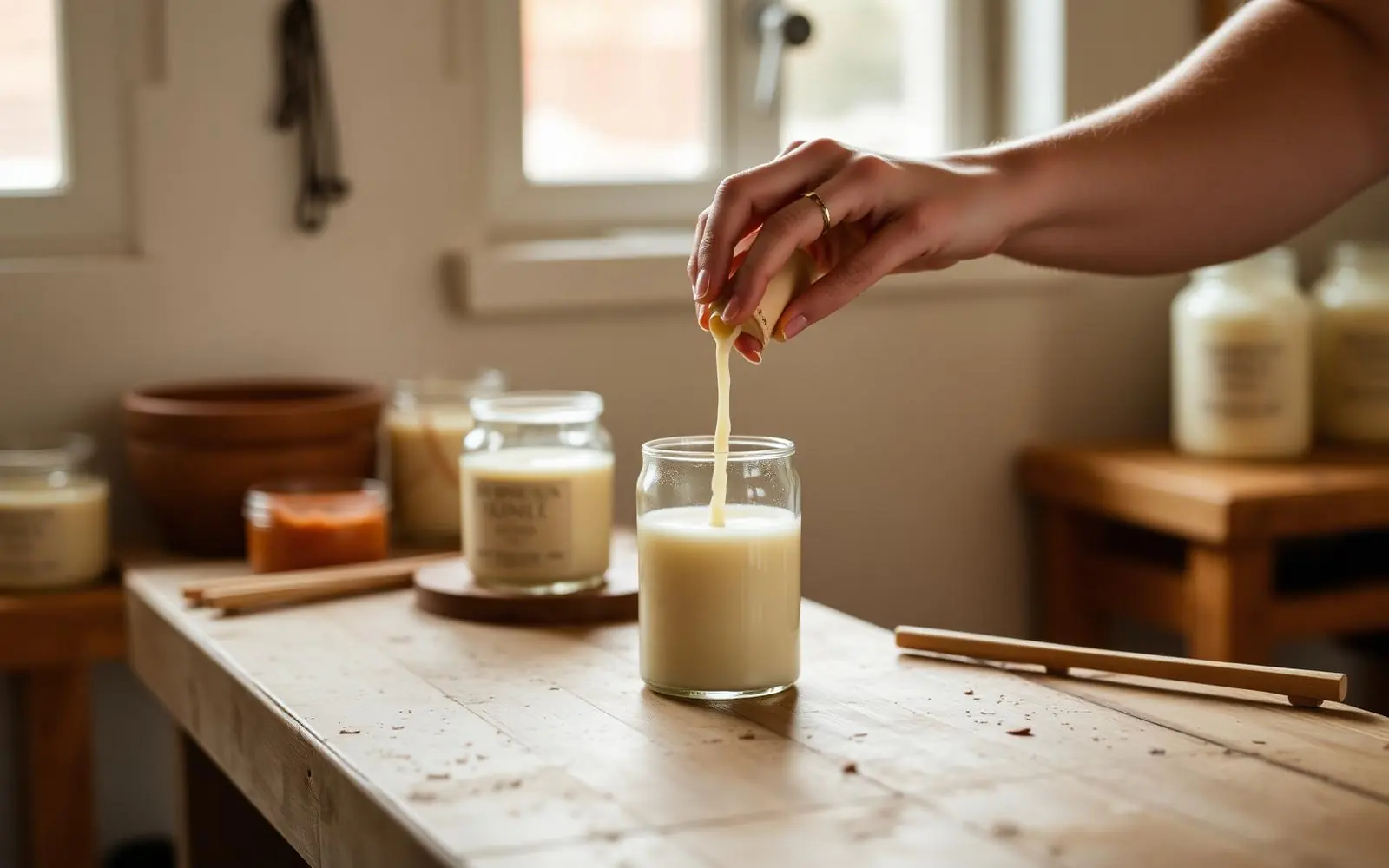
Soy wax starts as soybean oil that gets hydrogenated, a process that adds hydrogen to the oil’s fatty acids and turns a liquid into a solid wax. Most commercial soy candles are not pure soy. They are blends, often mixed with a small percentage of other waxes or additives, because 100% soy can be soft, prone to frosting, and slow to release fragrance. Adjusting the blend changes the melt point, which in turn changes how well the wax holds a scent load and how it looks once it cools in the jar.
Paraffin comes from crude oil refining. After crude oil is distilled, paraffin is separated out through a process called fractionation and then further refined to strip out impurities. Manufacturers often add stearic acid or other hardening agents to control melt point and improve how the wax carries dye and fragrance. That refining step is a big reason paraffin holds fragrance and color so predictably: the petroleum feedstock is already a fairly uniform, purified material before anything gets blended in.
These upstream differences explain a lot of what makers see later. Soy’s plant-oil chemistry is naturally more variable and more sensitive to temperature during pouring, which is part of why frosting and fragrance retention swing so much between batches and brands.

Performance: scent throw, burn time, and finish
Cold throw, the smell a candle gives off unlit, and hot throw, the smell released while burning, do not always move together. Paraffin tends to produce a stronger hot throw right out of the mold because its refined structure carries fragrance oils efficiently. Soy can close that gap, but it takes a higher fragrance load and a longer cure time, often several days to two weeks, before the scent fully develops in the wax.
Burn time is where a popular myth needs correcting: soy does not automatically burn longer than paraffin. The real drivers are wick size, wick shape, and vessel diameter. A soy candle with the wrong wick can burn faster and tunnel down the middle, wasting wax on the sides. A well-matched paraffin candle with the correct wick can burn just as evenly. Wax type sets the baseline melt point, but the wick decides how that melt point plays out in real use.

Appearance is where the two diverge visibly. Soy is prone to frosting, the white, crystalline bloom that can appear on the surface or sides of a cooled candle, and it tends toward a softer, more matte finish. Paraffin holds dye more evenly and produces the glossy, saturated color often seen in mass-market candles.
To validate any wax choice before a full production run, run a small batch through this sequence:
- Pick a wick size based on your vessel diameter and test burn it alone first.
- Add fragrance oil at 6% to 10% of wax weight, adjusting based on the oil’s flash point and your wax supplier’s guidance.
- Cure the test candle for at least 48 to 72 hours before evaluating hot throw.
- Burn for three to four hours and check for tunneling, soot, or an uneven melt pool.
- Repeat with a different wick size if the melt pool does not reach the edge of the jar by the second burn.
Pro Tip: Test fragrance solubility at your actual pour temperature, not room temperature: an oil that blends cleanly at 185°F can still separate or “sweat” once the candle cools if the load is too high for that wax.
Soot, VOCs, and what the science actually says about safety
Both waxes can produce soot and airborne particles, and the wax type alone is not the deciding factor. Visible black soot is more commonly associated with paraffin, especially with an oversized wick or a poorly trimmed one, since incomplete combustion of the denser petroleum-derived wax releases more carbon particulate. Soy tends to burn cleaner in terms of visible soot, but that does not mean it is emission-free.
A 2025 field study measured indoor nanoparticle concentrations from scented wax melts exceeding 1 million particles per cubic centimeter, a level comparable to combustion-based sources like cooking or smoking. The mechanism has nothing to do with wax type: fragrance oils release terpenes, and those terpenes react with indoor ozone to trigger new particle formation, a chemical reaction that happens whether the scent comes from a lit candle or an unlit wax warmer.
A separate PTR-TOF-MS study of scented wax products found that wax warmers and melts actually emitted more monoterpene mass per gram consumed than lit candles, with terpene concentrations peaking in the range of tenths of a part per billion up to roughly 100 parts per billion. That finding matters because many shoppers assume flame-free wax melts are the “safer” option. The broader research on fragranced consumer products confirms that candles and melts alike are meaningful sources of volatile organic compounds that can shift indoor air chemistry, regardless of whether the wax is soy or paraffin.
Practical steps that reduce exposure for either wax type:
- Ventilate the room when burning candles or running wax warmers, especially during longer sessions.
- Trim the wick to about a quarter inch before each burn to limit incomplete combustion and soot.
- Choose phthalate-free fragrance oils and avoid old lead-core wicks, which US regulators have flagged as a hazard in federal consumer product rules.
- Limit burn duration in small or poorly ventilated rooms, since particle concentrations build with time and low air exchange.
Environmental footprint: renewable does not mean impact-free
Paraffin’s environmental cost is upfront and obvious: it depends on crude oil extraction and refining, a fossil process with a fixed carbon footprint tied to petroleum markets. Soy’s cost is less visible but not zero. Soybean farming carries its own agricultural footprint, including pesticide use, water demand, and in some growing regions, links to deforestation and land conversion. Transport from farm to processor to candle maker adds further emissions on top of that.
There is no single, universal certification that verifies a “sustainable soy” claim the way some other commodities have standardized eco-labels. That gap means the word “natural” on a wax label is not a guarantee of low impact. It just tells you the feedstock started as a plant instead of a fossil fuel.
For shoppers and makers who care about sourcing, a few practical questions cut through the noise:
- Ask suppliers where the soybeans are grown and whether the wax is processed domestically or shipped internationally before reaching you.
- Ask about fragrance oil sourcing, since phthalate-free formulations vary in transparency between suppliers.
- Treat “soy” and “eco-friendly” as separate claims, not synonyms, when comparing products.
Cost and where to actually buy each wax
Paraffin is generally the cheaper raw material, largely because petroleum refining produces it as a high-volume byproduct with established supply chains. Soy wax costs more per pound due to the agricultural processing and hydrogenation steps, and that premium usually shows up in the final candle price.
Hobbyists typically buy small quantities from craft retailers, while small businesses making candles at scale turn to wholesale wax distributors for better per-pound pricing on both soy and paraffin. Blended waxes, designed specifically for container candles, often cost more than raw flake but reduce frosting and shrinkage, which can lower the effective cost per usable candle even if the sticker price is higher. Storage matters too: wax stored in heat or direct sunlight can discolor or develop surface issues before it is ever poured, effectively wasting the purchase.
How to choose the right wax for your goal
Start with your end use, not the wax itself. A gift candle in a glass jar calls for a different wax than a scented pillar meant to fill a room fast.
- Define your vessel and use case first: container jar, pillar, wax melt, or tin, since each has different heat tolerance and wick needs.
- Rank scent throw versus appearance: choose paraffin if vivid color and strong immediate throw matter most, soy if a clean burn and gift-quality finish matter more.
- Set a price ceiling: paraffin fits tighter margins, soy fits a premium or personalized product line.
- Weigh environmental priority honestly: renewable sourcing matters to you, or it does not, and that alone can settle close calls.
- Run the wick and fragrance test sequence described earlier before committing to a full batch of either wax.
Red flags that mean you should rerun tests: visible frosting spreading beyond the surface, a melt pool that stalls before reaching the jar’s edge, soot forming after the first hour of burning, or scent that fades noticeably by the second burn. Any of these point to a wick mismatch or fragrance load problem rather than a flaw in the wax type itself.
Why we choose soy for personalized keepsake candles
This brand builds its jar candles around phthalate-free fragrances and lead-free wicks to reduce emissions and safety concerns that come up in wax research. Every order goes through a proofing process before it ships, checking print quality and label accuracy so a personalized candle arrives looking the way it was designed, not as a guess.
Soy is the practical choice for this kind of product. Personalized candles are keepsakes, often displayed rather than burned constantly, and soy’s cleaner-burning reputation and renewable sourcing story fit that use better than paraffin’s stronger but harsher throw. The tradeoff is real: soy needs more careful fragrance loading and cure time to perform well, which is exactly why a proofed, tested product removes that guesswork for the person buying it as a gift.
— Jake
Skip the testing, order a finished soy candle instead
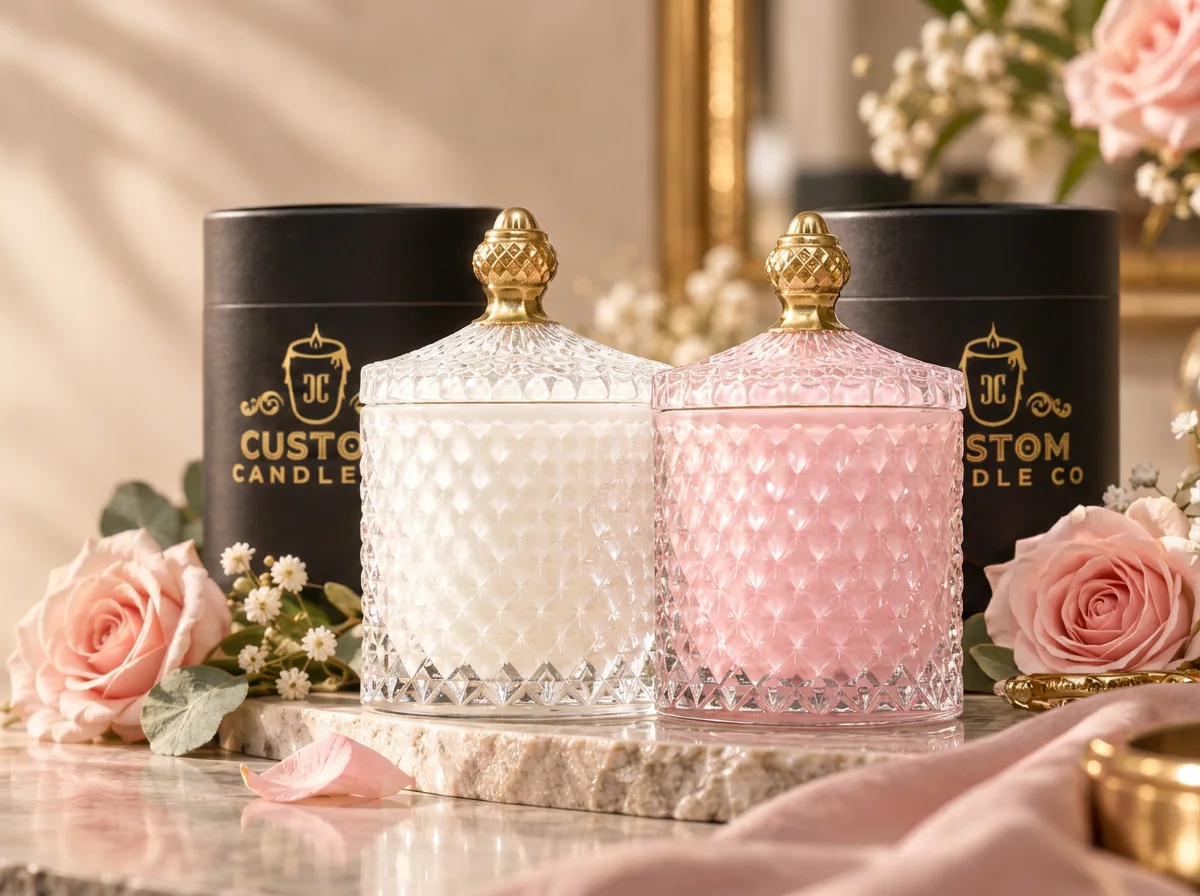
If everything above sounds like more equipment and trial batches than you want to deal with, buying a finished soy candle skips the testing phase entirely. Custom Candle Co. makes Personalized Candles and Photo Candles that print your own photos or custom text directly onto the label of a hand-poured soy jar candle, along with Custom Candles built around names, dates, or short messages.

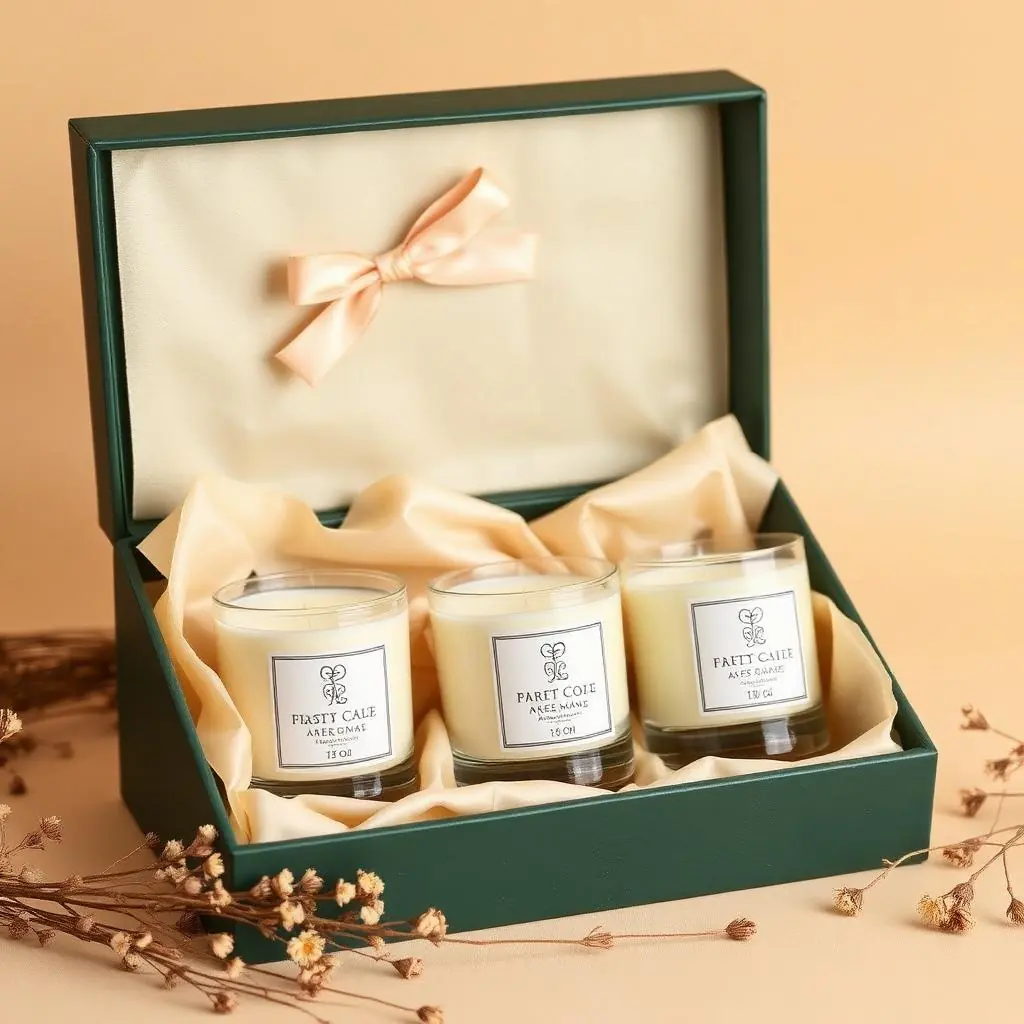
Every order runs through the same hand-proofing check before it ships, so you are not relying on your own wick tests or fragrance sweeps to know the candle will burn cleanly and smell right. For weddings, client gifts, or holiday bundles, the gifting and bundles page covers boxed sets starting at $48 one-off, wedding favors from $18 one-off per candle, and corporate gifting from $22 one-off per candle. Orders typically ship with keepsake packaging and sometimes include handwritten cards.
Start a design on the Custom Candles page and have a personalized soy jar candle on its way within two days of proofing.
Where these findings come from
- The PTR-TOF-MS terpene emissions study backs the comparison between wax warmers and lit candles.
Sources
- Flame-Free Candles Are Not Pollution-Free: Scented Wax Melts as a Significant Source of Atmospheric Nanoparticles | NSF Public Access Repository
- Real-time evaluation of terpene emissions and exposures during the use of scented wax products in residential buildings with PTR-TOF-MS | NSF Public Access Repository
- PMCID study on fragranced consumer products and indoor air chemistry
- A Guide to Types of Candle Wax — Martha Stewart
FAQ
Which is better, paraffin or soy?
Neither wax is universally better. Paraffin wins on scent throw, color saturation, and cost, while soy wins on renewable sourcing and a generally cleaner-burning reputation, so the right answer depends on whether your priority is performance or sourcing.
What are the downsides of using soy wax?
Soy is prone to frosting, a white crystalline film on the surface, and it typically needs a higher fragrance load and longer cure time than paraffin to reach a comparable hot throw. It also costs more per pound due to the extra processing involved in turning soybean oil into wax.
Are Yankee candles soy or paraffin?
Yankee Candle’s mainline products are not published as pure soy wax, and wax blends vary by product line and are not detailed here. Check the specific product’s packaging or the brand’s own materials for its exact wax composition.
What is the healthiest wax to burn?
There is no single wax proven to be free of emissions, since both soy and paraffin can release VOCs and terpenes depending on the fragrance oil used, as shown in research on scented wax products. Choosing phthalate-free fragrances, lead-free wicks, and burning in a ventilated space reduces exposure regardless of which wax you pick.