








Ventilate First: Eco Friendly Home Fragrance Safe for Pets and Kids

The safest eco-friendly home-fragrance approach starts before you light anything: neutralize odors first, then reach for low-VOC, ingredient-transparent products. Soy or beeswax candles with lead-free wicks, refillable reed diffusers, and lightly diluted essential-oil sprays all work, provided you use them sparingly and keep a window cracked. Skip anything labeled simply “fragrance” with no ingredient list, and treat scent as the last step in a clean room, not a cover-up for one.
TL;DR:
- Removing odors with ventilation and cleaning before introducing fragrances significantly reduces indoor VOC levels and overall air pollution risks.
- Soy and beeswax candles with lead-free wicks produce less soot and combustion pollutants than paraffin-based options, especially when properly maintained.
- Refillable diffusers and ultrasonic essential oil vaporizers emit fewer pollutants and can be safer choices when containing natural oils and used in well-ventilated rooms.
- Essential oils pose varying risks to pets, especially cats and birds, and should be used with veterinary guidance and in rooms pets can safely leave.
- Transparent ingredient labeling, third-party certifications, and recyclable packaging are crucial for selecting genuinely low-toxicity, safe home fragrance products.
Table of Contents
- What Counts as Eco-Friendly Home Fragrance, and Which Category Fits You
- What the Research Actually Says About Fragrance and Indoor Air
- Keeping Essential Oils Safe for Pets and Vulnerable Household Members
- A Shopper’s Checklist for Genuinely Low-Toxicity Scent
- Simple DIY Ways to Scent a Room With Almost No Waste
- How Custom Candle Co. Applies These Safety Standards
- The Overlooked Gap Between “Natural” Marketing and Actual Safety
- Ready for a Safer, Personalized Candle? Here’s Where to Start
- Sources
- FAQ
What Counts as Eco-Friendly Home Fragrance, and Which Category Fits You
“Eco-friendly” gets slapped on packaging so often it has lost meaning, so it helps to define it in practical terms: renewable source materials, low volatile organic compound (VOC) output, and a company willing to tell you what’s actually in the bottle. That third piece matters more than people think. A wax or oil can be technically plant-derived and still off-gas heavily if the fragrance load is high or the burn quality is poor.
Each product category carries a different trade-off between longevity, intensity, and waste.
- Soy and beeswax candles. Both come from renewable sources and burn cooler and cleaner than standard paraffin, which is a petroleum byproduct. Look for a lead-free wick, and expect minimal soot if the candle burns evenly with a full melt pool. A wick trimmed to about a quarter inch before each burn, per longstanding safety guidance from the Consumer Product Safety Commission, keeps soot and combustion byproducts down.
- Reed diffusers and refillable liquid diffusers. These skip the flame entirely, which removes soot and combustion gases from the equation. The catch is the carrier liquid. Some use natural oils; cheaper versions rely on solvents that evaporate fast and smell strong precisely because they’re releasing more compound into the air. Refillable versions cut packaging waste significantly compared to disposable plug-ins.
- Ultrasonic essential-oil diffusers. These vaporize water and oil into a fine mist rather than burning anything, so they avoid soot and open-flame risk. They still release VOCs, just at a lower, more controlled rate than a spray, which matters for the air-quality concerns below.
- Room sprays, linen sprays, and wax melts. Sprays disperse fast and concentrated, which is exactly why ingredient lists matter most here. Wax melts skip the wick and soot problem but still rely on heat to release fragrance, so check the wax base the same way you would for a candle.
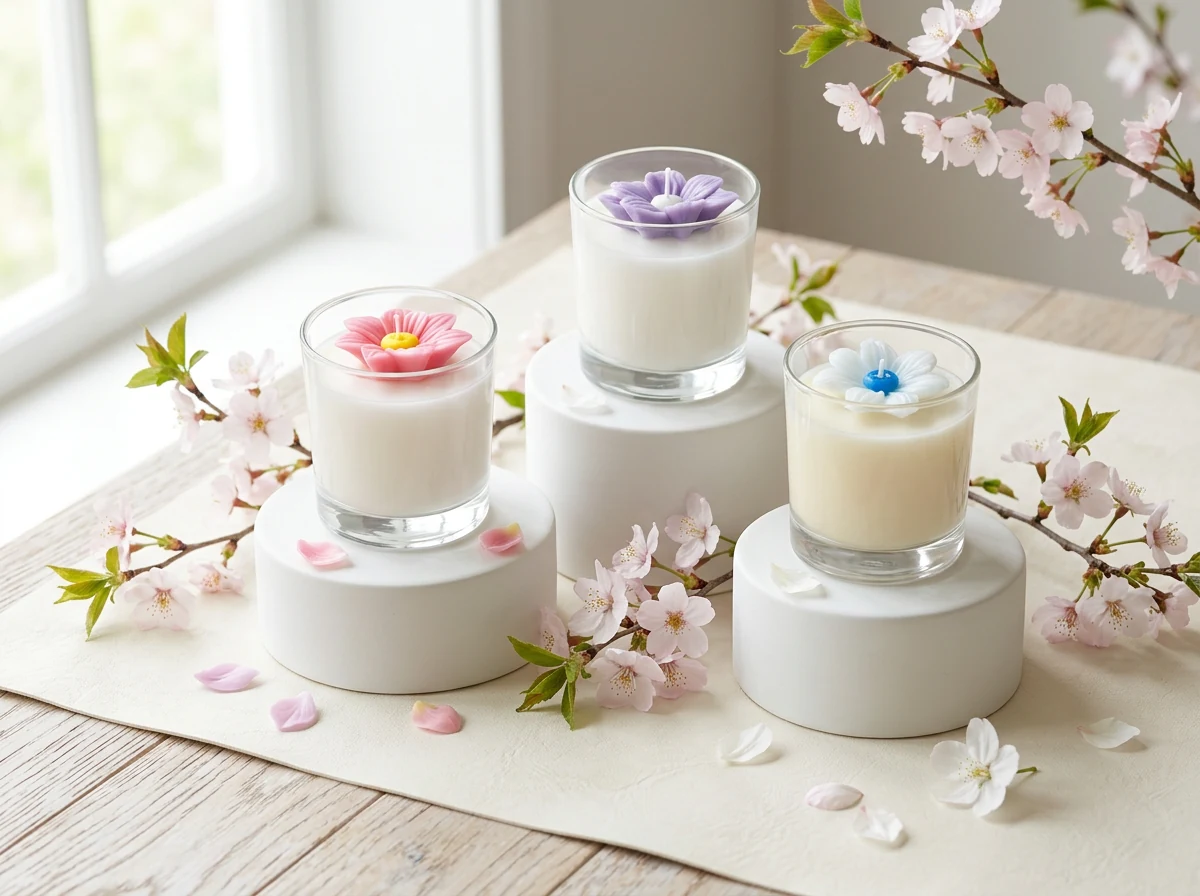
If you’re shopping, natural-wood and nature-themed candle collections illustrate what a renewable-wax, low-soot option looks like on a product page: wax type, wick material, and fragrance details spelled out rather than buried.
What the Research Actually Says About Fragrance and Indoor Air
“Natural” and “safe” are not the same word, and the data on this is more specific than most marketing admits. Chamber studies reviewed by the EPA found that common room fragrance products emit VOCs, including terpenes, at rates exceeding 2 milligrams per unit per hour, with more than 100 distinct compounds identified across tested products. Terpenes themselves aren’t necessarily dangerous. The problem starts when they meet ozone already present indoors.
That reaction produces secondary pollutants, including formaldehyde and ultrafine particles known as secondary organic aerosols. In high-ozone chamber tests, some air freshener and cleaning-product combinations produced particle mass concentrations that raised concern for sensory airway irritation, even from products marketed as gentle or natural.
The lowest-exposure approach isn’t a specific product at all. It’s removing the odor source through cleaning and ventilation before introducing any fragrance, since every added compound is one more thing indoor air has to process.
Candles carry a separate risk profile. A market review of candle and incense emissions found that poor combustion, often tied to low-quality wicks, can release benzene, aldehydes, and soot at levels the EPA’s literature review flagged as worth monitoring in enclosed spaces.
None of this means fragrance is off the table. It means intensity, frequency, and ventilation change the actual risk, not just the marketing. People with asthma, chemical sensitivities, or young kids in the house have the least margin for error and benefit most from sticking to low-concentration, intermittent use with a window open.

Keeping Essential Oils Safe for Pets and Vulnerable Household Members

Essential oils are popular precisely because they feel natural, but “natural” doesn’t mean uniformly safe, especially for animals. Cats lack a liver enzyme needed to metabolize many essential oil compounds efficiently, which means oils that barely affect a dog can build up to toxic levels in a cat. Birds have extremely sensitive respiratory systems and can react to airborne concentrations that wouldn’t register with a person in the room.
Phenol-rich oils, including tea tree, wintergreen, and many pine-derived oils, show up most often in veterinary toxicity warnings. Citrus oils and eucalyptus carry similar flags for cats specifically. Because oil composition varies by plant source, extraction method, and batch, there’s no universal “safe list,” which is exactly why vets recommend caution over confidence.
- Never apply essential oils directly to a pet’s skin or fur without veterinary guidance.
- Diffuse only in well-ventilated rooms pets can freely leave.
- Skip phenol-heavy oils entirely in multi-pet or bird-owning households.
- When in doubt, ask a veterinarian before adding a new oil to your routine.
Pro Tip: If you have cats or birds, choose a candle or diffuser blend explicitly labeled pet-considered rather than assuming “essential oil” automatically means gentle.
A Shopper’s Checklist for Genuinely Low-Toxicity Scent
Marketing language on fragrance products has gotten slippery enough that a simple checklist beats reading the front label. Run through these before adding anything to your cart:
- Demand ingredient transparency. If a label lists only “fragrance” with no breakdown, that’s a red flag, not a shortcut. The EPA’s Safer Choice standard exists partly because even small-percentage ingredients can trigger allergic sensitization, and you can’t assess that risk from a blank label.
- Check for phthalate-free, paraben-free, and formaldehyde-free claims, and look for recognized third-party certifications like EPA Safer Choice, EcoCert, or USDA Organic where the product category applies.
- Favor refillable systems and recyclable packaging. A refillable diffuser or a candle in a reusable jar cuts waste in a way a disposable plug-in never will.
- Choose renewable waxes and lead-free wicks over paraffin and unlabeled wick cores.
- Read concentration and usage claims skeptically. Lower fragrance load and occasional use reduce exposure more reliably than any single certification.
| What to check | Why it matters | Good sign |
|---|---|---|
| Ingredient list | Reveals sensitizers and allergens | Full breakdown, not just “fragrance” |
| Certifications | Third-party verification of safer formulation | EPA Safer Choice, EcoCert, USDA Organic |
| Wax and wick | Determines soot and combustion byproducts | Soy or beeswax, lead-free wick |
| Packaging | Reflects waste footprint | Refillable, recyclable |
Simple DIY Ways to Scent a Room With Almost No Waste
Sometimes the safest fragrance is one you make yourself, in small batches, with ingredients you already recognize.
- Start with a simmer pot. Combine water with citrus peels, cinnamon sticks, or cloves in a small pot, bring to a low simmer, and let it run on the stove for 20 to 30 minutes with the kitchen fan on. Never leave it unattended, and skip this method entirely in households with unsupervised pets or small children near the stove.
- Mix a DIY linen spray. Combine distilled water with a small amount of witch hazel or vodka as a dispersant, then add essential oil at a conservative concentration, generally under 0.5% by volume for general room sprays. That review notes essential-oil composition varies by plant part and extraction method, so conservative dosing matters more than any single recipe.
- Neutralize before you scent. Set out an open box of baking soda or activated charcoal in problem rooms, and improve ventilation before adding any fragrance at all. This step alone solves most odor complaints without introducing new VOCs.
- Know when to buy instead. DIY sprays and simmer pots don’t keep well, and they’re not something you’d hand to someone as a gift. For durability, presentation, or a keepsake, a manufactured candle with disclosed ingredients still wins.
How Custom Candle Co. Applies These Safety Standards
Everything above sounds reasonable in theory. Where it gets tested is on an actual product page, when you’re deciding whether a candle is safe enough to burn in a nursery or send to a friend who just adopted a cat.
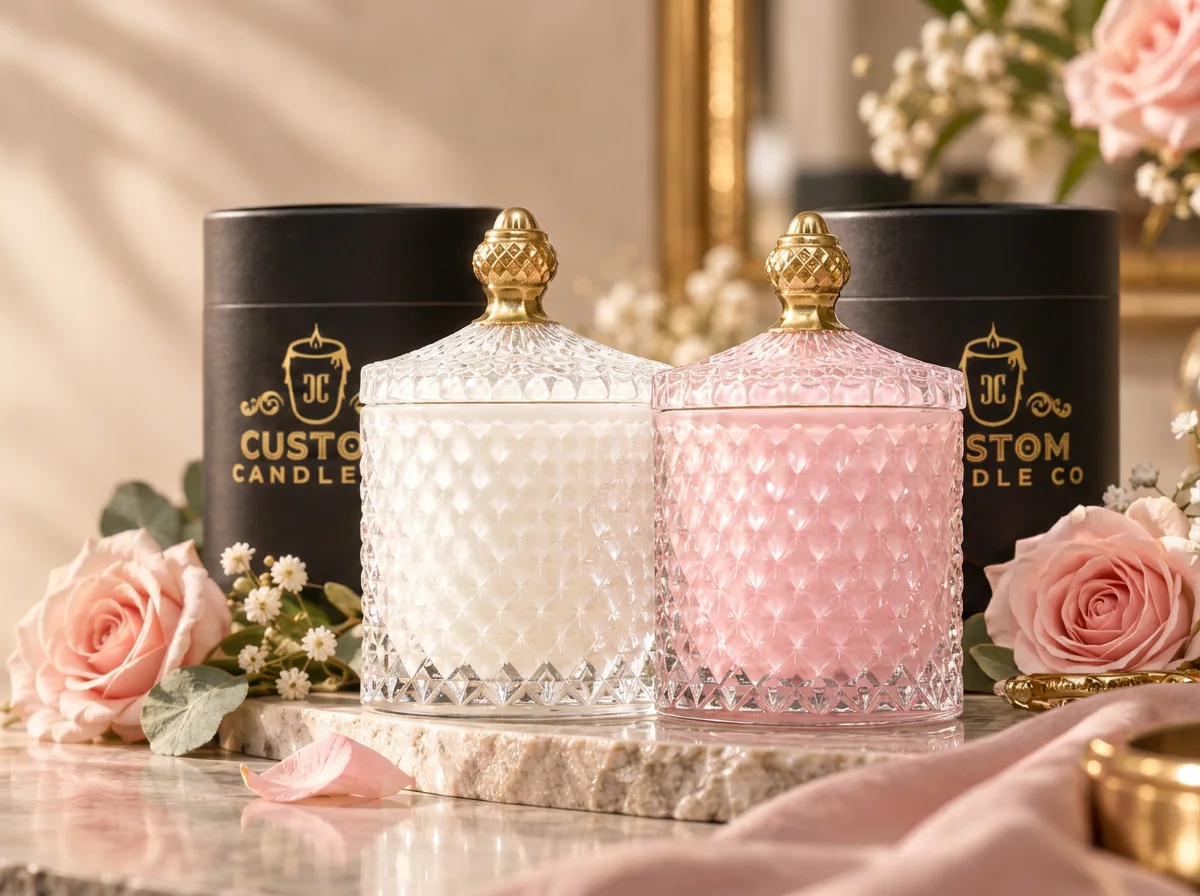
Custom Candle Co. builds around the same standards this article recommends: phthalate-free fragrances and lead-free wicks in every candle, hand-proofing on each personalized order before it ships, and a two-day shipping window for personalized orders once approved. Pet owners can check essential oil content directly, which matters given how much variability exists between blends.
When you’re evaluating any candle brand, not just this one, look for the same three things on the product page:
- A clear wax type (soy, beeswax) rather than a vague “premium blend.”
- Explicit wick material, ideally stated as lead-free.
- Some form of ingredient or fragrance disclosure, not just a scent name.
Those three details tell you more about real-world safety than any amount of “natural” language on the front of the box.
The Overlooked Gap Between “Natural” Marketing and Actual Safety
The conventional advice on this topic treats “natural” as a finish line. It isn’t. The EPA research on terpene and ozone reactions makes clear that plant-derived fragrance compounds can still generate formaldehyde and ultrafine particles indoors, which means a soy candle with a heavy essential-oil load can, in the wrong room, create more exposure than a lightly scented synthetic one used briefly with a window open.
What actually matters is intensity, frequency, and disclosure, not the word on the label. That means prioritizing ventilation and odor removal before fragrance, checking wick and wax details the way you’d check a nutrition label, and treating pet safety as a separate question from human safety rather than assuming one covers the other. Readers who skip straight to “buy the natural-branded one” are solving the wrong problem. Readers who ask what’s actually in it, and how much, are the ones who end up with genuinely lower exposure.
— Jake
Ready for a Safer, Personalized Candle? Here’s Where to Start
If you’ve read this far, you already know what to look for: disclosed ingredients, lead-free wicks, and renewable wax from companies that are transparent about their products.

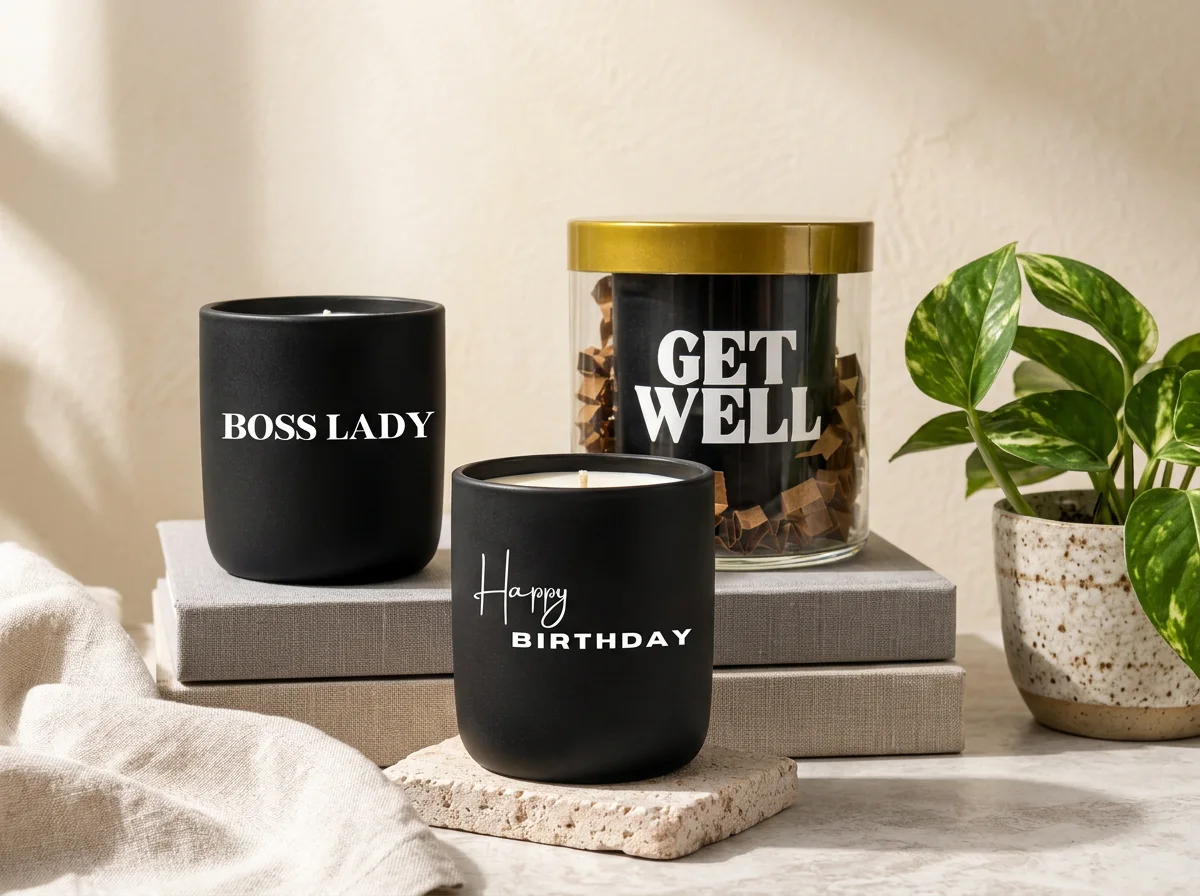
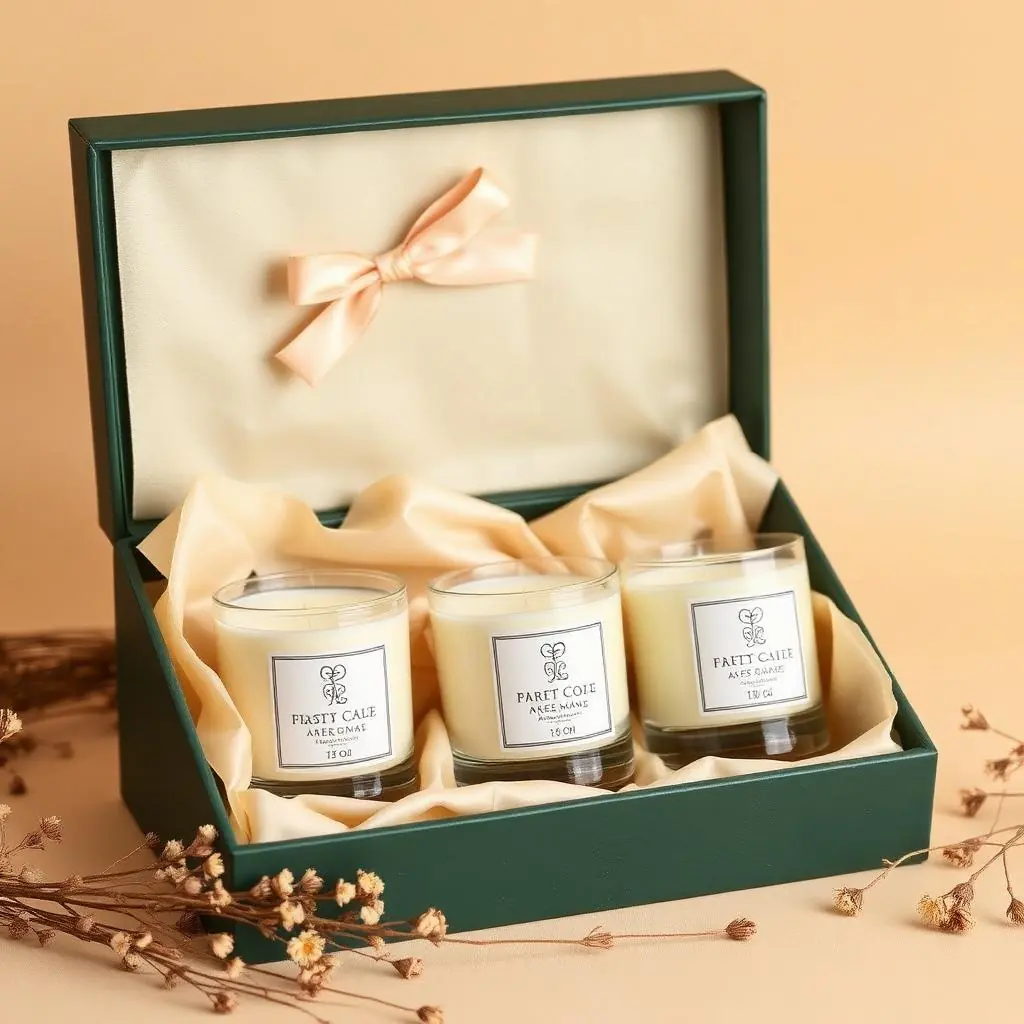
For gifting, the gifting collection includes wedding favors and corporate client gifts at prices detailed on the website, with each item hand-proofed before shipping and packaged with a handwritten card. If you want something for your own home, the personalized candles page lets you build a custom name or message candle from products adhering to high safety and ingredient standards. Typically, orders ship shortly after proofing approval, helping accommodate last-minute needs.
Sources
- Impact of room fragrance products on indoor air quality
- Ozone-initiated VOC and particle emissions from a cleaning agent and an air freshener: Risk assessment of acute airway effects
- Candles and Incense as Potential Sources of Indoor Air Pollution: Market Analysis and Literature Review
- Are essential oils dangerous to pets? — Tufts Now
FAQ
What Is the Least Toxic Home Fragrance?
Unscented, well-ventilated air is the lowest-exposure baseline, followed by soy or beeswax candles with lead-free wicks and refillable diffusers with disclosed ingredients. The common thread across safer options is low fragrance concentration and transparent labeling, not any single “natural” ingredient.
How Can I Make My House Smell Nice Naturally Without Harmful Chemicals?
Neutralize odors first with baking soda, activated charcoal, and better ventilation, then add fragrance sparingly. A simmer pot with citrus peels and cinnamon, or a diluted linen spray under 0.5% essential oil by volume, gives real scent without heavy chemical load.
What Is the Healthiest Way to Fragrance Your Home?
The healthiest approach limits both concentration and frequency, uses products with full ingredient disclosure, and keeps rooms ventilated during and after use. Candles with renewable wax and lead-free wicks, like those from Custom Candle Co., reduce soot and combustion byproducts compared to standard paraffin candles.
Are Essential Oil Diffusers Safe Around Pets?
Not universally. Cats and birds are especially sensitive to certain essential oil compounds, particularly phenol-rich oils like tea tree and wintergreen, and can react at concentrations that don’t bother dogs or humans. Diffuse only in well-ventilated, escapable rooms, and check with a veterinarian before introducing a new oil around pets.
Do Scented Candles Actually Pollute Indoor Air?
Yes, to varying degrees depending on wax quality, wick material, and burn conditions. Poor-quality wicks and heavy soot production can release benzene, aldehydes, and particulate matter, while soy or beeswax candles with lead-free wicks and proper trimming generate noticeably less.