


Materials
Soy Wax & Eco-Friendly Candles Guide
Soy wax is marketed as the clean choice. Some of that is true, some is oversimplified. Here is what the evidence actually supports on burn quality, indoor air and environmental footprint.
Custom Candle Co Studio Team · 10 min read · Updated
We pour soy, so treat this guide with the appropriate scepticism — and then check the claims, because we have tried to write the version we wanted to read before we chose a wax. Soy has real advantages and real limitations, and several of the strongest marketing claims made about it do not hold up.
What follows covers what soy wax is, how it compares to paraffin, coconut and beeswax across burn quality and footprint, what 'non-toxic' can and cannot mean, and how to read a candle label so that you can judge for yourself.
What soy wax actually is
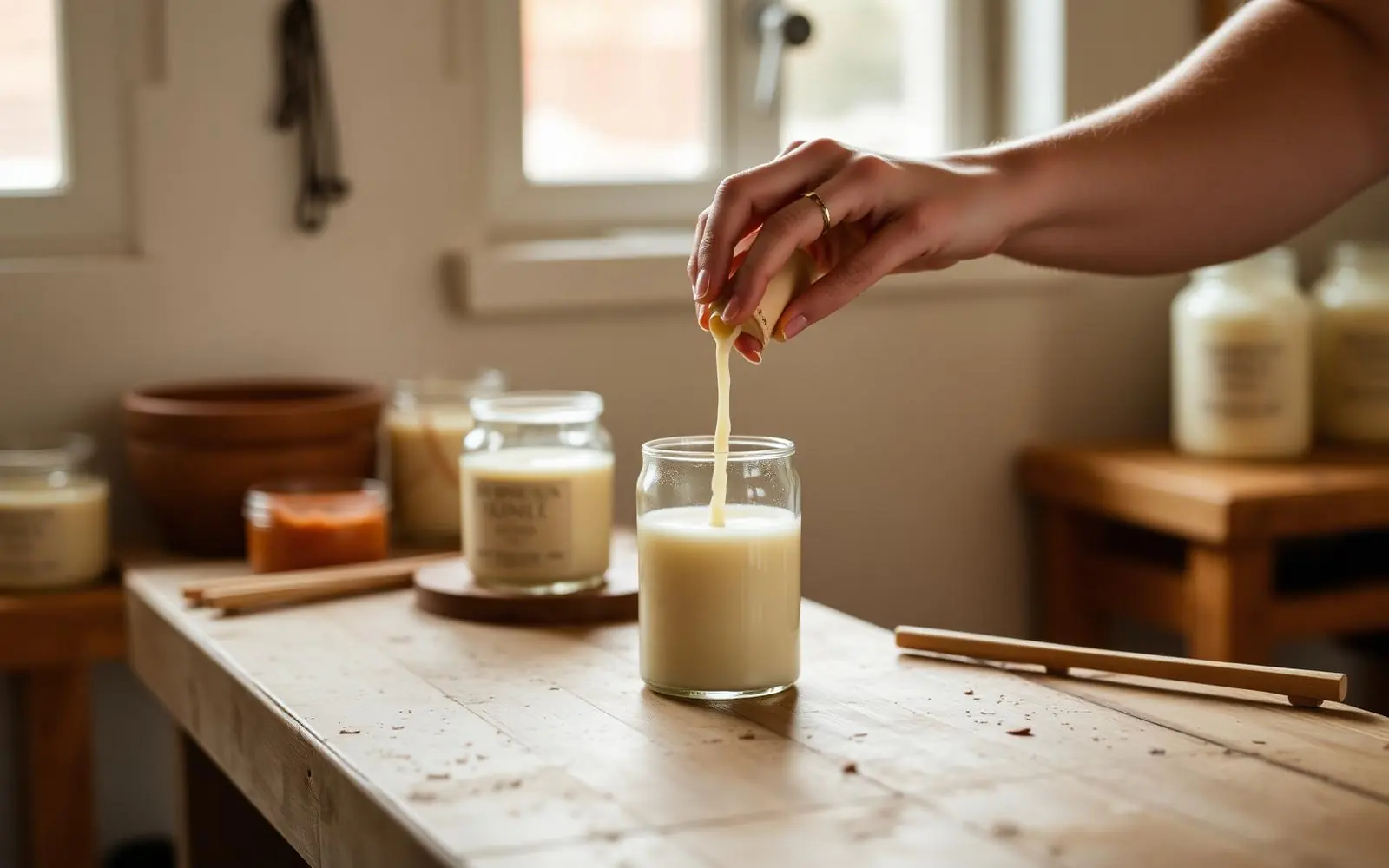
Soy wax is hydrogenated soybean oil. Beans are harvested, cleaned, cracked and rolled into flakes; the oil is extracted and then hydrogenated, which converts unsaturated fatty acids to saturated ones and turns a liquid oil into a solid with a melt point around 49–57°C.
It was commercialised in the early 1990s as a cheaper domestic alternative to beeswax, not primarily as an environmental product. The sustainability story came later and is genuine but more complicated than the label suggests.
Soy versus paraffin: what the evidence supports
Burn time
Supported. Soy's lower melt point and denser structure mean it burns roughly 30–50% longer than paraffin at equivalent weight. A 9oz soy candle commonly gives 55–65 hours against 40–45 for comparable paraffin.
Soot
Supported. Soy produces noticeably less visible black soot. Much of the difference comes down to wick sizing and trimming, but the wax contributes — you will see it in less staining on jar glass and on the wall behind a wall-mounted sconce.
Scent throw
Against soy, honestly. Paraffin carries fragrance better, particularly cold throw and the first ten minutes of hot throw. Soy needs a higher fragrance load and a longer warm-up to fill a room, which is why a good soy candle takes longer to notice and longer to fade.
'Paraffin releases toxins'
Overstated. This claim traces largely to a single unpublished 2009 conference abstract that was never peer reviewed. Subsequent industry-funded and independent work under normal domestic conditions has not established that properly formulated paraffin candles produce hazardous indoor pollutant levels. The honest summary: soy burns cleaner in terms of visible particulate, and paraffin has not been shown to be dangerous in ordinary use.
What 'non-toxic' can and cannot mean
'Non-toxic' is not a regulated term on candle packaging. It is worth knowing what a brand can and cannot legitimately claim.
- The wax can reasonably be described as food-derived and free of petroleum distillates. That is a factual claim about soy.
- The wick can be described as lead-free, though lead cores have been banned in the US since 2003 and across the EU and UK, so this is table stakes rather than a differentiator.
- The fragrance is where the claim gets slippery. Almost every scented candle uses fragrance oils, and phthalate-free is the meaningful specification to look for. A brand that says 'non-toxic' but will not confirm phthalate-free is telling you something.
- No candle is free of combustion by-products. Burning anything produces particulates and trace carbon monoxide. Ventilation matters regardless of wax.
The environmental picture, honestly
The case for soy
- Renewable and annually harvested, unlike petroleum-derived paraffin.
- Biodegradable and water-soluble with soap, which makes jar cleaning and spill removal easier and less chemical-intensive.
- Grown domestically in most major markets, shortening supply chains relative to imported waxes.
- Longer burn time means fewer candles bought per hour of use — a real, if unglamorous, footprint reduction.
The complications
- Soy agriculture at scale is associated with land-use change, and in South America specifically with deforestation. Sourcing region matters enormously; most candle-grade soy in the US and EU comes from North American cropland rather than cleared rainforest, but this is worth asking about.
- Conventional soy farming uses pesticides and synthetic fertiliser, and a majority of the global crop is genetically modified. Whether that concerns you is a separate judgement from carbon footprint.
- Hydrogenation is an industrial process with its own energy cost, so soy wax is not simply 'a bean'.
- Glass jars are heavy to ship and, while endlessly recyclable, are frequently not recycled because of wax residue. Cleaning and reusing the jar is the single highest-impact thing you can do with a finished candle.
Our position: soy is a defensibly better choice than paraffin on renewability and burn cleanliness, the difference is meaningful but not enormous, and the packaging decision is at least as significant as the wax decision.
How the four main waxes compare
Soy
Long, clean, even burn. Renewable and biodegradable. Moderate scent throw, prone to frosting and wet spots on the glass — both cosmetic. Mid-priced. The sensible all-round choice.
Coconut
The best scent throw of the natural waxes and a very clean burn, from a high-yield crop. Extremely soft, so it is almost always blended, and it is the most expensive option.
Beeswax
The longest burn of any wax and a natural honey scent that needs no fragrance. Not vegan, dependent on apiculture, expensive, and it does not hold added fragrance well.
Paraffin
Excellent scent throw, holds colour beautifully, cheapest by a distance. Petroleum-derived and non-renewable, with the most visible soot. Not the hazard it is often painted as, but not the choice we make.
How to read a candle label
- Look for '100% soy wax'. The phrase 'soy blend' or 'soy wax blend' is unregulated and frequently means a paraffin majority.
- Check the wick material is stated. Cotton, hemp or wood, explicitly described as lead-free.
- Look for 'phthalate-free fragrance'. Its absence on an otherwise detailed label is informative.
- Check whether essential oils are listed by name. This matters most in homes with cats — see our pet-safe candles guide.
- Check declared burn time against weight. Under 5 hours per ounce suggests either an oversized wick or a paraffin-heavy blend.
- Check where it was poured. Small-batch and hand-poured usually means shorter storage, fresher fragrance and a shorter supply chain.
What we pour and why
- 100% North-American-grown soy wax, no paraffin blending.
- Lead-free braided cotton wicks, sized per vessel so the melt pool reaches the glass on a standard four-hour burn.
- Phthalate-free fragrance oils, with every essential oil disclosed by name on the product page.
- Recyclable glass and FSC-certified paperboard packaging, with no plastic film.
- Hand-poured in small batches, printed and shipped within 5-7 business days.
Frequently asked questions
- Is soy wax really non-toxic?
- The wax is food-derived and free of petroleum distillates, which is a reasonable basis for the claim. But all combustion produces particulates, and the fragrance oil matters more than the wax for indoor air quality. Look for phthalate-free fragrance and ventilate the room.
- Why does my soy candle look bumpy and uneven on top?
- That is frosting — soy's natural crystalline structure re-forming as it cools. It is a sign of unblended soy rather than a defect, and it has no effect on burn or scent.
- Do soy candles burn longer than paraffin?
- Yes, typically 30–50% longer at the same weight because of the lower melt point and slower consumption. A 9oz soy candle commonly delivers 55–65 hours.
- Is soy wax bad for the environment because of deforestation?
- It can be, depending on origin. Soy grown on cleared South American land carries a serious footprint; soy grown on established North American cropland does not carry the same issue. Ask where a brand's wax is grown.
Shop what this guide talks about
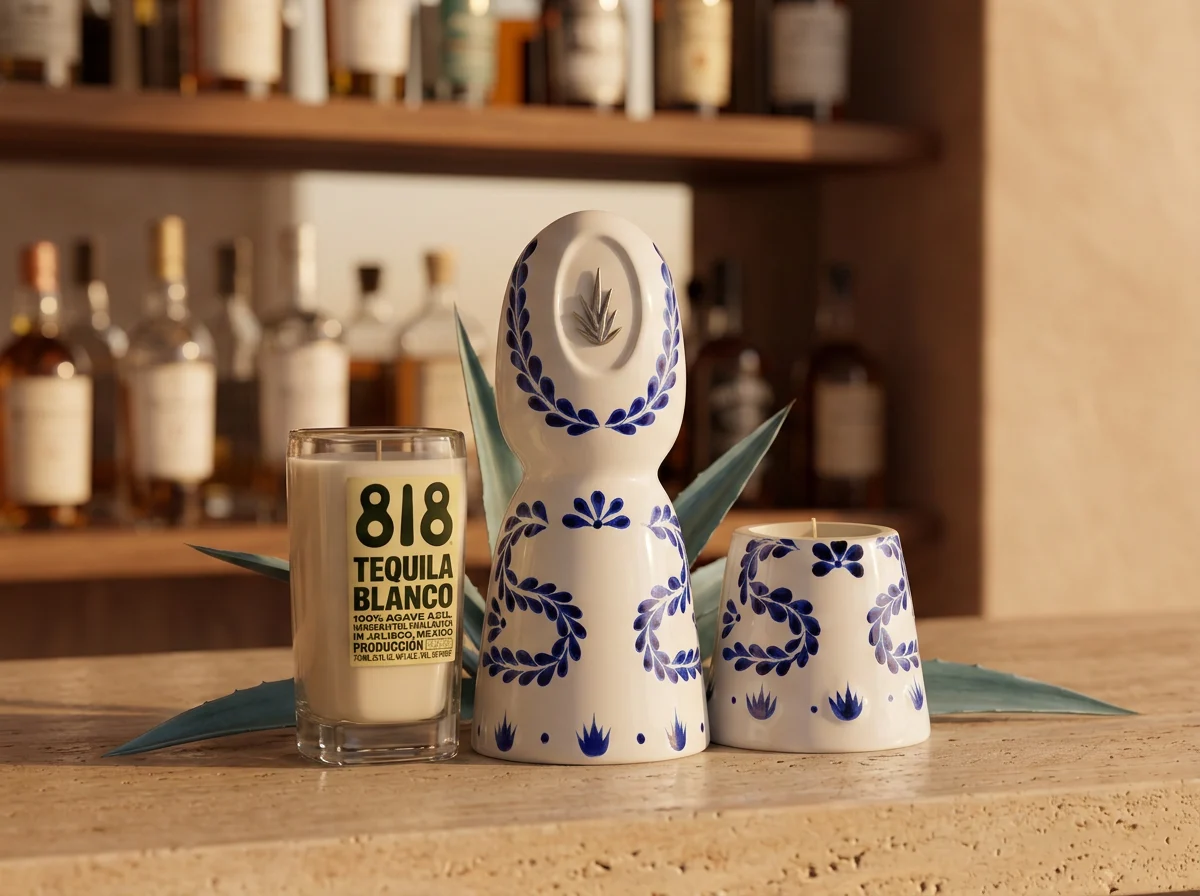
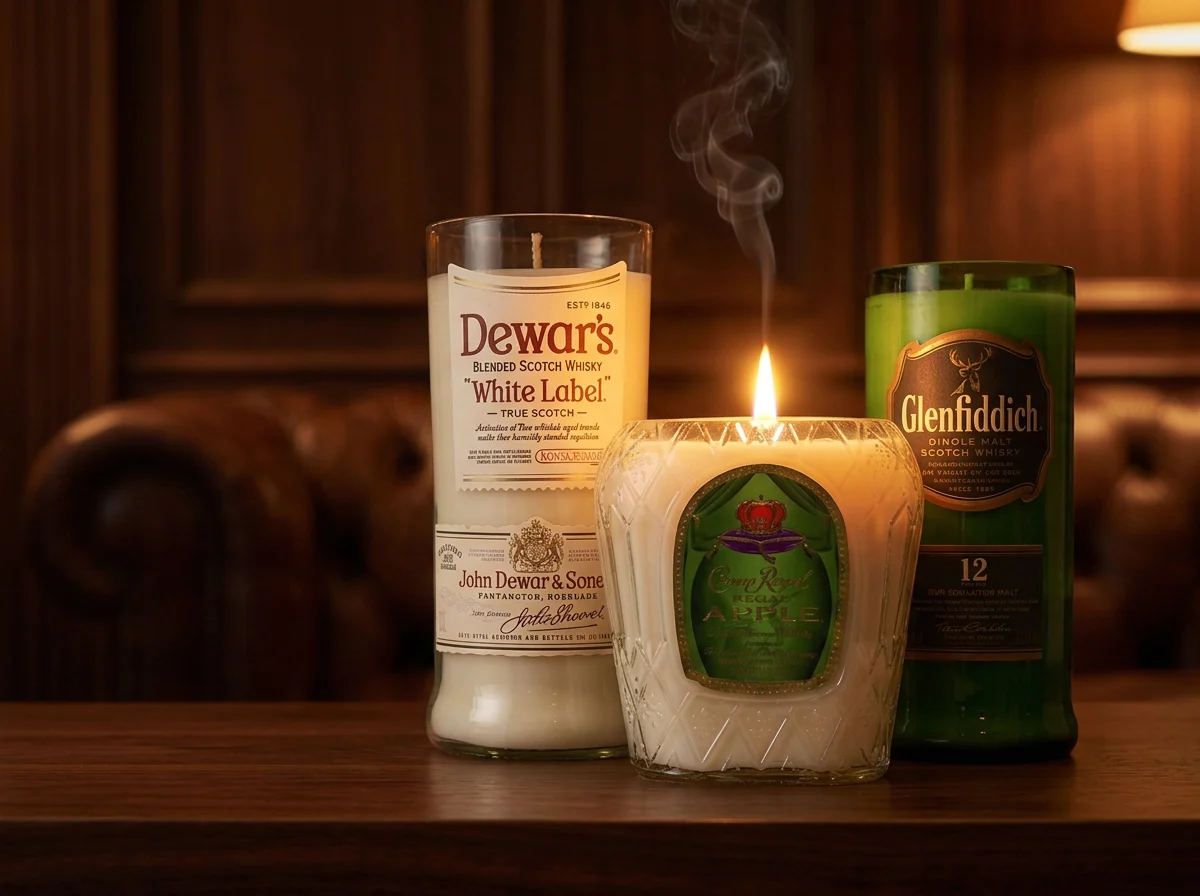
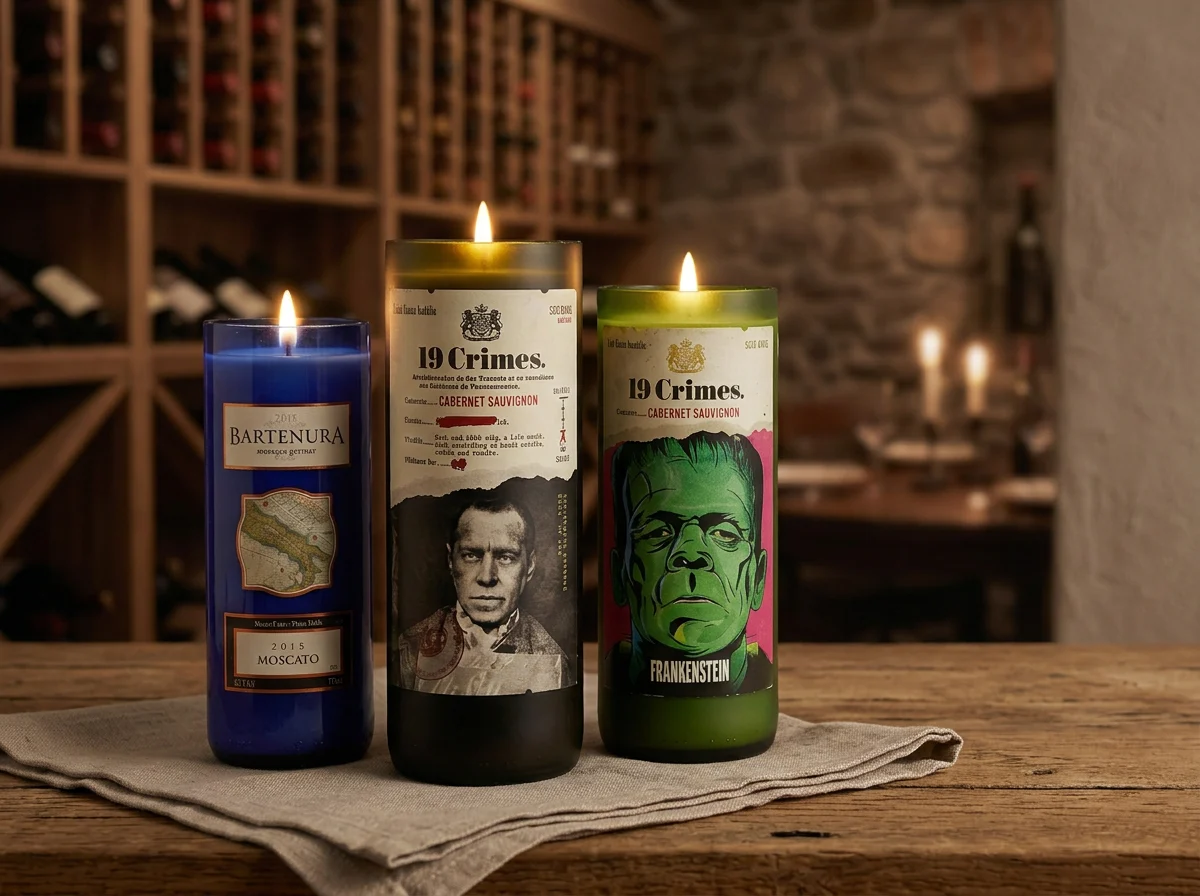
- Recycled bottle candles
Real bottles, cut and re-poured in 100% soy.
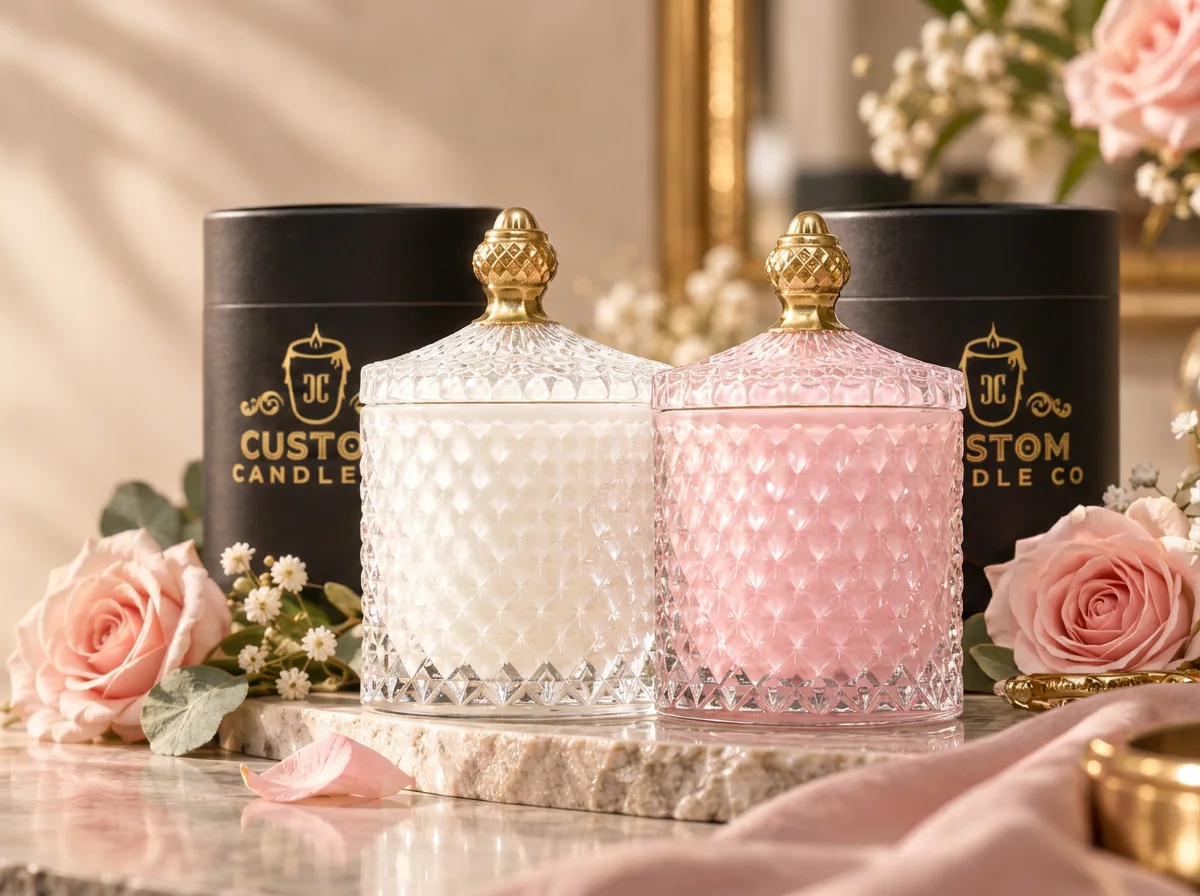
- Signature soy candles
The house line — soy wax, cotton wicks, recyclable glass.
- Customize a candle
Choose the wax, scent and packaging yourself.
Sources & further reading
- Volatile organic compounds and indoor air qualityUS Environmental Protection Agency
- BioPreferred program on bio-based productsUS Department of Agriculture