








Soy, Phthalate Free, Lead Free Candles That Lower Risk for Cat Owners

The safest candles for cat households are unscented or lightly scented soy, beeswax, or vegetable wax candles with lead-free cotton or wooden wicks, burned in a well-ventilated room. No candle carries medical certification as truly “cat-safe,” since risk depends on ingredient concentration, your cat’s proximity, and airflow, not just the label on the jar. Many essential oils and paraffin-based candles raise that risk considerably, according to guidance from the Merck Veterinary Manual and resources from Pet Poison Helpline.
TL;DR:
- Avoid candles containing tea tree, eucalyptus, peppermint, citrus, wintergreen, clove, cinnamon, ylang ylang, or pennyroyal; symptoms may appear within 6 to 8 hours.
- A natural or essential oil label does not guarantee safety; check fragrance concentration and a full ingredient list, since concentrated oils can pose greater risk.
- Test a new candle for 20–30 minutes in a ventilated room, watching for sneezing, watery eyes, coughing, or sudden hiding before using it again.
- Keep candles beyond jumping range in heavy, covered vessels, extinguish them before leaving the room, and never burn scented candles alongside a diffuser.
Table of Contents
- How candle exposure harms cats: routes, symptoms, and dose
- Scents and essential oils to avoid around cats
- Safer waxes and wicks: what to pick on the label
- Everyday safety: placement, ventilation, and burn habits
- Lower-risk alternatives to scented candles
- How our soy candles line up with these safety guidelines
- A note on how we test scent strength at home
- Pet-conscious soy candles you can order today
- FAQ
- Sources
How candle exposure harms cats: routes, symptoms, and dose
Cats encounter candle hazards three ways: breathing in combustion byproducts, absorbing fragrance oils through fur and then ingesting them during grooming, or chewing wax and wicks directly. The grooming route matters more for cats than for dogs, because cats groom constantly and will swallow anything that settles on their coat.
Clinical signs typically follow a pattern. According to the Merck Veterinary Manual, symptoms of essential oil toxicity often appear within 6 to 8 hours of exposure and can include:
- Drooling or foaming at the mouth
- Vomiting or loss of appetite
- Tremors or wobbly movement
- Labored breathing or coughing
- Lethargy or hiding more than usual
Severity depends heavily on dose. A candle burned briefly in a ventilated kitchen poses far less risk than a concentrated oil blend diffused all day in a closed bedroom. Cats also lack a liver enzyme called glucuronyl transferase, which most mammals use to break down certain plant compounds, so they clear some essential oil components far more slowly than humans or dogs do.
Scents and essential oils to avoid around cats
Several oils show up in household candles and home fragrance blends but carry outsized risk for cats. The Merck Veterinary Manual lists tea tree (melaleuca), eucalyptus, peppermint, citrus oils like orange and lemon, wintergreen, clove, cinnamon, ylang-ylang, and pennyroyal among the most commonly implicated.
- Tea tree and eucalyptus: linked to tremors, drooling, and depressed breathing even at modest exposure.
- Citrus oils (orange, lemon, lime, grapefruit): can irritate skin and airways, and ingestion during grooming compounds the risk.
- Wintergreen and clove: contain compounds that are toxic in small amounts relative to a cat’s body weight.
- Cinnamon and ylang-ylang: frequently flagged in pet poisoning resources for gastrointestinal and neurological signs.
Essential oils can cause poisoning in cats through inhalation or skin contact, with clinical signs generally appearing within 6 to 8 hours of exposure, according to Pet Poison Helpline. That timeline holds whether the oil comes from a diffuser, a candle, or a lotion a cat later licks off your hands.
“Natural” is not a safety guarantee. Concentration is what matters, and a candle marketed as “100% essential oil” scented can carry a higher dose of a risky compound than a synthetic fragrance oil formulated at a lower concentration. Favor products with transparent fragrance ingredient lists and a stated phthalate-free formulation rather than vague “natural” claims.
Safer waxes and wicks: what to pick on the label
Wax choice changes how much your cat breathes in every time you light a candle. Cats Protection notes that paraffin wax can release volatile organic compounds such as benzene and naphthalene when burned, while 100% soy, beeswax, or vegetable-based waxes produce negligible soot under standard burn conditions.
- Wax: choose 100% soy, beeswax, or coconut-based wax over paraffin for lower soot and fewer airborne byproducts.
- Wick: look for lead-free cotton or untreated wooden wicks, and skip anything described only as “metal-core” without further detail.
- Fragrance: prefer a phthalate-free fragrance formulation with a visible ingredient list rather than a blend sold simply as “essential oil scented.”
- Additives: a “no dyes” or “no parabens” claim is a reasonable bonus signal when it’s actually listed, not just implied.
The BC SPCA echoes this, noting that paraffin, lead-core wicks, and synthetic fragrances can aggravate respiratory issues in pets, and recommending soy, coconut, or vegetable wax paired with cotton wicks as a lower-risk combination. You can read more on wax emissions in our soy versus paraffin comparison.
Everyday safety: placement, ventilation, and burn habits
Product choice only solves part of the problem. Daily habits determine whether a reasonably safe candle stays that way.
- Place candles where cats cannot jump or knock them over, ideally in heavy, enclosed vessels or hurricane covers.
- Set a tray of water underneath a candle on an accessible surface so a topple doesn’t start a fire.
- Open a window or run an exhaust fan while burning anything scented, and avoid running a candle and a diffuser in the same room at once.
- Never leave a lit candle unattended, and extinguish it before leaving the room or going to sleep.
- Watch cats with asthma or other respiratory conditions closely for coughing or wheezing during and after a burn.
Cats Protection specifically recommends keeping candles out of jump range and using heavy vessels or water trays to prevent burns and house fires, since a knocked-over candle is as much a fire hazard as a scent hazard.
Pro Tip: Burn a new candle for just 20 to 30 minutes the first time, in a ventilated room, while watching your cat’s behavior for sneezing, watery eyes, or sudden hiding.
For more on balancing scent and ventilation, see our guide to eco-friendly home fragrance.
Lower-risk alternatives to scented candles
You don’t have to give up a nice-smelling home to keep your cat safe. A few swaps lower the risk without eliminating scent entirely.
- Burn unscented or very lightly scented candles occasionally, always in a ventilated room, since cats smell far more intensely than humans and light fragrances can be overwhelming for them.
- Try passive scenting, like briefly simmering citrus peel with cinnamon on the stove, rather than active diffusing, since passive methods don’t aerosolize microdroplets the way nebulizing diffusers do.
- Place reed diffusers somewhere your cat physically cannot reach the liquid reservoir, since the liquid itself is more concentrated than the scent in the air.
- Keep washable textiles clean, run a HEPA air filter, and use odor absorbers near the litter box instead of relying on fragrance to mask smells. Pet-safe textile choices, like the options covered in this pet-friendly bedding guide, can also cut down on odor without any scent risk at all.
How our soy candles line up with these safety guidelines
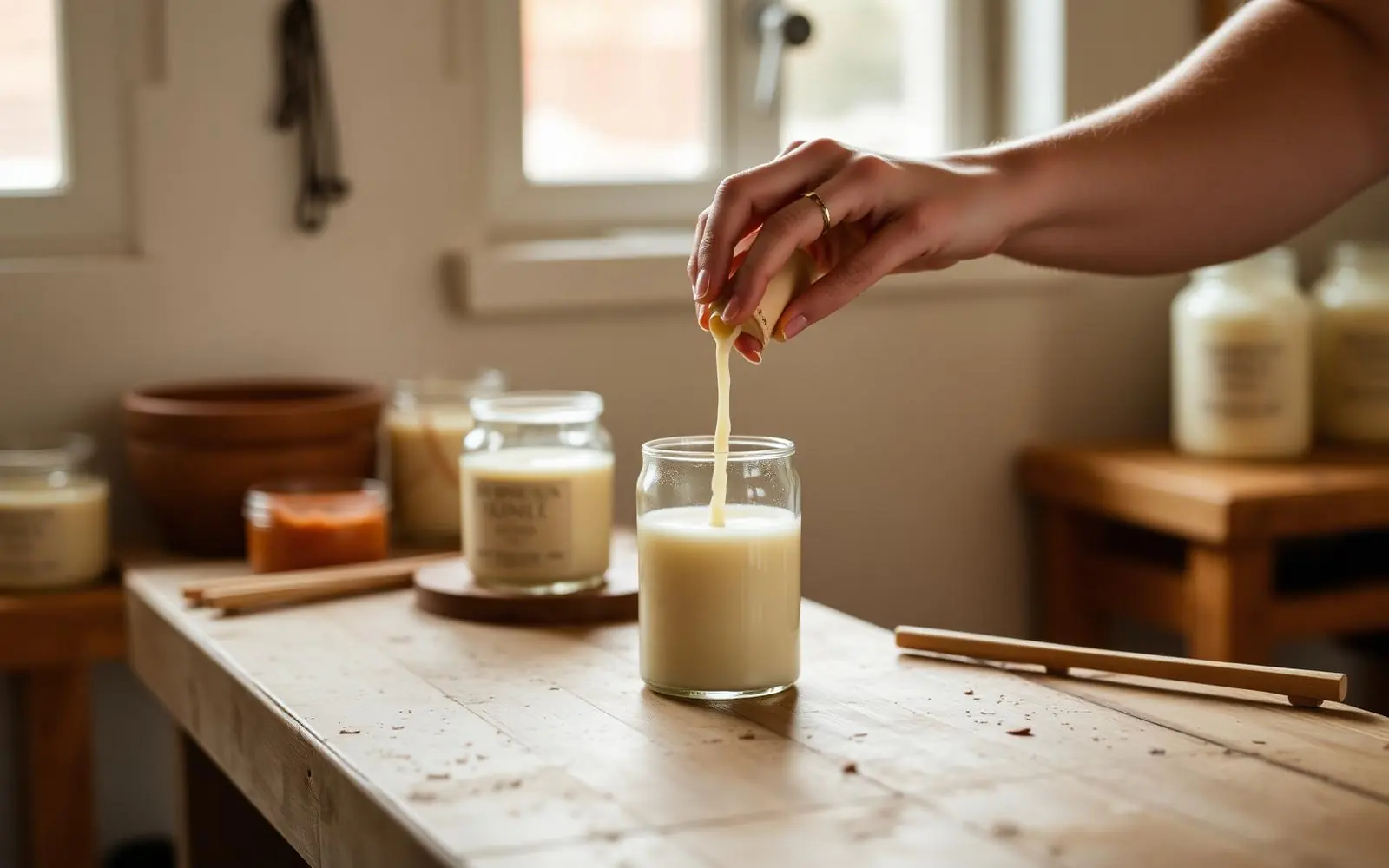
We hand-pour every candle in soy wax, formulate fragrances without phthalates, and use lead-free wicks, following commonly recommended criteria for lower-risk candle options. Every order goes through a proofing process before it ships promptly, so what you receive matches what you ordered.
That said, these practices reduce risk, they don’t erase it. No candle, including ours, carries medical certification as universally cat-safe, and concentration and ventilation still matter more than any single ingredient claim. Before buying any candle for a cat household, it’s worth asking a few direct questions:
- What is the fragrance concentration, and is the full ingredient list available?
- What type of wick does the candle use, and is it confirmed lead-free?
- Does the scent contain any of the high-risk oils, like tea tree, citrus, or clove?
You can read a longer breakdown of real risks and safer burning habits in our guide to candles and cats.
A note on how we test scent strength at home

When we evaluate a new scent, we do a short test burn with a window open and watch for any change in a cat’s behavior, sneezing, pacing, or sudden disinterest in the room are the signals we take seriously. Ventilation and a slow introduction matter more than any single ingredient claim.
If you’ve noticed your own cat react to a particular wax or scent, we’d like to hear about it through our product reviews or by reaching out directly. Real observations from cat households sharpen this kind of guidance more than lab specs ever could.
— Jake
Pet-conscious soy candles you can order today
If you’re shopping with this checklist in hand, our personalized candles and signature soy collection are hand-poured in soy wax with phthalate-free fragrances and lead-free wicks, the same combination this guide recommends looking for. Every order goes through a hand proofing step before it ships within two days, so your label, photo, or message arrives exactly as intended.

- Browse personalized soy jar candles for an everyday option with your choice of scent strength.
- Check our custom photo candles if you want a keepsake gift rather than a household staple.
- Looking for a gift set instead of a single candle? Our boxed gift sets start from $48 one-off.
For specifics on fragrance concentration or wick composition before you order, contact the seller directly to learn more. You can start browsing the full range at Custom Candle Co.
FAQ
What kind of candles are safe for cats?
Unscented or lightly scented candles made from 100% soy, beeswax, or vegetable wax with lead-free cotton or wooden wicks carry the lowest risk, burned in a ventilated room. No candle is medically certified as universally cat-safe, so ingredient transparency and ventilation matter more than any single label claim.
What candles are safe to use with cats?
The safest approach combines a low-emission wax like soy or beeswax, a lead-free wick, and a fragrance that avoids known high-risk oils such as tea tree or citrus. Burning briefly in a ventilated space and watching your cat’s behavior during the first burn adds another layer of safety.
Are there candle scents that are toxic to cats?
Yes. Oils including tea tree, eucalyptus, peppermint, citrus, wintergreen, clove, cinnamon, ylang-ylang, and pennyroyal are commonly linked to toxicity in cats, according to the Merck Veterinary Manual. Signs of exposure often appear within 6 to 8 hours and can include drooling, vomiting, and tremors.
How can I make my house smell good without harming my cat?
Try passive scenting methods like simmering citrus peel briefly on the stove, keep diffuser liquids completely out of reach, and run a HEPA filter to reduce odors without added fragrance. Washing textiles regularly and using odor absorbers near the litter box also helps, without introducing any inhalation risk.
Sources
- Toxicoses from essential oils in animals — Merck Veterinary Manual
- Essential oils — Pet Poison Helpline
- Cats and candles — Cats Protection
- Essentials: essential oils around pets — ASPCA