


Beeswax vs Soy Candles: How to Choose the Right Wax

Soy is the better pick for scented container candles and for gifts, because it holds and releases fragrance well and suits jars. Beeswax is the better pick for unscented pillars and tapers with a faint honey aroma. Neither wax has been shown to be toxic when the candle is well made, so the real decision comes down to scent, candle shape, budget and how you plan to use it. Below you will find the differences that matter, where coconut wax fits, and how wick, vessel and fragrance change the result more than most shoppers expect.
TL;DR
- Scent: soy carries added fragrance well. Beeswax has its own light, honey-like smell and is less effective at holding added scent.
- Shape: beeswax is harder and suits pillars. Soy is softer and suits jars and containers.
- Safety: a major trade body says high-quality waxes burn cleanly and safely, and none has been shown to be harmful. Wick care and ventilation matter most.
- Cost and diet: soy is plant-based and generally more affordable. Beeswax is natural and renewable but not vegan, and usually costs more.
- Coconut wax: it throws scent well when hot and is often blended with soy.
Table of Contents
- Beeswax vs soy at a glance
- Scent: which wax smells better?
- Burn time and candle shape
- Is one safer or cleaner than the other?
- Soy vs coconut wax
- Price and ethics: what are you paying for?
- What actually decides how a candle performs
- Which should you choose? A quick decision guide
- Personalized soy candles for gifts and weddings
- Using any candle well
- FAQ
- Sources
Beeswax vs soy at a glance
Here is the short comparison before we go into the detail.
| Factor | Soy wax | Beeswax | Coconut wax |
|---|---|---|---|
| Source | Plant-based, from soybeans | Made by honeybees, not vegan | Plant-based, from coconut |
| Natural scent | Little of its own, needs fragrance oil | Subtle, honey-like | Little of its own |
| Holding added fragrance | Good | Weaker, especially pure beeswax | Excellent hot throw |
| Texture | Softer, firmer than coconut | Hard, dense | Softest of the three |
| Best for | Jars, containers, tealights | Pillars, tapers, votives | Jars, often blended with soy |
| Typical cost | More affordable | Generally higher | Varies |
The general profile in the table follows a candle wax guide from Martha Stewart, which describes soy as a slow, steady burner that holds less fragrance than some alternatives, beeswax as subtly scented and well suited to pillars, and coconut wax as good at holding fragrance and color. Treat the table as a starting point. Individual candles vary a great deal with how they are made.
Scent: which wax smells better?
This is the question behind most searches, and the answer depends on what you want to smell.
Beeswax brings its own aroma. It is subtly sweet and honey-like, and many people enjoy that quiet, warm note in an otherwise unscented candle. The flip side is that pure beeswax is less effective at holding and releasing added fragrance. If you want a candle that fills a room with vanilla, cedar or fresh linen, beeswax will fight you.
Soy is a blank canvas. It has little scent of its own, so it relies on added fragrance, and it tends to absorb and release that fragrance well. That is why most scented jar candles you see are soy or a soy blend. The CandleScience wax guide is a supplier resource we did not use for any claim here, so we will rely on the Martha Stewart guide above for the general picture.
A practical rule:
- Want a gentle, natural honey note and no added perfume? Choose beeswax.
- Want a defined fragrance such as a named scent, a seasonal blend or a signature aroma? Choose soy.
- Want strong scent and are open to a blend? Look at soy with coconut.
Scent strength is also about the wick. A wick that is too small for the jar leaves a shallow melt pool, and the candle never fills the room, whatever the wax. Our guide to fixing candle scent throw starts there for good reason.
Burn time and candle shape
Beeswax is a harder wax, which is why it is the traditional choice for pillars and tapers that stand on their own. Soy is softer, so it is poured into containers, where the jar holds the shape and the melt pool stays contained. Martha Stewart’s guide points to this hardness as the reason beeswax suits pillars, and recommends choosing wax by candle type first.
On burn time, both waxes have a reputation for burning slowly. You will see claims that one “lasts twice as long” as the other, but those numbers depend on the wick, the diameter, the vessel and how you burn the candle. Instead of chasing a figure, remember these habits, which help any candle last longer:
- On the first burn, let the melt pool reach the edge of the jar so the candle does not tunnel.
- Trim the wick before every burn.
- Keep burns to a few hours at a time.
- Keep the candle away from drafts, which make flames flicker and burn unevenly.
We cover these in more detail in our candle care guide.
Is one safer or cleaner than the other?
This is where most online posts get dramatic. You will read that beeswax “purifies the air” while soy “pollutes” it, or the reverse. The evidence is far calmer.
The National Candle Association, a trade body, states that high-quality candle waxes burn cleanly and safely in the same manner, that no wax has been shown to be toxic or harmful, and that soot depends mainly on wick length and flame disturbance. A 2007 study from the Bayreuth Institute of Environmental Research, summarized in an industry newsletter, found that well-made candles in the major wax types, soy and beeswax among them, burned cleanly and safely with no appreciable differences in burning behavior.
Because the National Candle Association represents candle makers, it is worth knowing that its position is consistent with that study and with guidance elsewhere. In Europe, regulatory guidance for emissions from candles points to WHO indoor air quality guidelines as the benchmark where no specific limit values exist.
What does that mean for you?
- The wax is not the main variable. The wick, the fragrance and how you burn the candle matter more. Our posts on wood wick vs cotton wick and cotton wick benefits explain how wick choice shapes the flame.
- Ventilation counts. A 2024 academic review of candle emissions advises judicious use in enclosed spaces, with adequate ventilation, and care around vulnerable people. Crack a window or burn in a room with air movement, and do not leave candles going for hours in a small closed room.
- Check the ingredients you cannot see. Lead-free wicks and phthalate-free fragrance are choices a maker makes. See our lead-free wick checklist for what to look for.
If anyone in your home has asthma, a respiratory condition or a sensitivity to smells, or if you have a baby at home, ask your doctor or pediatrician how and whether to burn scented candles. Pet owners should do the same with their veterinarian, particularly because some essential oils are a concern for pets. Say which oils are in the candle when you ask.
Soy vs coconut wax
Coconut wax comes up in the same searches, so here is the comparison. Coconut wax is softer than soy and is known for an excellent hot scent throw, meaning the smell while the candle is burning. Soy is firmer. Candle makers often combine them: the blend pairs soy’s firmer structure and slower burn with coconut’s strong throw, a pairing described in many maker resources.
For most shoppers the difference shows up in two ways. A coconut or coconut-soy candle may smell stronger in a room sooner. A pure soy candle may feel more traditional and, in a well-made jar, burns steadily. Both are plant-based. Sourcing is the thing to ask about: for all three waxes, how the raw material is grown, transported and certified affects the footprint far more than the label “natural” does.
Price and ethics: what are you paying for?
Soy is plant-based, renewable and generally the more affordable of the two. Beeswax is natural and renewable too, but it is not vegan and usually costs more, as Martha Stewart’s guide notes. Beeswax is also a much smaller share of the market: according to the National Candle Association, paraffin is by far the most used wax worldwide, with beeswax used in significantly smaller quantities.
If you avoid animal products, soy or coconut is the clear route. If you want to know what “paraffin-free” really means for your shopping, read our explainer on paraffin-free candles and our soy vs paraffin test.
On environmental impact, soy and beeswax are both renewable, but results vary with how the crop is grown or the hives are managed, and with how far the wax travels. Nobody can honestly say one wax is greener across the board. Choose a maker who is open about where the wax comes from.
What actually decides how a candle performs
Wax gets the headline, but a candle is a system. Martha Stewart’s guide makes the same point: consider the wax, fragrance, wick and vessel together. These are the variables that change your experience:
- Wick size: too small and you get tunneling and weak scent. Too large and you get a tall flame and soot.
- Vessel: a wide jar needs a wick suited to its diameter. A narrow glass concentrates heat.
- Fragrance load and quality: more is not always better. Poorly matched fragrance can clog a wick.
- Burn conditions: drafts, trimmed wicks and burn length all change soot and flame.
- Handmade process: small-batch pouring and wick testing catch problems before a candle ships. Our post on hand poured candles explains why wick tests mean less soot and better scent.
If you mostly want fragrance without a flame, a different format may suit you. Our comparison of wax melts and candles walks through when each makes sense.
Which should you choose? A quick decision guide
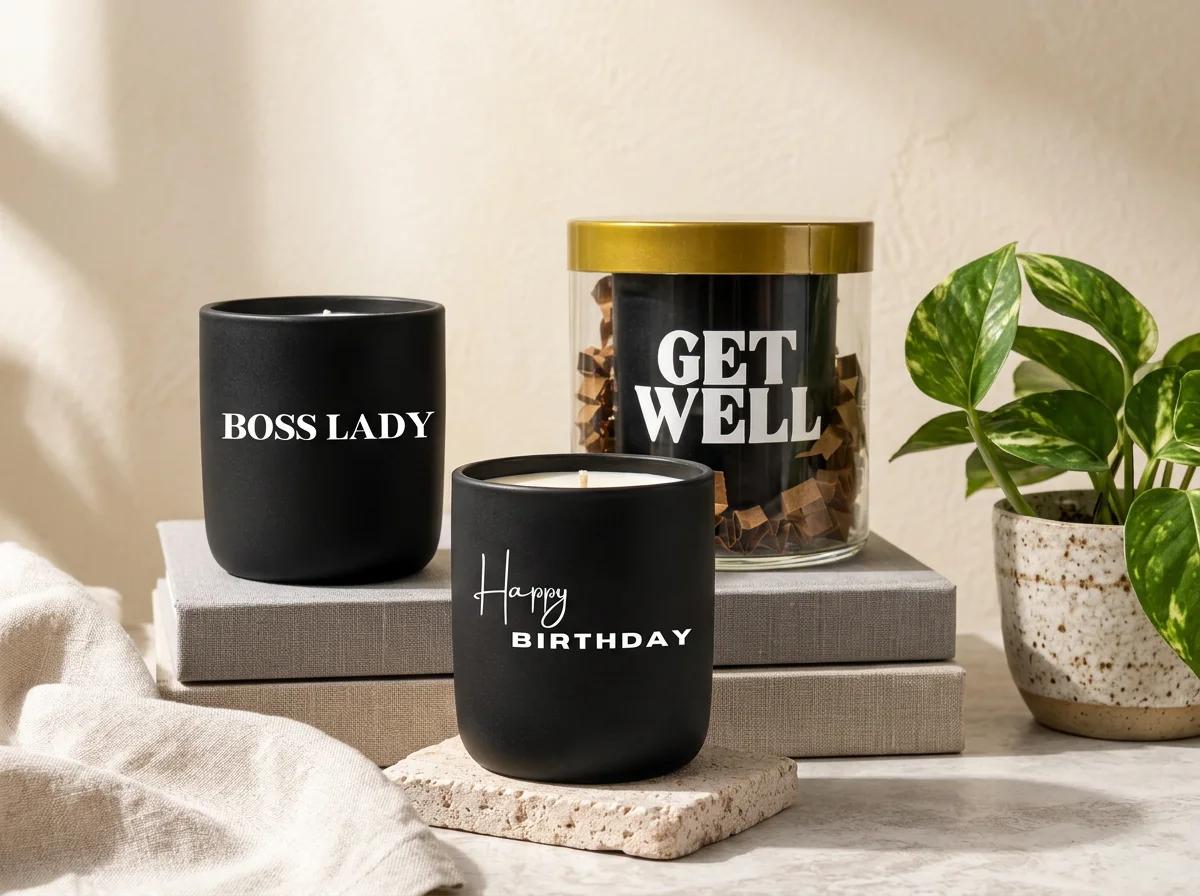
Choose soy if you want a scented jar candle, a candle for gifting, a vegan product or a more affordable one. It also works well when you want a printed label or photo on the jar, since the vessel is a stable canvas.
Choose beeswax if you want pillars or tapers, or an unscented candle with a mild honey note, and you are comfortable with a higher price and a non-vegan material.

Choose a coconut-soy blend if strong scent in the room is your priority.
For a home with pets, the wax matters less than the ingredients: look for candles that disclose their fragrance and essential oil content, so you can talk it through with your veterinarian.
Our view on soy
We pour in soy because it fits what people actually want from a personalized candle: a jar that carries fragrance well, looks right with a printed photo or message, and feels like a gift.
We do not think the wax label should be the whole story. What we care about is what goes into every candle: phthalate-free fragrances, lead-free wicks, and a hand proof of the print and presentation before anything leaves us. A wax can be wonderful, but a poorly proofed label or a mismatched wick still ruins the experience.
That is why we hand-proof every order and ship personalized orders within two days. If you are choosing between waxes for a gift, choose the one that suits the scent and shape you want. For jars with a photo or words on them, soy is the one we stand behind.
Jake
Personalized soy candles for gifts and weddings
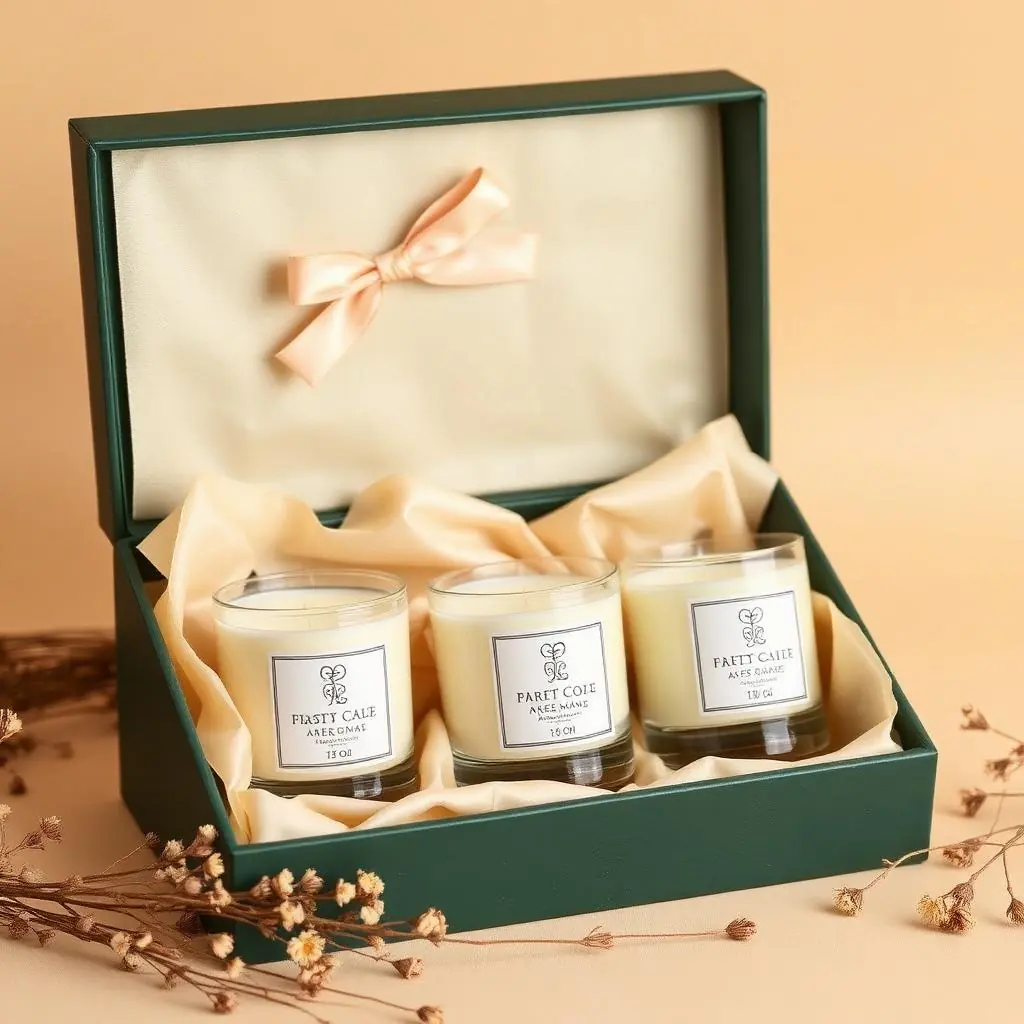
If you have decided that soy suits your needs, we make hand-poured soy candles that carry your own photo and words on the label. Every order is proofed by hand for print and presentation quality, uses phthalate-free fragrances and lead-free wicks, and comes with keepsake packaging and a handwritten card as standard.

Start with our photo candles or personalized candles with names and messages. Planning an event? Weddings and favours start from $18 per candle, corporate and client gifting from $22 per candle, and boxed gift sets from $48. You can also browse our wedding candles or see everything on customcandleco.com.
Using any candle well
Whichever wax you choose, these habits do more for safety and scent than the wax label:
- Trim the wick to a short length before each burn.
- Burn in a ventilated room, away from drafts, curtains and pets.
- Never leave a burning candle unattended or go to sleep with one lit.
- Stop burning when little wax is left at the bottom of the jar.
- Keep the candle on a heat-safe surface, out of reach of children and pets.
For wick trimming, first-burn timing and how to store a candle, see our candle care guide. If you are curious about whether scent itself has benefits, our post on what science supports about aromatherapy candles sorts the evidence from the marketing.
FAQ
Are beeswax candles healthier than soy candles?
Not in any way that has been shown. The National Candle Association says no wax has been shown to be toxic or harmful when the candle is high quality, and a 2007 German study found no appreciable differences in burning behavior between major waxes. Wick, fragrance and ventilation make more difference than the wax itself.
Which burns longer, soy or beeswax?
Both burn slowly, and beeswax is often described as the longest burner. Actual burn time depends on the wick, the candle’s diameter and how you burn it. Trimming the wick and letting the first burn reach the edge of the jar helps either wax last.
Is soy or coconut wax better for scent?
Coconut wax is known for excellent hot scent throw, while soy is firmer and burns longer. Many makers blend them to get both. If you want a straightforward jar candle with a well-held fragrance, soy is a dependable choice.
Is beeswax vegan?
No. Beeswax is made by honeybees, so it is natural and renewable but not vegan. Soy and coconut waxes are plant-based alternatives.
Sources
- A Guide to Types of Candle Wax, Martha Stewart
- Elements of a Candle: Wax, National Candle Association
- Candle Science and Testing newsletter, including the 2007 Bayreuth study
- EU guidance document on candle emissions
- Unveiling risk of the fragrant realm, 2024 academic review