



Hand Poured Candles: Why Wick Tests Mean Less Soot and Better Scent

Hand-poured candles can offer clearer practical benefits than mass-produced ones when the maker controls wick, wax, and testing. The real advantages are a matched wick and wax system, lower soot and tunneling risk, and consistent scent throw, backed by recognized testing standards rather than the label alone. We build every order around that same combination of control and testing.
TL;DR:
- The term lacks a legal definition, so look for wick sizing matched to the vessel, a stated fragrance range, and documented safety testing.
- Wax type alone does not predict emissions; wick sizing and fragrance load drive soot, while overloaded scented melts can also form indoor particles.
- Prevent tunneling by letting the first burn reach the edges, which takes roughly an hour per inch of diameter, and keep sessions under four hours.
- Choose sellers that cite ASTM candle safety, labeling, or glass standards; keep flames at least one foot from combustibles and never leave them unattended.
Table of Contents
- What “hand-poured” means and why label definitions vary
- Craftsmanship and process: pour temperature, cooling, and small-batch adjustments
- Materials and wick choice: wax type, fragrance load, and wick construction
- Burn quality, soot, and indoor emissions: what the research shows
- How to spot a genuine hand-poured candle
- Candle care: how to burn and store to preserve hand-poured benefits
- Safety standards and testing readers should trust
- Why craftsmanship and testing go hand in hand at Custom Candle Co
- Get a hand-poured candle built around your own photos and words
- FAQ
- Sources
What “hand-poured” means and why label definitions vary
“Hand-poured” has no single legal definition, which is why it shows up on products with wildly different levels of actual craft. At one end, a maker pours small batches, tests each wick size against a specific wax and fragrance load, and adjusts temperature by hand for every run. At the other, a factory worker tips a pre-measured pour into a machine-filled vessel once, and the label calls that “hand-touched” too.
Scale changes what a maker can control. A large production line locks in one pour temperature, one cooling rate, and one wick spec across thousands of units, because adjusting for each batch is not cost-effective. A small-batch candle maker can change those variables candle by candle, which is exactly what produces a cleaner burn and better scent.
When you are judging a product page, look past the phrase itself and check for:
- Specific process details, like pour temperature ranges or batch sizes, rather than just the word “handmade”
- Named wick specifications instead of a generic “cotton wick” claim
- Any mention of testing, burn trials, or adherence to published safety standards
Craftsmanship and process: pour temperature, cooling, and small-batch adjustments
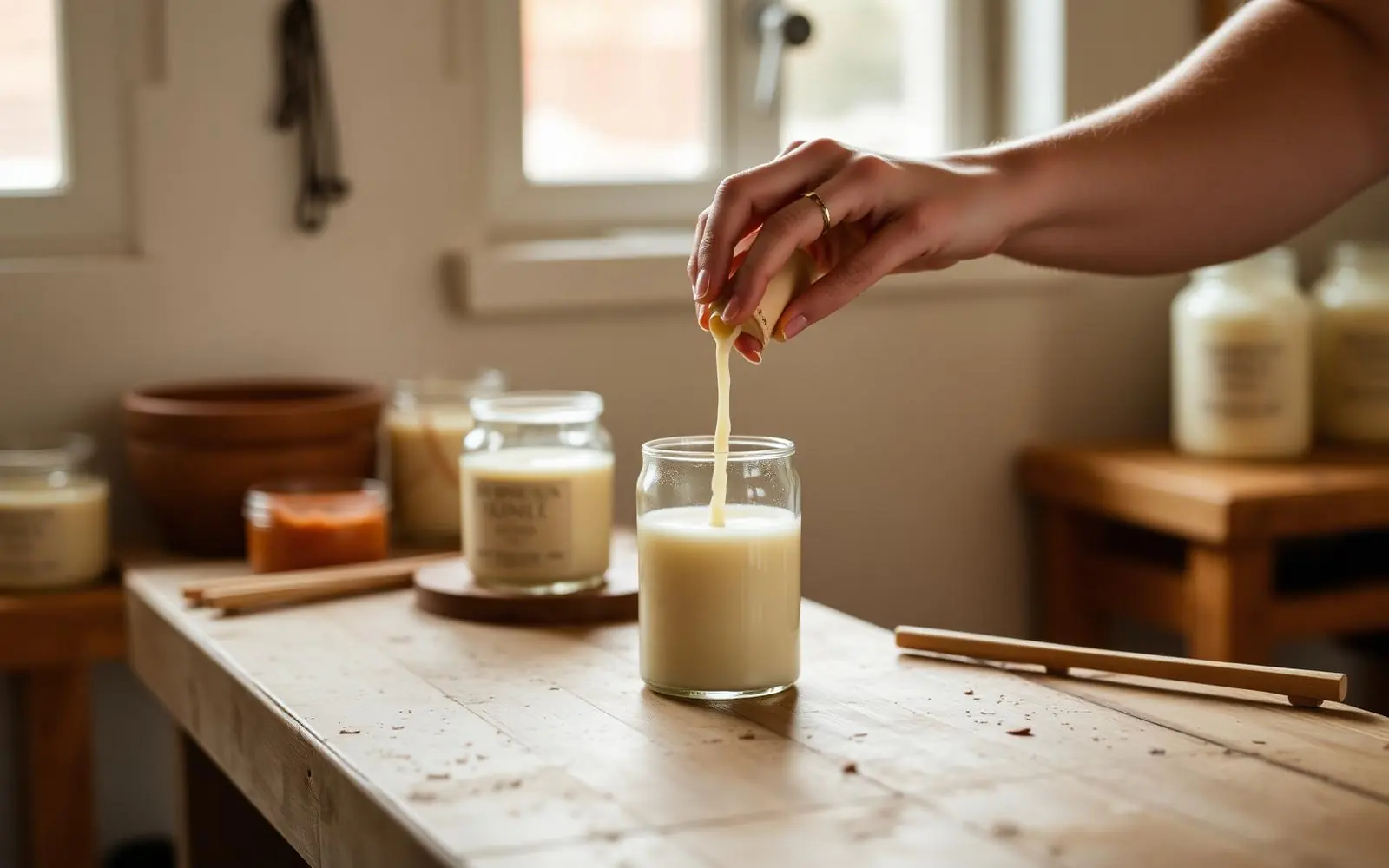
The temperature at which wax gets poured determines how it bonds to the vessel and how the surface finishes. Pour too hot and the wax can shrink away from the glass as it cools, leaving gaps; pour too cool and you risk a rough, uneven top that never fully levels.
Controlled cooling matters just as much. A candle left to cool too fast forms sinkholes and a cratered surface around the wick. Makers working in small batches can slow that process, often with a second “touch-up” pour once the wax starts to set, which fills in the dip and leaves a flat, finished top.
Small batches also allow for testing that large runs skip entirely:
- Adjusting wick size up or down based on how a specific wax and fragrance combination burns
- Changing fragrance load in small increments to find the point where scent throw is strong but soot stays low
- Testing different pour methods, like single-pour versus two-stage pour, for a specific vessel shape
Pro Tip: Ask a candle maker whether they test-burn new fragrance and wax combinations before selling them. A maker who can describe their testing process is usually one who actually does it.
Materials and wick choice: wax type, fragrance load, and wick construction
Wax type sets the baseline for how a candle burns, but it is rarely the deciding factor on its own. Soy, coconut, paraffin, beeswax, and blends can all burn cleanly when the rest of the system, wick, fragrance load, and vessel, is engineered to match.
Wick choice is where soot and tunneling problems usually start. A wick too small for the vessel diameter creates a narrow melt pool that never reaches the edges, which is tunneling. A wick too large burns hot, draws too much fuel, and throws off soot. A well-matched wick produces a full, even melt pool with a short, controlled flame.

Fragrance load and dye concentration carry similar risk on the high end. Overloading fragrance oil past what a wax and wick system can cleanly combust is one of the most common causes of visible smoke and soot, regardless of wax type.
What to look for in a well-made system:
- A wick size specified for the vessel’s exact diameter, not a generic “medium wick” note
- A disclosed or implied fragrance load range rather than an unlimited “maximum scent” claim
- Dye or color additive mentioned by name, since heavy dye loads can also affect burn clarity
Burn quality, soot, and indoor emissions: what the research shows
Wax type alone does not determine how clean a candle burns. An industry-funded study from Ökometric tested reference candles across paraffin, soy, stearin, palm, and beeswax and found that well-made candles across all of those wax types burned cleanly, while poorly designed, over-wicked “high-soot” systems produced far higher particulate and aldehyde emissions, regardless of which wax they used. That result points the responsibility back to wick sizing and system design, not the wax label on the jar.
Scent itself is not automatically risk-free either. A study published in Environmental Science & Technology Letters found that scented wax melts can emit terpenes that react with indoor ozone to form new nanoparticles, producing concentrations comparable to combustion sources in some tests. That matters because wax melts are often marketed as a “flame-free” and implicitly cleaner alternative to burning a candle, and the data complicates that assumption.
The practical response to both findings is the same: the wick-to-wax-to-fragrance match, not the marketing term, is what decides emissions. To minimize soot and particles indoors:
- Choose a wick sized correctly for the vessel, not the largest one available
- Avoid products with unusually strong, overloaded fragrance as a selling point
- Ventilate the room when burning candles or warming wax melts, especially in smaller spaces
- Favor sellers who mention testing or published standards over those who only use the word “natural”
How to spot a genuine hand-poured candle
A few concrete signals separate a tested, well-made candle from one that just carries the label.
- Batch or pour date noted on the product or packaging, which signals the maker tracks individual runs rather than one continuous production line.
- A specific wick size or spec listed, rather than a vague reference to “cotton” or “wood” wick with no sizing detail.
- A disclosed fragrance concentration range, which shows the maker has tested for a ceiling rather than maximizing scent at any cost.
- Reference to safety testing or standards, such as adherence to ASTM-based testing practices, rather than only the word “handmade.”
- Clear ingredient lists and visible process photos, since a maker willing to show their pour process typically has nothing to hide about it.
Candle care: how to burn and store to preserve hand-poured benefits
Even a well-made candle loses its advantages if it is burned or stored carelessly. A few habits preserve the benefits a careful pour builds in.
- Follow the first-burn rule: let the wax melt pool reach the full diameter of the vessel, roughly one hour for every inch across, before extinguishing.
- Trim the wick to a quarter inch before every burn and remove any wick debris or old matches from the wax pool.
- Keep each burn session under about four hours, then let the candle cool completely before relighting.
- Store unused candles in a cool, dark place with the lid on to keep fragrance oils from evaporating or fading.
Pro Tip: A mushroomed, sooty wick tip usually means the wick was never trimmed. Trimming before every burn is the single easiest habit for keeping a candle clean-burning for its full life.
Our own candle care guide walks through these same steps for every order that ships.
Safety standards and testing readers should trust
The terms “hand-poured” and “natural” are not regulated, but several published standards are, and they matter more for judging quality than any label claim.
- ASTM F-2417 covers fire-safety design standards for candles, addressing how a candle performs as it burns down.
- ASTM F-2058 governs candle labeling requirements, including fire-safety and care warnings consumers should see on packaging.
- ASTM F-2179 sets thermal shock and strength standards for candle glass, requiring documented annealing and testing processes rather than one-off sample checks.
- The National Fire Protection Association notes that December is the peak month for candle-related home fires and recommends keeping any open flame at least one foot from anything flammable and never leaving it unattended.
A seller who documents testing against these standards is giving you a stronger quality signal than any marketing phrase on the label.
Why craftsmanship and testing go hand in hand at Custom Candle Co
We hand-proof every photo and line of text before it goes to print, so the presentation matches what you approved, not an automated guess. Every candle uses phthalate-free fragrance and a lead-free wick, and personalized orders ship promptly after approval. Customer reviews consistently point to that combination of print accuracy and craft as the reason people come back for gifts and keepsakes alike.
— Jake
Get a hand-poured candle built around your own photos and words
A hand-poured, personalized soy candle gives you the burn-quality benefits covered above and a finished product built around something you actually care about: a photo, a name, a message. We hand-proof every detail before printing and ship personalized orders promptly, which keeps the care points above intact from pour to delivery.
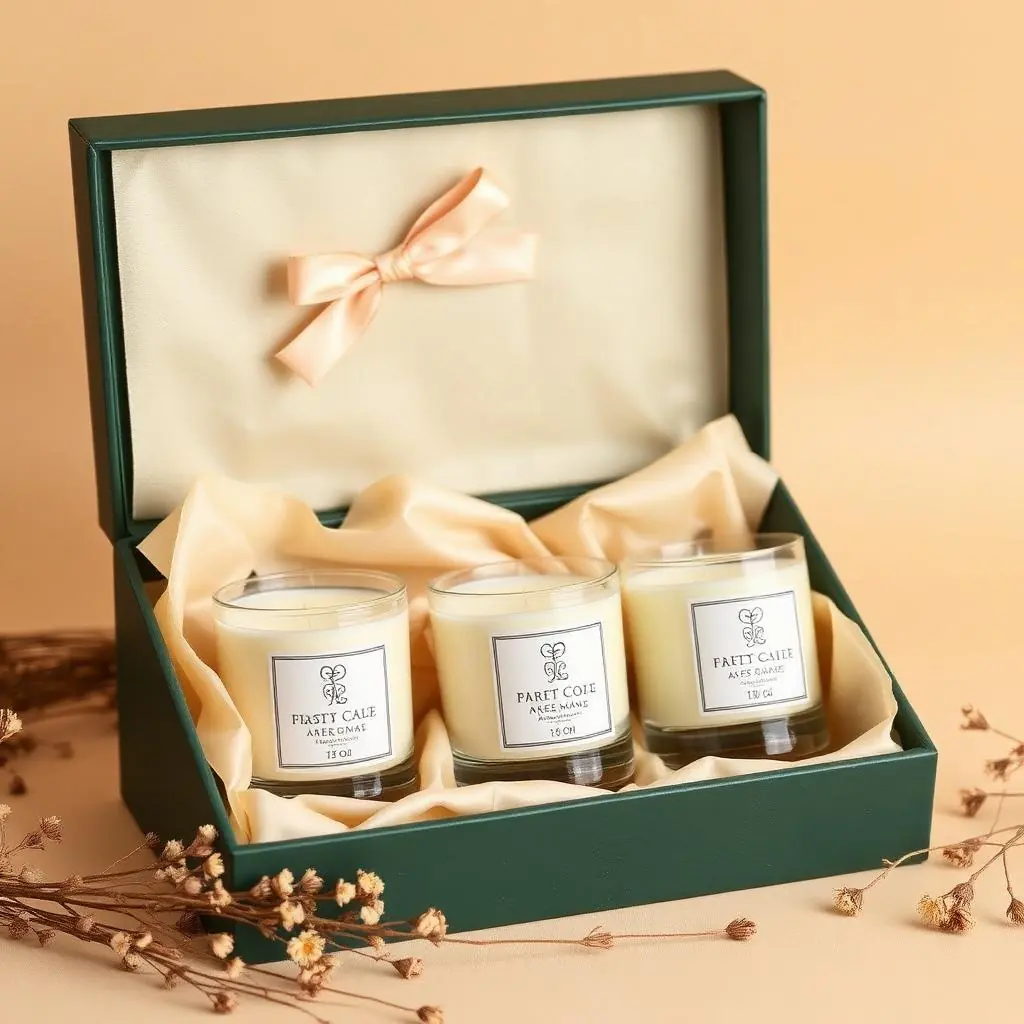
Browse our personalized candles to build one around your own photo or message, or check gifting and bundles for sets starting at $48 one-off, including wedding favors from $18 per candle and corporate gifting from $22 per candle.
If you are shopping for a gift beyond candles, hand-painted mini art makes a similarly personal addition to any keepsake box.
FAQ
How often should you burn candles?
Burn sessions should stay under about four hours at a time, with the candle fully cooled before you relight it. Following the first-burn rule, one hour per inch of diameter for the initial burn, helps prevent tunneling for the rest of the candle’s life.
Are scented candles non-toxic?
A properly engineered candle, matched wick to wax to fragrance load, can burn cleanly across most common wax types, according to industry testing. Scented products in general, including flame-free wax melts, can still generate indoor particles when fragrance is overloaded or ventilation is poor, so moderate use and good airflow matter regardless of format.
Why should you snuff candles instead of blowing them out?
Snuffing a candle avoids the hot wax splatter and smoke plume that blowing it out can create, and it keeps the wick from bending out of position. A straight, trimmed wick burns more evenly on the next lighting, which supports the lower-soot benefits a well-made candle is built for.
What should you check before buying a hand-poured candle?
Look for a specific wick size, a disclosed fragrance range, and any mention of testing against published standards rather than relying on the word “handmade” alone. Batch or pour dates and visible maker process photos are also strong signs the product was actually tested before it reached you.
Sources
- NFPA candle fire statistics
- Flame-free candles are not pollution-free: scented wax melts as a significant source of atmospheric nanoparticles (ESTL)
- Understanding safety standards - National Candle Association