





Aromatherapy Candle Benefits: What Science Supports

An aromatherapy candle can make a room feel calmer, give your evening a cue to slow down, and may modestly help with stress and sleep. It is not a treatment. The research is real but thin, mostly small studies, and the honest summary is “promising, not proven.” This guide separates what the evidence supports from what the marketing implies, then shows you how to pick a candle and burn it safely.
TL;DR
- Aromatherapy candles may help with stress, anxiety and sleep, but Mayo Clinic describes the research as limited. Treat them as a comfort ritual, not medicine.
- Much of the benefit comes from the routine: dim light, a set time, a scent you associate with winding down.
- “Aromatherapy” on a label doesn’t guarantee plant-derived essential oils. Read the ingredient details.
- A candle is still an open flame. Burn it in short sessions, trim the wick, and keep it away from pets and children.
- Pet households need extra care with certain essential oils, especially around cats.
Table of Contents
- What an aromatherapy candle actually is
- The benefits, ranked by how well they’re supported
- Which scents suit which goal
- How to choose an essential oil soy candle
- Perspective: what we’ve learned making candles people actually use
- Burning aromatherapy candles safely
- Candles, air quality and the diffuser question
- Pets and aromatherapy candles
- Build a routine that makes the candle work harder
- Make it personal: candles as gifts
- FAQ
- Sources
What an aromatherapy candle actually is
Aromatherapy is the use of essential oils extracted from plants. An aromatherapy candle is a candle scented, at least in part, with those oils. When the wax warms, scent molecules evaporate into the air and you breathe them in.
The term is not tightly regulated on candle labels. Many candles sold as “aromatherapy” use synthetic fragrance oils, which smell good but are not the same thing as plant-derived essential oils. Practitioners generally say that if you want the potential therapeutic side of aromatherapy, you should look for candles that name the essential oils they use. A fragrance-only candle can still be a lovely thing to light. It just shouldn’t be sold to you as therapy.
The wax matters too. Soy wax burns cooler and slower than paraffin and holds scent well, which is why many aromatherapy candles are soy or a soy blend. The wick matters as well: lead-free wicks are the standard you should expect.
The benefits, ranked by how well they’re supported
Not every claim you read on candle sites carries the same weight. Here is a plain ranking, from best supported to least.
Relaxation and the wind-down ritual
This is the benefit you can count on most, and it needs the least science. Lighting a candle at the same time each evening, dimming the overhead lights and putting your phone down builds a cue. Your brain learns that this scent means the day is over. Health researchers describe aromatherapy as most useful when it sits inside a broader routine that includes good sleep habits or stress management, rather than standing alone.

Stress and anxiety
Mayo Clinic notes that research on aromatherapy is limited, but some studies suggest benefits including relief from anxiety and depression, and better sleep. Small trials are the norm in this field. One example is a pilot randomized controlled study of lychee-scented candles that looked at stress and sleep quality in adults and older adults. It had thirty participants, which is exactly the scale that makes firm conclusions hard.
The practical read: a scent you enjoy may take the edge off a stressful evening. That is a reasonable expectation. A candle will not manage a diagnosed anxiety disorder, and if anxiety is interfering with your daily life, a doctor or licensed mental health professional is the right call.
Sleep
A 2024 literature review on aromatherapy candles and sleep disturbances looked at aromatic candles as a complementary therapy for sleep problems. The overall picture across the field is encouraging but mixed, and often based on small studies. Two cautions apply to bedtime in particular. First, never fall asleep with a flame burning. Second, if you have chronic insomnia or suspect a sleep disorder, see a physician rather than adding more scented products.
A sensible compromise: light the candle during your wind-down hour, blow it out before bed, and let the lingering scent do the work.
Mood and focus
Citrus and mint scents are often described as uplifting and good for concentration, and many people do report feeling more alert around them. The evidence is anecdotal at the candle level, so treat this as personal preference. If a scent lifts your mood, that is a perfectly good reason to keep using it.
Pain and physical symptoms
A Department of Veterans Affairs evidence map of aromatherapy and essential oils covered 26 systematic reviews. It found moderate-confidence evidence that aromatherapy helps with pain in dysmenorrhea. That is a specific finding about specific oils applied in specific ways, and it should not be stretched into a claim that scented candles relieve pain in general.
Which scents suit which goal
People who search for relaxation candle scents usually want a short list. Here is one, framed as common associations rather than guarantees.
| Goal | Scents people commonly choose | Notes |
|---|---|---|
| Unwinding after work | Lavender, sage, chamomile | The classic evening pairing |
| Falling asleep | Lavender, cedarwood, vanilla | Burn earlier in the evening, not in bed |
| Stress on a hard day | Lavender with a bright note such as grapefruit | Brightness keeps lavender from feeling heavy |
| Focus and energy | Peppermint, lemon, rosemary | Better for a desk than a bedroom |
| Gentle mood lift | Orange, bergamot | Light and clean |
Lavender gets all the attention, but it isn’t the only answer. Some people find it flat or even dislike it. We wrote about calming candle scents beyond lavender for exactly that reason. The best calming scent is one you personally find calming.
How to choose an essential oil soy candle
A good aromatherapy soy candle is easy to spot if you know what to check.
- Look for named essential oils. A product page that lists lavender or sage as an ingredient tells you more than the word “aromatherapy” does.
- Ask about fragrance safety. Phthalate-free fragrance is a reasonable baseline when a candle uses any fragrance oil at all.
- Check the wick. Lead-free wicks should be stated.
- Choose a size you’ll finish. An 11 oz candle suits a nightly routine in one room. Smaller sizes are better for trying a new scent.
- Expect honest claims. A seller promising to cure insomnia or anxiety is overpromising.
If you want something ready to light, our RELAX aromatherapy candle is made for evenings like this, and the SAGE relaxing aromatherapy candle and LAVENDER SAGE relaxing candle are good choices if you prefer an herbal profile.
Perspective: what we’ve learned making candles people actually use
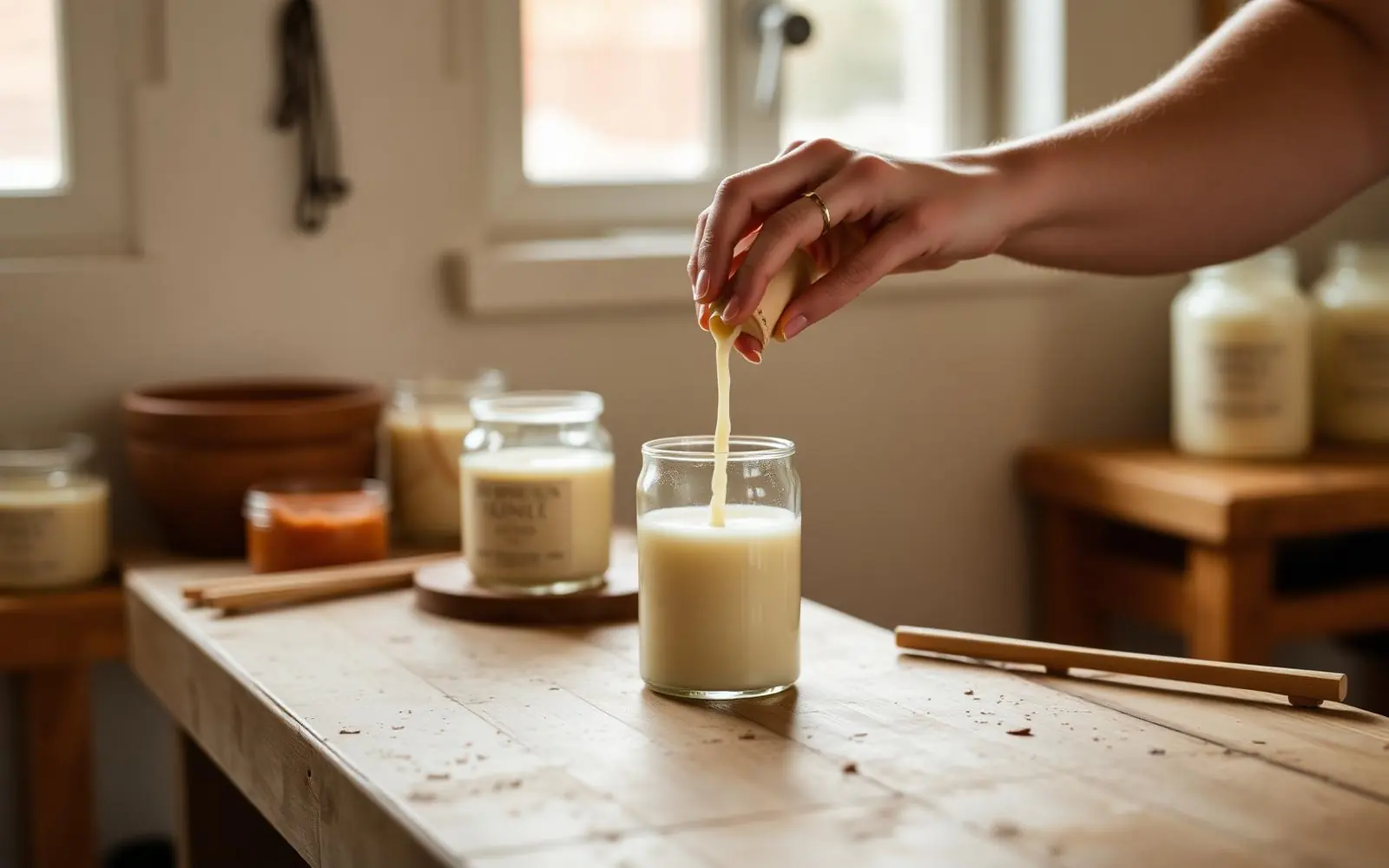
We pour soy candles by hand, and most of our customers aren’t buying a candle for medical reasons. They’re buying a moment: a gift that says “slow down,” a keepsake with a photo on it, a candle for a quiet night. That shapes how we talk about aromatherapy.
First, we’d rather under-promise. The science supports a gentle claim, and we think people deserve a gentle claim. A candle that smells wonderful and gets lit every evening is doing its job.
Second, the ingredients decide whether you can relax about the candle itself. That is why our fragrances are phthalate-free and our wicks are lead-free. If you’re lighting something in the room where you sleep or where your pets live, you shouldn’t have to wonder.
Third, we hand-proof every order before it ships, and personalized orders leave within two days. Most of that care is about print quality, but it comes from the same belief: a candle is something people put in their homes and around people they love, so it should be made carefully.
Finally, pet owners ask us the most questions, and we encourage them to verify essential oil content before burning anything. Scent is lovely. A relaxed cat is lovelier.
— Jake
Burning aromatherapy candles safely
The benefits above disappear quickly if a candle causes a problem. These habits keep your routine safe.
Follow the burn-time rule
The 2026 NFPA educational messages are the source for the “three to four hour” rule people ask about. In practice: burn a candle for no more than four hours at a time, then let it cool for at least two hours before relighting. For a nightly ritual, that is rarely a limitation. One to two hours is plenty.

Trim the wick
Trim the wick to 1/4 inch before every use. This keeps the flame steady and helps prevent black soot marks on walls, jars and ceilings, which usually come from an overgrown wick rather than from the candle itself.
Give candles space
If you light more than one candle in a room, keep them at least 3 inches apart. Too close and they melt each other, flicker and smoke. Place every candle in a sturdy, heat-resistant holder that can’t tip over, and never leave a flame unattended.
Consider flameless for some rooms
NFPA’s guidance points out that candles with real flames are a fire risk even when the wax is non-toxic, and it recommends battery-operated flameless candles as a safer option, particularly with children or pets around. If a nursery or a very busy household is your situation, keeping the flame for adult-only rooms is a sensible rule.
Candles, air quality and the diffuser question
One of the questions readers ask most is whether candles release toxins into the air. Any burning candle puts some combustion byproducts into a room, which is a good reason to ventilate and to avoid burning for long stretches. Quality ingredients help, and so does a trimmed wick. If lung comfort is your priority, it is worth reading a diffuser versus scented candle comparison before deciding which suits your home, especially if anyone in your household has asthma or sensitive airways. Whichever you choose, open a window for a few minutes before and after.
Pets and aromatherapy candles
If you share your home with a cat or dog, the scent question matters as much as the flame question.
According to the Pet Poison Helpline, essential oils in candles are generally a lower risk for pets than active diffusers, but they can still cause respiratory irritation. The larger danger is ingestion or a spill onto a pet. Oils such as tea tree, eucalyptus and cinnamon can be toxic to cats and dogs with concentrated exposure. Signs of respiratory distress include panting, wheezing, coughing and watery eyes. Cats are especially vulnerable because they lack certain liver enzymes needed to process some compounds.
The helpline’s practical advice is simple:
- Always give your pet an exit route so it can leave the room.
- Stop using a scent immediately if you see sneezing or coughing.
- Keep candles where a pet can’t knock them over or lick the wax.
- If your pet has ingested a candle or shows serious symptoms, call your veterinarian or an animal poison hotline right away.
We’ve written more detailed guides on this: are candles safe for cats, are candles safe for dogs, and soy, phthalate-free, lead-free candles for cat owners. For a broader approach, our guide to ventilating first and choosing pet-friendly home fragrance is a good start.
Build a routine that makes the candle work harder
The candle is one ingredient. Here is a simple evening sequence that pairs it with habits that have better support for calming down.
- Set a time. Same hour most nights.
- Dim the room. Turn off overhead lights and screens.
- Trim and light. 1/4 inch wick, sturdy holder, ventilated room.
- Do one slow thing. Stretch, read, journal, or make tea.
- Extinguish before bed. Snuff the flame and let the scent linger.
If you do this for a couple of weeks and still feel anxious or sleepless most nights, that is useful information. It’s a signal to talk with a clinician, not to buy a stronger candle.
Make it personal: candles as gifts
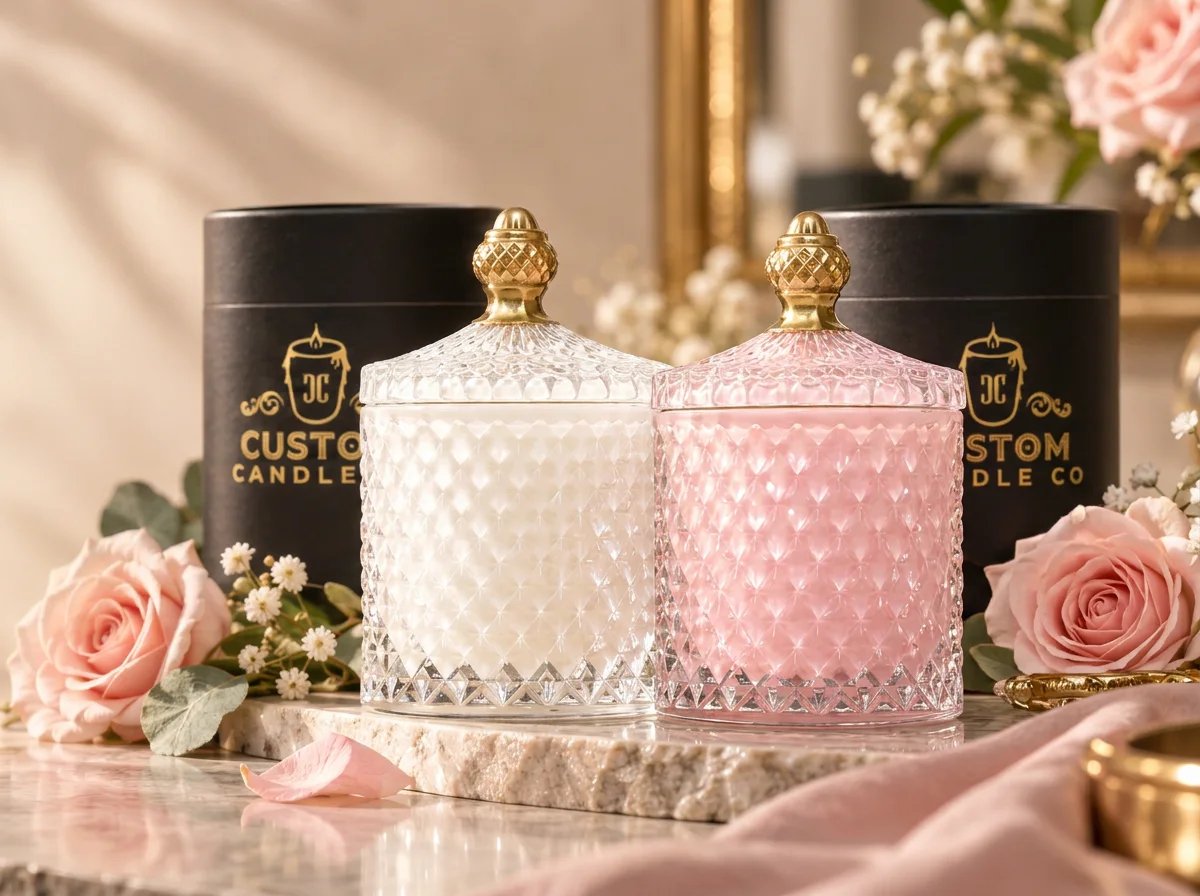
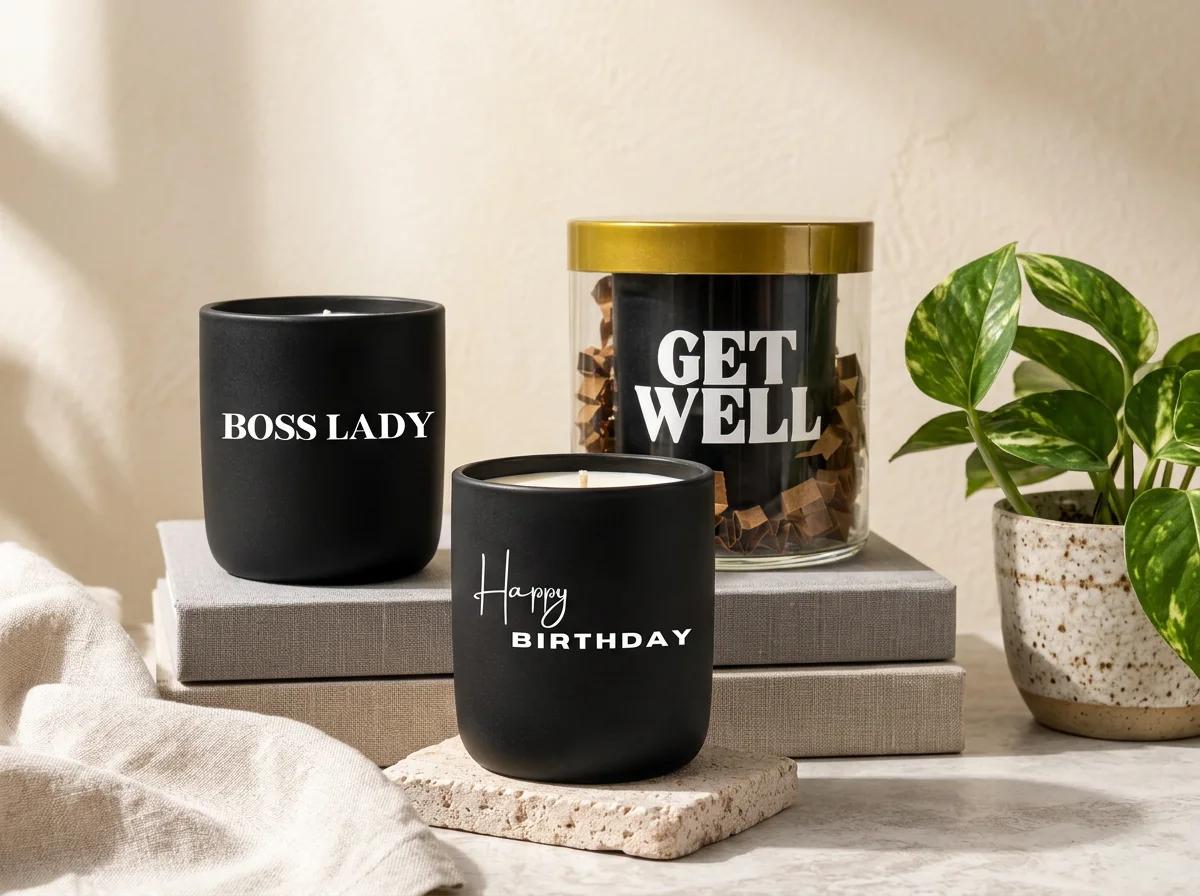
Aromatherapy candles are one of the easiest gifts to get right, because the message is built in: rest. A calming scent with a photo or a few handwritten words makes it a keepsake as well as a candle. We print photos and custom text on soy candle labels, proof each one by hand, and include keepsake packaging and a handwritten card as standard. Browse personalized candles or photo candles for a single gift.
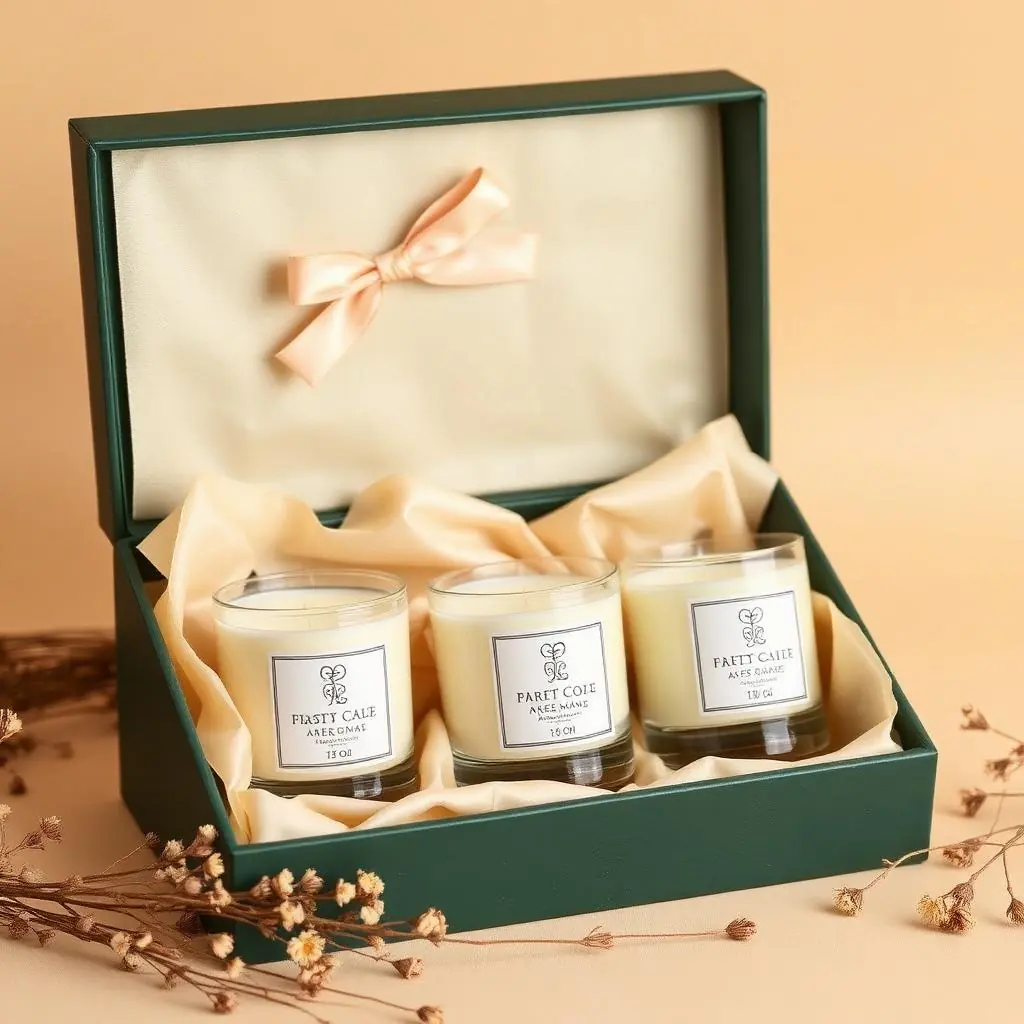
For events and larger orders, our gifting page lists wedding favors from $18 per candle, corporate and client gifting from $22 per candle, and boxed gift sets from $48. A calming candle is a thoughtful thank-you for guests, a team or a client who has had a long year.
FAQ
What does an aromatherapy candle do?
It releases the scent of essential oils as the wax warms, which can help a room feel calmer and cue you to relax. Research suggests possible help with stress, anxiety and sleep, but the evidence is limited and mostly small studies. Think of it as a complement to good habits, not a treatment.
What is the 3 hour candle rule?
The guidance from NFPA is to burn a candle no more than four hours at a time, then let it cool for at least two hours. This prevents overheating and excess soot. Always trim the wick to 1/4 inch before relighting.
Do candles release toxins into the air?
Burning any candle produces some combustion byproducts, so ventilate the room and keep the wick trimmed to reduce soot. Ingredients matter: we use phthalate-free fragrances and lead-free wicks. People with asthma or other respiratory conditions should check with their doctor before burning candles regularly.
Are essential oil candles safe for pets?
Candles are generally a lower risk than diffusers, according to the Pet Poison Helpline, but some oils can irritate airways or be toxic if ingested. Always give pets an exit route, and stop using a scent if your pet sneezes or coughs. Call your vet if you have any concern.
Sources
- Home Remedies: What are the benefits of aromatherapy? Mayo Clinic News Network
- Inhalation effect of lychee-scented candles on stress and sleep quality: a pilot randomized controlled study
- Aromatherapy and Essential Oils: A Map of the Evidence, U.S. Department of Veterans Affairs
- NFPA Educational Messages, 2026 edition
- Updates on Essential Oils, Pet Poison Helpline
- Diffuser vs. scented candle for your lungs