



55–60% Less Climate Impact: Candles That Don’t Raise Indoor VOCs

Candles made with very high shares of renewable raw material cut climate impact by roughly half compared to standard paraffin, according to Nordic Swan’s own testing. But that’s only half the equation. Scented and colored candles, along with several wax-warmer products, can raise indoor VOC and particulate levels more than a plain flame ever would. The rest of this guide breaks down exactly what to buy and how to burn it to keep both problems in check.
TL;DR:
- Candles made with at least 90% renewable raw materials typically produce about 55 to 60% less climate impact than paraffin candles, which are mainly petroleum byproducts.
- Burning scented candles releases terpenes that react with indoor ozone to form secondary particles, increasing indoor particulate matter and potentially affecting air quality.
- To reduce indoor pollution, select unscented candles, trim wicks, ensure proper ventilation, and limit burns to two to three hours per session.
- Authentic eco claims require transparency about renewable content, wick composition, sourcing, and emissions testing, not just vague marketing language.
- Recyclable containers, especially glass and ceramic, and responsible disposal practices can significantly offset the environmental footprint of candles.
Table of Contents
- What Wax Type Does to Your Eco Impact Candles’ Footprint
- Do Burning Candles Pollute Indoor Air?
- How Do You Know an Eco Claim Is Real?
- A Buying and Burning Checklist for Lower-Impact Candles
- Are Wax Warmers Cleaner Than Candles? Common Myths, Corrected
- How Custom Candle Co. Applies This Checklist
- Does Candle Packaging Affect Its Environmental Footprint?
- A Note on Ritual, Responsibility, and Real Trade-Offs
- Looking for a Personalized Candle That Fits This Checklist?
- Sources
- FAQ
What Wax Type Does to Your Eco Impact Candles’ Footprint
Paraffin is the wax most candles are still made from, and it’s a byproduct of crude oil refining. That fossil origin is exactly why paraffin candles carry a heavier climate footprint than plant or animal-based alternatives, and it isn’t the manufacturing that does the damage. It’s the burning.

Nordic Swan’s life-cycle assessment of candles found that combustion accounts for about 70% of a paraffin candle’s total climate impact. Candles built from at least 90% renewable raw material, by contrast, see that number drop to around 17%, because the emissions hotspot shifts upstream to how the raw material was farmed and processed. Overall, those high-renewable candles show roughly 55 to 60% less climate impact than a 100% paraffin candle over their full life cycle.
Not all “plant-based” wax is equal, though. Here’s how the common options stack up:
- Soy wax burns cleaner than paraffin and is widely available, but soy monocropping carries its own land-use and pesticide concerns depending on the source.
- Palm wax raises the same deforestation and habitat-loss issues tied to palm oil in food and cosmetics, which is why credible ecolabels restrict it.
- Coconut wax tends to burn slowly and cleanly, though it’s rarely grown near the markets where most candles sell, adding shipping emissions.
- Rapeseed wax is often grown regionally in Europe and North America, cutting transport distance.
- Beeswax is a genuinely renewable byproduct of beekeeping, but supply is limited and sourcing quality varies a lot by producer.
A candle labeled “plant-based” but shipped halfway around the world can lose ground to a well-sourced local blend. Distance matters as much as the plant it came from.
Do Burning Candles Pollute Indoor Air?
Yes, and the effect is measurable within minutes. A 2025 study in Scientific Reports found that burning scented candles raises indoor PM2.5 and PM1 concentrations, with elevated particle levels persisting in adjacent rooms and detectable shifts in the indoor airborne microbiome, not just the room where the candle burned.
The chemistry behind fragrance is a big part of the story. Scented candles release terpenes, the aromatic compounds responsible for scents like citrus, pine, and lavender. Those terpenes react with ozone already present indoors to form secondary organic aerosols, essentially building new particles out of thin air. Wax warmers and melts complicate the “safer” narrative here, since research using PTR-TOF-MS measurement found terpene emission factors substantially higher for warmers and melts than for scented candles.
A few conditions make emissions noticeably worse:
- Visible sooting from an oversized flame or drafty room signals incomplete combustion and higher PAH output.
- Untrimmed wicks longer than a quarter inch burn hotter and dirtier.
- Poor ventilation lets both particulate matter and VOCs accumulate instead of dispersing.
- Extended single burns, especially past the container’s rated burn time, push emissions higher as the wax pool deepens.
Older EPA reviews also flagged specific combustion byproducts worth knowing: acetaldehyde, formaldehyde, acrolein, and polycyclic aromatic hydrocarbons among them, alongside historical evidence that metal-core wicks released measurable lead indoors before most regions banned them. That history is a big reason wick composition still belongs on any buying checklist today.
If you burn candles regularly, the fixes are simple: pick unscented or lightly scented options, crack a window, trim the wick before every burn, and cap single sessions at two to three hours.
How Do You Know an Eco Claim Is Real?
Marketing terms like “natural” or “eco-friendly” carry no legal weight on a candle label. A genuine ecolabel does. The Nordic Swan Ecolabel runs on generation 3.0 criteria that require candles to use at least 90% renewable raw material, ban palm and soy oil outright over their social and environmental risks, restrict fragrance chemicals, limit wick materials to eliminate metal cores, and require soot-index testing before certification.
That 55 to 60% climate reduction figure only means something when it’s tied to a specific, testable standard, not a vague label claim.
A few checks separate a real sustainability claim from marketing copy:
- Ask for the percent renewable raw material on the spec sheet, not just a general “plant-based” claim.
- Confirm the wick composition in writing, specifically that it contains no metal core.
- Look for soot-index or emissions test results, even informal ones, rather than taking cleanliness claims at face value.
- Request raw-material traceability, meaning the seller can say roughly where the wax and fragrance oils came from.
Pro Tip: If a brand can’t answer where its wax came from within a sentence or two, that’s usually a sign nobody asked the question before you did.
A Buying and Burning Checklist for Lower-Impact Candles
Getting both the climate and the air-quality benefit means shopping and burning differently, not just one or the other.
Start with the label:
- Choose unscented or lightly fragranced candles when indoor air quality is the priority; fragrance load is the single biggest driver of VOC and terpene output.
- Check for a stated renewable-material percentage, ideally 90% or higher.
- Confirm the wick contains no metal, cotton or wood cores only.
- Favor a recyclable or reusable container, glass and ceramic vessels can become plant pots or storage jars long after the wax is gone.
- Look for sourcing transparency, brands willing to disclose where their fragrance oils and phthalates (or lack thereof) come from tend to have less to hide elsewhere.
Then apply a use routine:
- Ventilate the room, even a cracked window measurably reduces particulate buildup during and after burning.
- Trim the wick to a quarter inch before every light.
- Cap burn sessions at two to three hours, then let the wax fully cool before relighting.
- Stop burning immediately if you see soot or a flickering, smoking flame, it means something in that formulation isn’t burning clean.
- Rotate which room you burn in rather than concentrating all candle use in one poorly ventilated space.
If allergies are a concern in your household, beeswax tends to be the gentler option since it carries fewer added fragrance compounds by nature. Rapeseed wax is worth seeking out if you want a plant-based option without the palm or soy supply-chain questions. And if you’re weighing a flame against a wax warmer, know that a flame-free device isn’t automatically the cleaner choice. The chemistry, not the flame, is what to interrogate.
Are Wax Warmers Cleaner Than Candles? Common Myths, Corrected
“Natural” doesn’t mean low-emission. Plenty of soy and coconut candles carry heavy fragrance loads that outpace a modestly scented paraffin candle in VOC output, since the fragrance additive, not the base wax, usually drives emissions.
“Flame-free is safer” doesn’t hold up either. Wax warmers and melts can trigger new particle formation events, producing indoor nanoparticle concentrations comparable to combustion sources, all without a visible flame in sight.
And “100% non-toxic” is a marketing phrase, not a scientific one. Any combustion, and even some non-combustion terpene chemistry, releases some level of particulate matter or VOC. The realistic goal isn’t zero emissions. It’s minimizing exposure through lower fragrance load, better ventilation, and honest sourcing.
Three things worth remembering: renewable content drives climate impact, fragrance drives indoor-air impact, and wick material is a health question regulators already answered once.
How Custom Candle Co. Applies This Checklist
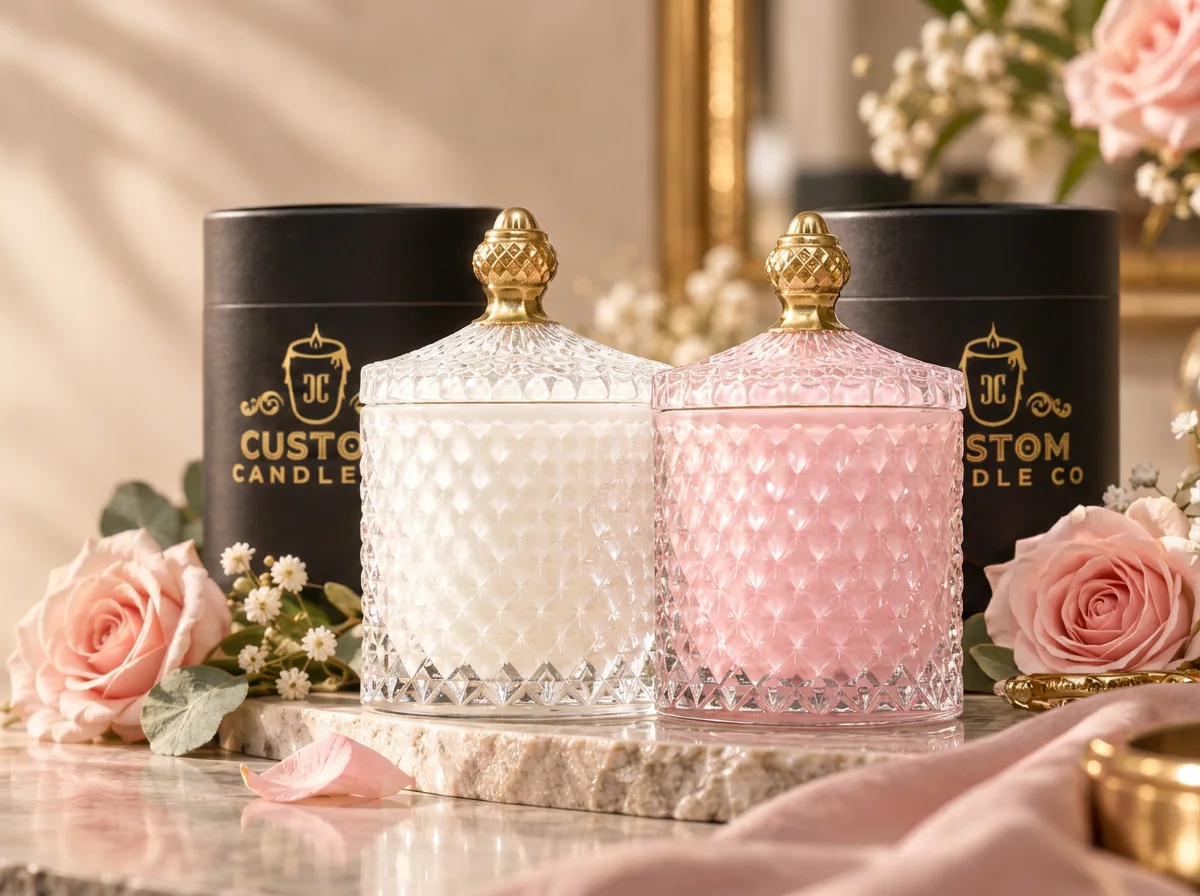
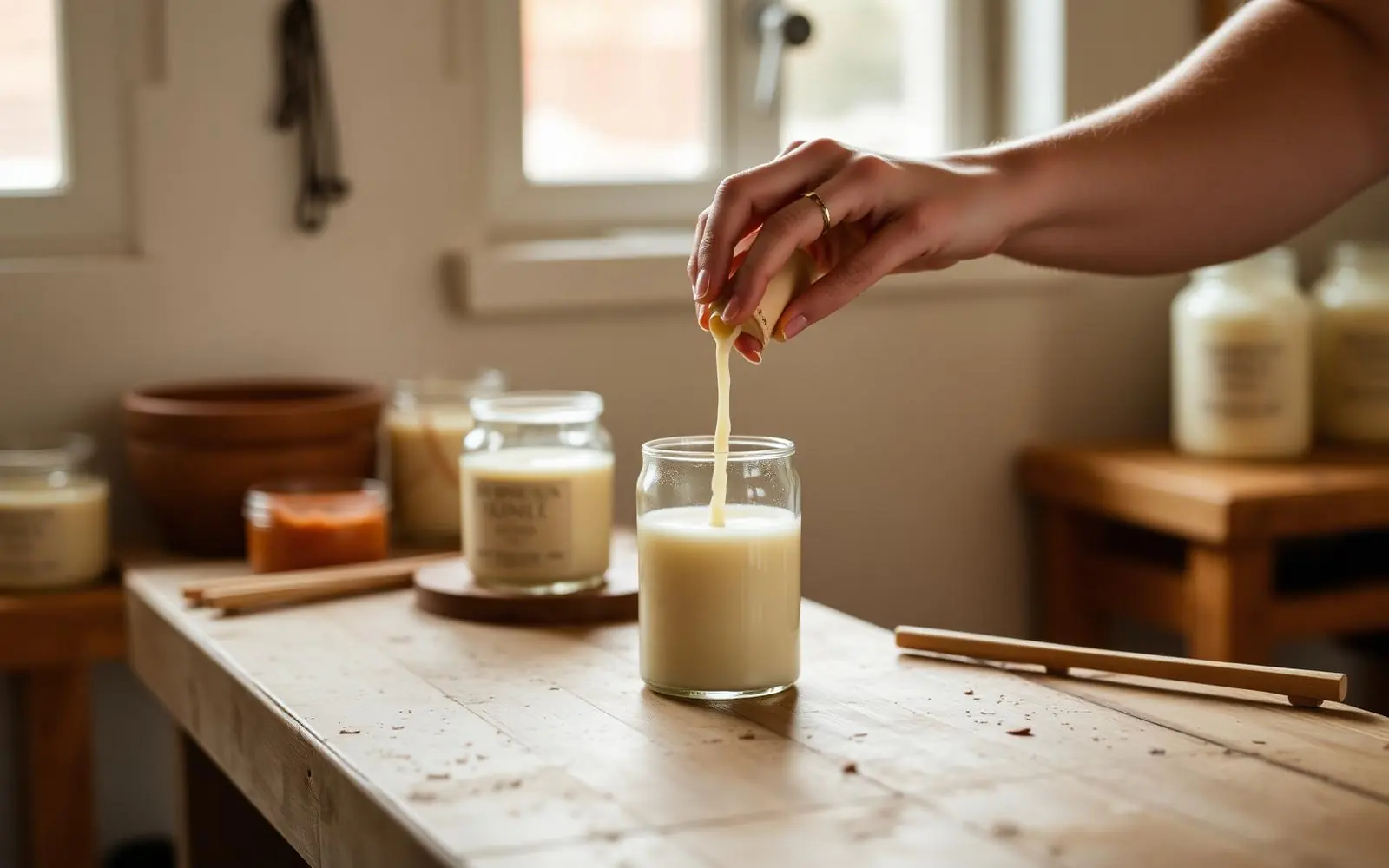
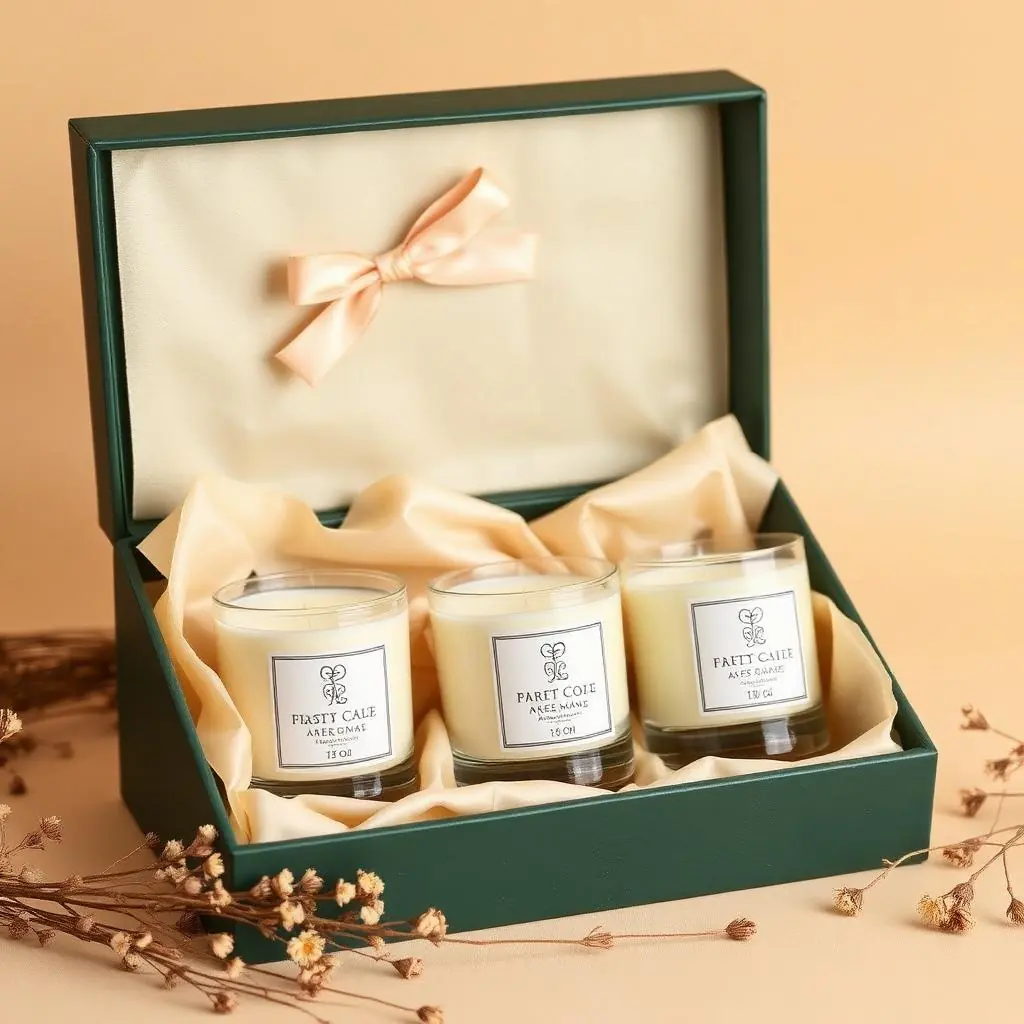
Custom Candle Co. builds its personalized soy candles around several of the same checkable features this guide recommends: hand-poured soy wax, phthalate-free fragrances, and lead-free wicks, backed by a proofing process before anything ships and two-day turnaround once it does. Every order arrives in keepsake packaging with a handwritten card.
Whatever brand you buy from, ask directly: what percent is renewable, what’s the wick made of, is fragrance disclosed, and has soot or VOC testing ever been done? Request documentation when a seller makes a sustainability claim, don’t just take the label’s word for it.
Does Candle Packaging Affect Its Environmental Footprint?
Yes, and it’s a part of the equation buyers frequently skip. The container a candle ships in, and what happens to it after the wax is gone, adds a second layer to its total footprint beyond wax and wick.
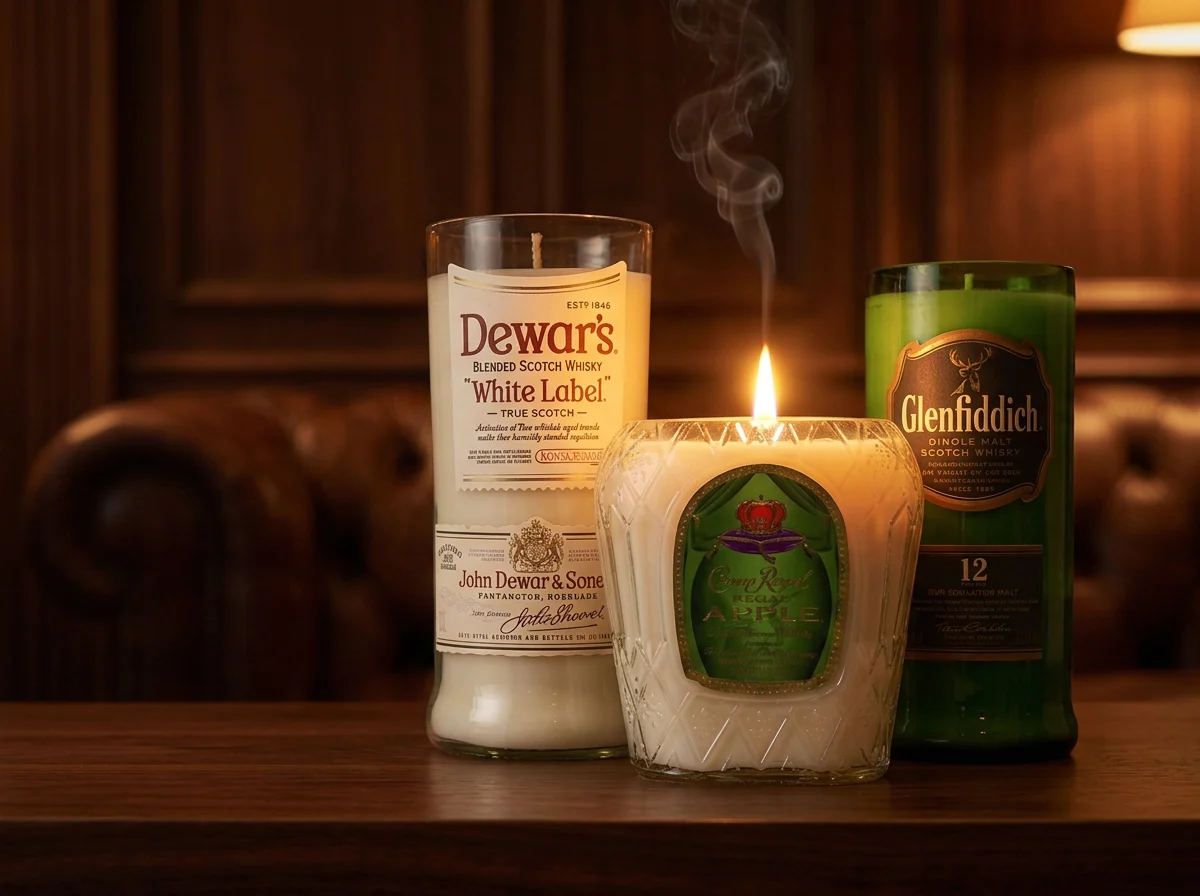
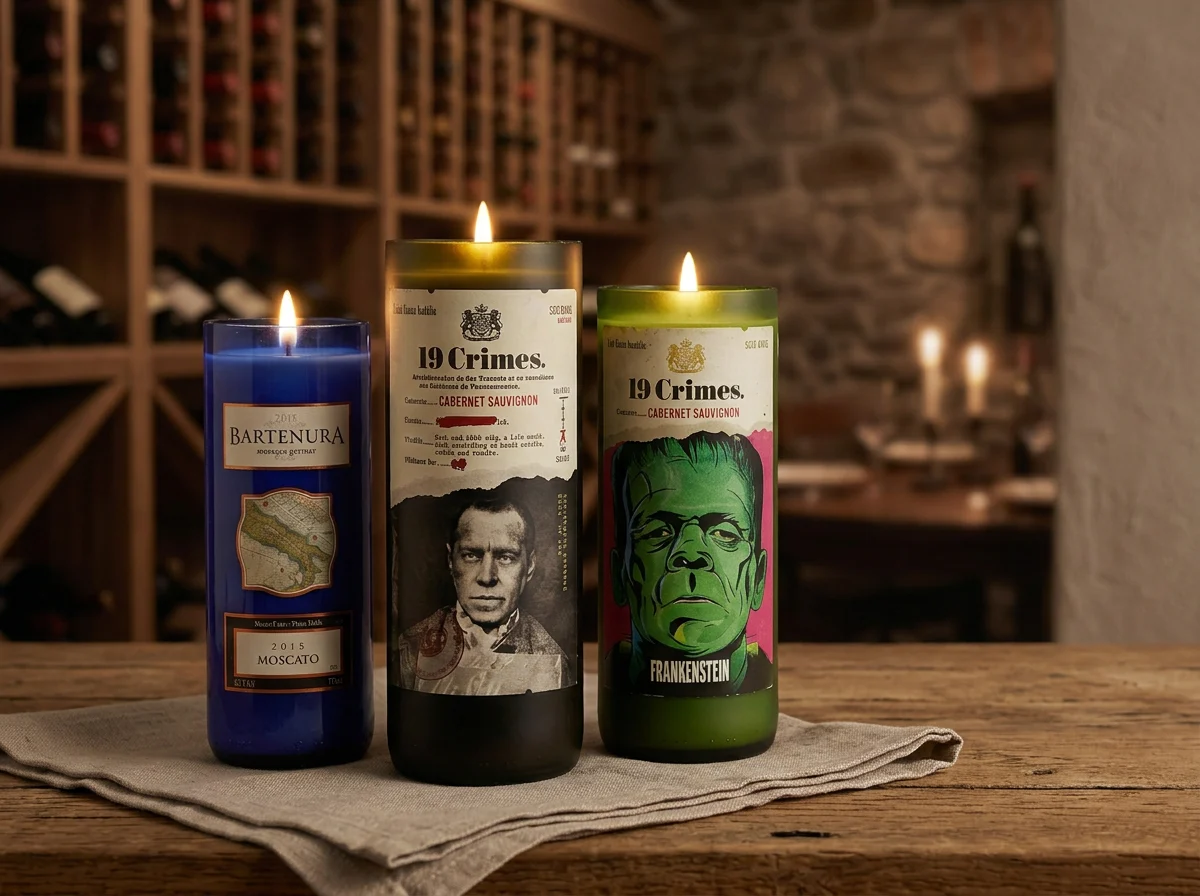
Glass and ceramic jars have a real advantage here: they’re reusable indefinitely as storage containers, planters, or drinking glasses long after the last burn. A candle poured into a repurposed liquor or wine bottle stretches that advantage further, since it diverts a container that would otherwise go straight to recycling or landfill into a second useful life before it even leaves the shelf. Tin containers recycle easily through most municipal programs, though they’re rarely reused as-is the way glass is.
Outer packaging matters too. Cardboard boxes and paper-based cushioning break down or recycle far more easily than plastic shrink-wrap or foam inserts, which is worth checking before checkout if packaging waste bothers you. Shipping materials count toward a candle’s footprint just as much as the wax itself, even though they rarely appear on a product label.
Disposal habits shift the numbers further. A candle jar that gets rinsed and reused for years effectively spreads its manufacturing footprint across a much longer useful life than one that gets tossed the moment the wax runs out. Wax residue itself should go in the trash, not down a drain, since it can clog pipes and doesn’t break down in water treatment systems the way it does in a landfill.

The takeaway is simple: a low-impact wax choice can be undercut by wasteful packaging, and a reusable container can offset a slightly heavier wax footprint over time.
A Note on Ritual, Responsibility, and Real Trade-Offs
Candles matter to people for reasons that have nothing to do with life-cycle assessments, a scent tied to a memory, a flame that makes a room feel calmer. None of the evidence here argues for giving that up. It argues for burning smarter: crack a window, skip the heaviest fragrances, and ask the maker the same four questions you’d ask about any product claiming to be better for the planet. Transparency is the cheapest upgrade available to any candle habit.
— Jake
Looking for a Personalized Candle That Fits This Checklist?
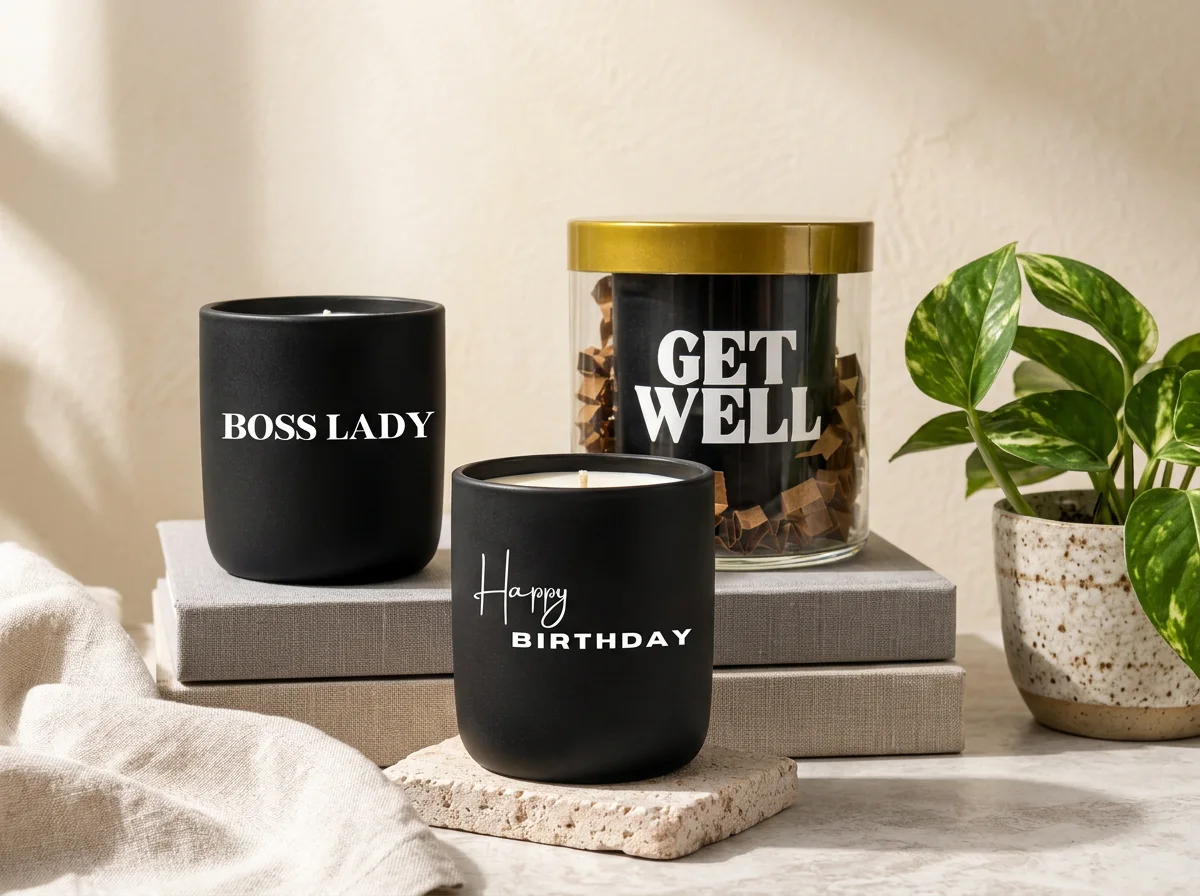
If the checklist in this guide is what you’re shopping against, Customcandleco’s personalized soy candles are built around the same fundamentals: hand-poured soy wax, phthalate-free fragrances, and lead-free wicks, with every order proofed by hand before it ships within two days.

That combination matters most for gifts and keepsakes, where you want something that looks right, burns clean, and doesn’t carry the sourcing question marks a mystery candle from a big-box shelf often does. Every order ships in keepsake packaging with a handwritten card, which counts for a lot when the candle is a wedding favor or a corporate gift rather than something you’re buying just for yourself. Weddings and favors start at $18 per candle, and corporate gifting runs from $22 per candle for orders that need to make a good impression at scale.
Browse personalized candles built around your own photos and wording, or head to the gifting collection for boxed sets starting at $48. If you have questions about fragrance content or wax sourcing before you order, ask. That’s exactly the kind of question this guide encourages you to ask any candle maker.
This article is general information, not a substitute for advice from a qualified doctor. Consult a qualified healthcare professional about your own circumstances before acting on anything here.
FAQ
What Is the Healthiest Candle Brand to Burn?
There’s no single “healthiest” brand, since air quality impact comes down to formulation, not a name on the label. Look for unscented or lightly fragranced options with a disclosed, no-metal wick and a stated renewable-material percentage, features Custom Candle Co. lists for its own hand-poured soy candles, phthalate-free fragrances, and lead-free wicks.
What Is the Most Eco-Friendly Candle?
Candles made with at least 90% renewable raw material carry roughly 55 to 60% less climate impact than a fully paraffin candle, according to Nordic Swan’s life-cycle testing. Locally sourced rapeseed or beeswax candles in reusable glass containers tend to score especially well since they cut both raw-material and transport impact.
Are There Any 100% Non-Toxic Candles Available?
No candle burns with zero emissions, since combustion always produces some particulate matter and VOCs regardless of wax type. The more useful goal is minimizing exposure by choosing low-fragrance, no-metal-wick candles and ventilating the room while burning.
What Is the 3 Hour Candle Rule?
The 3 hour rule is a common industry recommendation to burn a candle for no more than two to three hours at a time before extinguishing it and letting it cool. Longer single burns raise the wax pool temperature, which drives up soot and pollutant output and shortens the container’s usable life.