



Start With the Wick: Fix Candle Scent Throw for Makers and Shoppers

Scent throw is how far and how strongly a candle’s fragrance spreads through a room, and it comes in two forms: cold throw when it’s unlit, hot throw while it’s burning. The single biggest lever for improving it is building a full, even melt pool with a wick sized correctly for the vessel. Fix that, and most weak throw complaints disappear. Shoppers should look for candles that mention tested wick sizing; makers should burn test batches before scaling up.
TL;DR:
- Using the correct wick size is crucial, as an undersized wick prevents full melt pool formation, reducing scent vaporization and hot throw strength.
- Soy wax generally requires 8 to 12 percent fragrance oil and a 10 to 14 day cure time, which is longer than paraffin’s typical curing period.
- Weak hot throw often stems from wick and melt pool issues rather than fragrance load, so adjusting wick size should precede increasing fragrance concentration.
- A strong initial burn and proper curing are essential, especially for soy candles, to improve scent throw before considering fragrance adjustments.
- Consistent testing of one variable at a time, along with a burn log, enables precise identification of issues affecting scent performance.
Table of Contents
- Cold Throw vs. Hot Throw: What’s Actually Happening
- What Actually Controls Scent Throw
- The Priority Order for Fixing Weak Scent Throw
- A Fast Diagnostic Flow When Throw Is Weak
- How Custom Candle Co. Builds For Better Scent Throw
- What Actually Moves the Needle on Scent Throw
- Get Scent Throw Handled Before You Even Light the Wick
- Sources
- FAQ
Cold Throw vs. Hot Throw: What’s Actually Happening
Cold throw is the smell you get from an unlit candle, usually from a few inches away. It comes from fragrance oil molecules slowly evaporating off the wax surface at room temperature. Hot throw is the smell that fills a room once the candle is lit, driven by heat vaporizing fragrance out of the melt pool. These are two separate mechanisms, and a candle can nail one while flopping on the other.
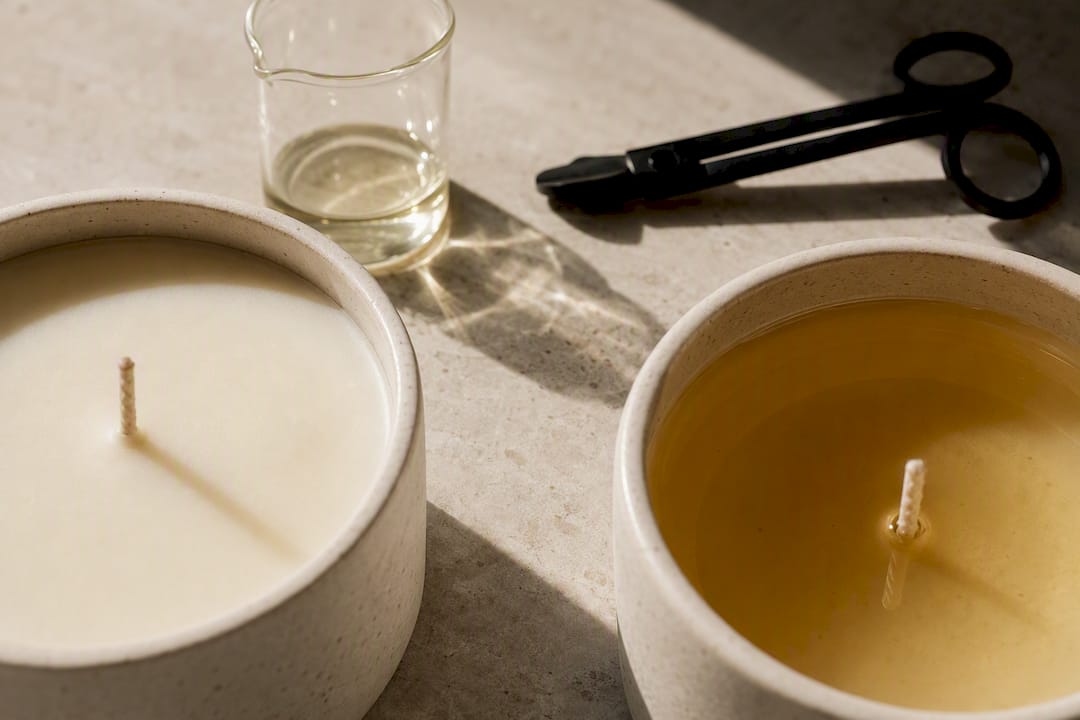
That distinction trips up a lot of buyers. A candle can smell fantastic straight out of the box and then go nearly silent once you light it, because a weak wick never builds a melt pool hot enough to push scent into the air. The reverse happens too: a candle with almost no cold throw can bloom into a strong hot throw once it’s burning, because some fragrance oils need heat to volatilize properly.
Here’s how to test each one:
- Cold throw test: Sniff the unlit candle from about 12 inches away, in a still room with no competing smells.
- Hot throw test: Light it, let a full melt pool form, then sniff from roughly 2 meters away.
- Compare the two: If cold throw is strong but hot throw is weak, suspect the wick or melt pool. If both are weak, suspect fragrance load or cure time.
What Actually Controls Scent Throw
Wax type sets the ceiling for how a candle performs before you even light the wick. Paraffin tends to project fragrance aggressively because it has a lower melt point and releases oils fast. Soy wax binds fragrance more tightly into its molecular structure, which means it generally needs a higher fragrance load and a longer rest before it throws well. Beeswax has a higher melt point and releases scent more slowly, giving a subtler cold throw but a sustained hot throw once the pool is established. Blends split the difference, and that’s exactly why so many commercial candles use a soy-paraffin mix.
Fragrance load matters just as much as wax choice. Soy candles typically need 8 to 12 percent fragrance oil by weight to throw well, compared to lower loads that work fine in paraffin. Push past what the wax can hold and you get sweating, that greasy film on the surface, or oil that never binds and just sits there doing nothing for scent.
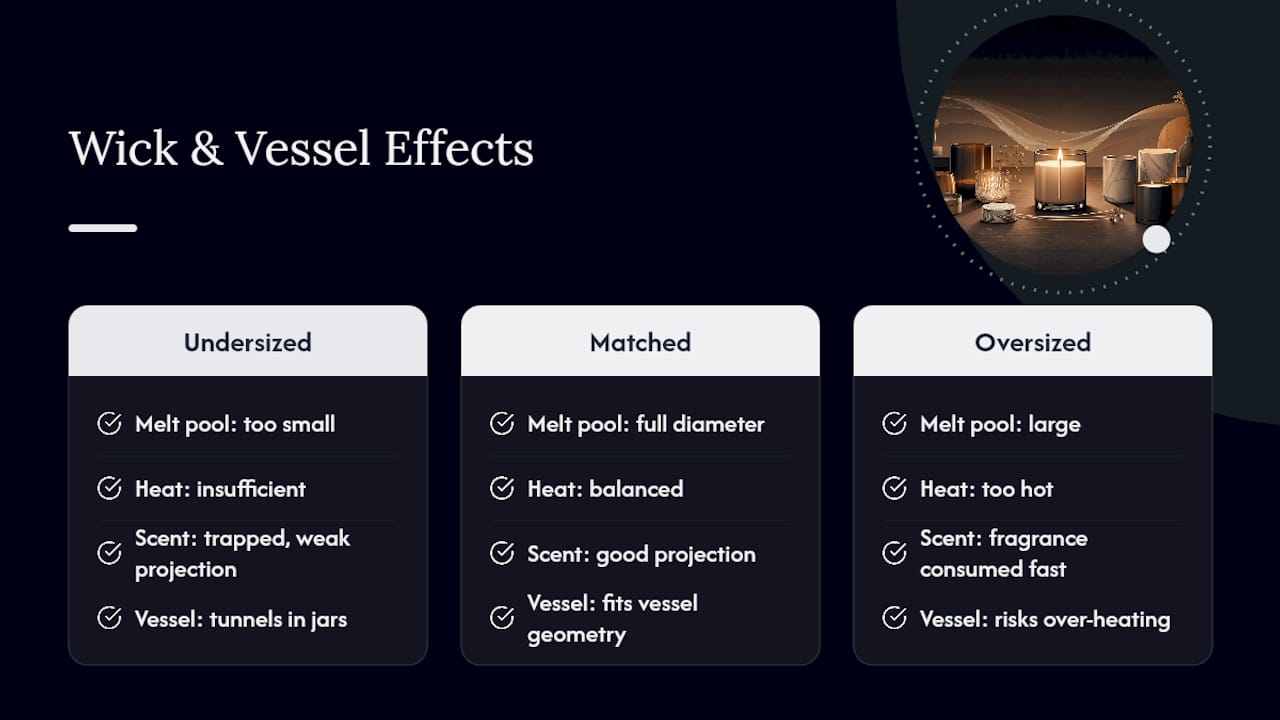
Wick sizing is where most weak-throw problems actually live. A wick that’s too small can’t generate enough heat to melt the full diameter of wax, so fragrance trapped near the edges never vaporizes. A wick that’s too large burns hot enough to consume fragrance too fast, which can actually reduce projection instead of boosting it. Vessel geometry compounds this: a wide, shallow jar needs a different wick (or multiple wicks) than a tall, narrow one, because the melt pool has to reach the walls without tunneling down the center.
Fast fact: Soy wax generally needs 8 to 12 percent fragrance load and 10 to 14 days of cure time for optimal throw, according to testing from Royal Flame Candle Co. That’s roughly two weeks longer than most paraffin blends need before they hit peak performance.
Cure time is the variable most people skip, and it’s the reason a candle that smells weak on day one can smell completely different on day 12. Room size, airflow, and placement round things out. Fragrance disperses fastest in a closed, still room and gets diluted quickly near open windows, fans, or HVAC vents.
The Priority Order for Fixing Weak Scent Throw
Fixing scent throw isn’t guesswork if you tackle the variables in the right order. Here’s the sequence that solves the most problems with the least trial and error.
- Prime with a proper first burn. Trim the wick to a quarter inch, then burn for one to two hours or until wax melts edge to edge. Keep the room closed for the first 30 minutes so you get an honest read on hot throw.
- Respect burn-length limits. Burn in two to four hour sessions, never much longer, and trim to a quarter inch before every relight. Burning past four hours straight can overheat the wax and break down fragrance rather than improve it.
- Let it cure before judging it. Paraffin candles often perform well within a few days, but soy needs that 10 to 14 day window before you write off a scent as weak.
- Match fragrance type to expectations. Synthetic fragrance oils generally throw louder than essential oils, so if a candle uses essential oils, expect a quieter, closer-range scent rather than a room-filling one.
- Scale to the space. A single jar candle can handle a small bathroom or bedroom; a living room or open kitchen usually needs two candles burning or one candle with multiple wicks. Keep candles away from drafts, doorways, and air vents.
- Test one variable at a time. If you’re making candles yourself, change only the wick size or only the fragrance load between batches, never both, so you know exactly what moved the needle.
Pro Tip: Keep a simple burn log with wick size, fragrance load, and cure date for every test batch. Patterns that feel invisible after one candle become obvious after five.
For deeper guidance on picking the right wick for your wax type, Latvian Candles’ wick guide breaks downsizing by wax and vessel diameter in more detail than most product listings ever will.
A Fast Diagnostic Flow When Throw Is Weak
When a candle underperforms, work through this sequence instead of randomly swapping ingredients:
- Run the cold test first. Sniff unlit from 12 inches. If it’s weak, the problem is almost always fragrance load or cure time, not the wick.
- Run the hot test next. Burn to a full melt pool, which usually takes one to three hours depending on vessel size, then sniff from about 2 meters. Weak hot throw despite a good cold throw almost always points to wick size or melt pool depth.
- Apply the fast wins in order. Step the wick size up or down one notch, re-test after a full cure, then check whether fragrance was added at the right pour temperature.
- Know when to walk away from the combo. If you’ve tested wick, load, and cure and hot throw is still flat, the fragrance oil and wax likely just don’t pair well. Some oils bind poorly with soy specifically, and switching wax type solves it faster than more testing.
Wick testing beats cranking up fragrance load almost every time weak hot throw is the complaint. Overloading fragrance past what the wax can hold causes sweating or a poor bind long before it fixes the actual scent output.
How Custom Candle Co. Builds For Better Scent Throw
Every candle pours start as hand-poured soy wax, formulated with phthalate-free fragrances and lead-free wicks selected for the vessel size, not just dropped in as a default. That wick-to-vessel matching is the same principle covered above: get it wrong, and even a well-loaded candle throws poorly.
Each order goes through a hand-proofing process before it ships, checking label accuracy and presentation, and orders leave the workshop promptly. Consistent cure schedules and tested wick sizing are exactly the kind of quality controls that head off the sweating, tunneling, and weak-hot-throw complaints covered above, before a candle ever reaches your door.
What Actually Moves the Needle on Scent Throw
Most candle advice obsesses over fragrance oils, chasing stronger blends or higher concentrations, when the wick is usually the real bottleneck. That’s the biggest gap between conventional wisdom and what the testing data actually shows: people troubleshoot the ingredient they can see and skip the mechanical variable that’s actually failing.
Cure time gets treated as an afterthought too, something you wait out rather than something you test. But a soy candle judged on day two and a soy candle judged on day twelve can seem like two different products. If you’re a maker, that means your quality control needs a calendar built in, not just a recipe.
My honest priority order for anyone chasing better throw: fix the wick first, respect the cure window second, and only then start adjusting fragrance percentages. Skipping straight to “add more fragrance oil” is the single most common mistake, and it’s usually the one that causes sweating and wasted batches instead of solving anything.
— Jake
Get Scent Throw Handled Before You Even Light the Wick
If you’d rather skip the trial-and-error entirely, Custom Candle Co. builds that testing into every order instead of leaving it to chance. Every candle is hand-poured in soy wax with a wick matched to the vessel, phthalate-free fragrance dialed to a load that’s actually been tested for that wax, and a hand-proofing check before anything ships.

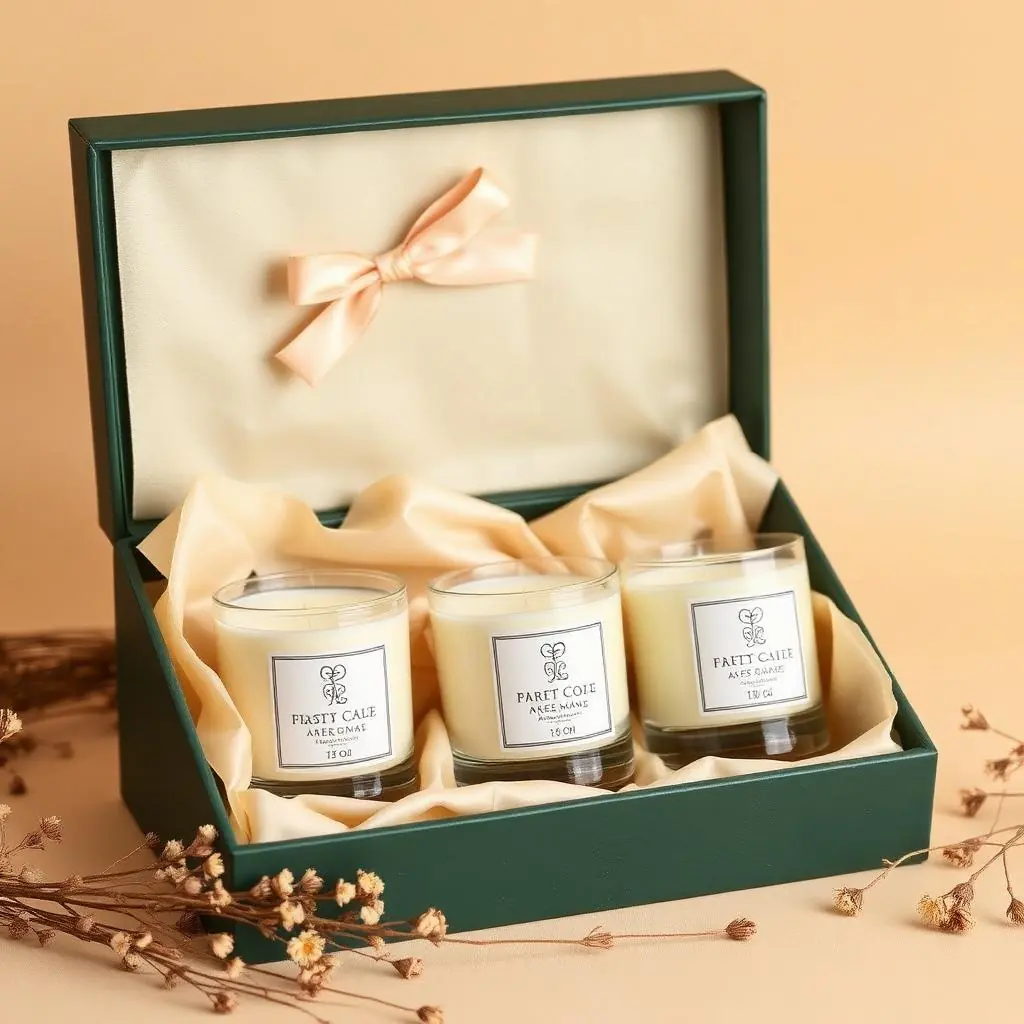
That matters most for gifts, where you don’t get a second chance to fix a candle that throws weak on arrival. Whether you want a personalized photo candle for a birthday or a full gift set for a wedding or corporate order, the fragrance performance is built in before it ever reaches a checkout. Head to the customization page to pick your wax, scent, and label, and orders ship within two days of proofing.
Sources
For readers who want to go deeper on any single variable, a few outside resources cover ground this guide only touches on. The Fragrance Materials Association publishes safety and ingredient guidance relevant to fragrance load decisions. For hands-on soy candle maintenance, Stars and Cents’ care guide walks through burn habits that extend both scent life and jar life.
- Candle Scent Throw Explained: What It Means & Why Strength Varies – AROMU
- Candle Scent Throw Explained: Hot Throw vs. Cold Throw (Royal Flame Candle Co.)
- Candle Scent Throw: Why It’s Weak, and How to Fix It – Waxverse
- How Candle Scent Throw Works – MBur Candle Co.
FAQ
How do I get the best scent throw when making candles?
Prioritize wick size first, then fragrance load, then cure time. Test one variable at a time, burn a full melt pool before judging hot throw, and give soy candles the full 10 to 14 day cure window before writing off a scent as weak.
What candles have the best scent throw?
Candles that pair a properly sized wick with a wax suited to the fragrance load tend to throw the strongest, regardless of brand. Custom Candle Co.'s hand-poured soy candles use lead-free wicks matched to each vessel specifically to avoid the weak-throw problems caused by mismatched sizing.
What is the 30/50/20 rule for candle scents?
There’s no single, widely recognized “30/50/20 rule” in candle making that this guide’s sources confirm. If you’ve seen it referenced, treat it as one maker’s personal ratio rather than an industry standard, and rely on tested fragrance load ranges (like soy’s 8 to 12 percent) instead.
What wax gives the best scent throw?
Paraffin generally throws scent most aggressively because of its lower melt point, but soy can match it once properly loaded and cured, and beeswax delivers a slower, more sustained hot throw once its higher melt point is reached. The “best” wax depends on whether you want an immediate burst or a slow release over the burn.