





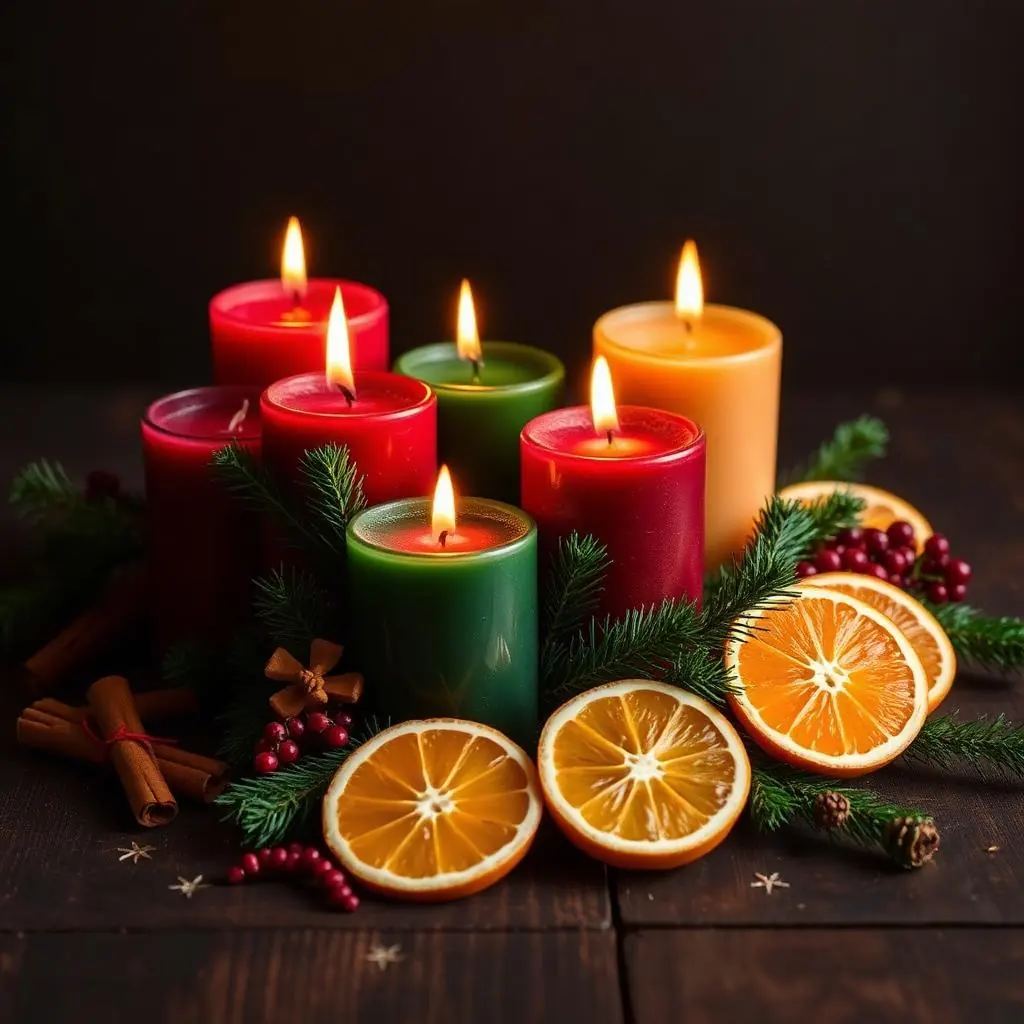
Yoga Candles: Keep Trataka Focused With Light Scents and Safer Flames

For most yoga and meditation sessions, a small, clean-burning soy or beeswax jar candle with a lead-free wick and a light or no fragrance works best. These burn predictably, support eyes-closed meditation and Trataka without overwhelming scent, and pose less indoor air risk than heavily perfumed options. Whatever you choose, keep it stable, within sight, and in a ventilated room.
TL;DR:
- Keep every flame at least one foot from mats, props, and fabric, extinguish it before leaving, and check local fire rules in public studios.
- Choose unscented candles for Trataka or groups with participants sensitive to fragrance; beginners should gaze for 2 to 5 minutes, extending as eye comfort allows.
- Burning scented candles can raise indoor particulate matter, so ventilate during and after use and keep burn times short in small, poorly ventilated rooms.
- Move or extinguish candles before vigorous sequences, and use flameless LED options for long classes or public venues where permits restrict open flames.
Table of Contents
- 1. What makes a candle right for yoga practice
- 2. Which scents fit which kind of practice
- 3. How to bring candles into a class or home practice
- 4. How to practice candle meditation, or Trataka
- 5. What the research and fire authorities say about safety
- 6. Candle care and burn etiquette for a calm space
- 7. Why careful candle choices matter to a mindful practice
- 8. How Custom Candle Co. supports a calmer practice space
- FAQ
- Sources
1. What makes a candle right for yoga practice
The right yoga candle starts with the wax. Soy wax burns cleaner and more predictably than many paraffin blends, with a slower, steadier melt pool that suits long holds and quiet rooms. Beeswax burns even slower and produces very little soot, though it costs more and carries a natural honey note that some practitioners prefer to avoid during unscented practice. Coconut wax blends split the difference: a soft, even burn with good scent throw, often mixed with soy for stability.
Wick type matters as much as wax. Cotton wicks are the standard for a reason: they burn evenly and predictably. Wooden wicks have become popular for the crackling sound some people find grounding, but they need the correct width for the container or they tunnel and burn unevenly. Either way, a lead-free wick is non-negotiable, and sizing should match the vessel’s diameter so the flame does not gutter, flare, or leave unmelted wax along the edges.
Container choice affects both safety and mood. Jars contain the melt pool and are the safest option for a yoga room, especially where mats, props, or robes might brush past. Votives need an enclosed holder to stay stable. Pillars look beautiful on an altar but need a steady, heat-resistant base and more clearance from anything flammable.
- Soy or beeswax jar candles suit most practice settings because they burn cleanly and stay contained.
- Cotton or properly sized wooden wicks reduce soot and uneven burning.
- Enclosed jars or votive holders are safer around mats, cushions, and flowing fabric than open pillars.
Scent strength should match the activity. A heavily fragranced candle can compete with breath awareness or trigger sensitivity in a shared room, while an unscented or lightly scented option stays in the background and lets the practice lead.
Pro Tip: Smell the candle unlit before buying. If the cold scent is strong, it will likely be stronger once warmed, which matters a lot in a small studio or bedroom.
2. Which scents fit which kind of practice
Scent is one of the fastest ways to shift the mood of a session, so it helps to match the note to the goal rather than picking whatever smells nicest on the shelf.
Lavender and chamomile sit at the calming end of the spectrum. Both are associated with slowing down and winding down, which makes them a natural fit for restorative classes, yin sequences, or an evening practice that ends in savasana. Sandalwood and cedar lean grounding rather than soothing: deeper, woodier notes that pair well with slow flows, hip openers, or any sequence built around settling the nervous system before a longer hold.
Eucalyptus and peppermint sit at the brighter, more stimulating end. They can sharpen focus during a morning flow or a short breathwork segment, but they are also the notes most likely to feel sharp in a closed room, so they work best in short doses or spaces with some airflow.
- Lavender or chamomile for restorative, yin, or evening practice.
- Sandalwood or cedar for slow flows and centering sequences.
- Eucalyptus or peppermint in small doses for energizing morning sessions.
- Unscented or very mild candles for Trataka, eyes-closed meditation, or any room with scent-sensitive students.
Unscented candles deserve their own category rather than a consolation-prize mention. For candle-gazing, eyes-closed meditation, or any group setting where even one student has a fragrance sensitivity, an unscented or barely-there candle removes a variable entirely. The flame does the work; the nose stays out of it.
3. How to bring candles into a class or home practice
Candles add atmosphere, but placement and timing decide whether they add calm or just add risk. A few setup habits make the difference between a candle that supports the practice and one that becomes a distraction or hazard.
- Set the candle at eye level if it will be used for gazing, and keep it at least one foot from mats, blocks, blankets, or any loose fabric, in line with the one-foot safety circle that fire-safety research recommends for any open flame in a home or shared space.
- Light candles before students arrive or before the opening seated moment, so the flame is already steady rather than flickering while people are still settling in.
- Extinguish or move candles away from the practice area before any vigorous movement, sun salutations, or standing sequences where a mat shift or a dropped prop could reach the flame.
- Relight or reposition for the closing meditation or savasana, when stillness returns and the candle can again sit safely within view.
- Never leave a lit candle in a room once everyone has left, even for a short break between classes.
For a simple altar, one centered candle flanked by a small object of meaning (a stone, a photo, a short written intention) is usually enough, and selecting complementary pieces of art for mindfulness can deepen the calming space. Larger group spaces can use a few votives in enclosed holders along a windowsill or ledge rather than one large flame near the center of the room, which reduces both fire risk and the chance of someone brushing past it mid-flow.
Pairing scent and flame with breath cues adds another layer: a slow exhale cue as the candle is lit, or a soft gaze cue as it’s placed at eye level, gives the flame a role in the sequence rather than just a backdrop.
Pro Tip: If you teach or practice in a shared space, keep a small fire-safe snuffer or lid nearby so you can extinguish a candle quickly without blowing wax or smoke across the room.

4. How to practice candle meditation, or Trataka
Trataka is a concentration practice built around a steady gaze on a single flame, and it is one of the more approachable entry points into meditation because the candle gives the mind a clear anchor. The Calm Blog’s guide to candle meditation recommends placing the candle at eye level, about two feet away, in a draft-free spot so the flame stays steady.
- Sit comfortably, spine tall, with the candle at eye level roughly two feet in front of you.
- Light the candle and let the flame settle for a few seconds before you begin.
- Soften your gaze on the flame rather than staring hard, letting your eyes relax even as your focus stays steady.
- Hold the gaze for a short, timed interval, starting with 2 to 5 minutes as a beginner, and extend gradually as comfort allows.
- Close your eyes and hold the afterimage of the flame in your mind’s eye for a few breaths before opening your eyes again.
- Blink gently a few times to rest the eyes before standing or moving on.
One widely cited beginner protocol for Trataka runs 2 to 5 minutes per session, with duration increased gradually as the eyes adjust, according to the Calm Blog’s step-by-step guide. Pushing past a comfortable duration too soon tends to produce eye fatigue rather than deeper focus, so progress slowly rather than jumping straight to longer holds.
For group settings, an instructor can call the timing aloud rather than relying on a visible timer, which keeps the room’s eyes on the flame instead of a clock. Anyone with eye sensitivity, dry eyes, or a history of migraines can modify by softening the gaze further, closing the eyes periodically during the hold, or substituting a lower, steadier flame and shortening the interval.
5. What the research and fire authorities say about safety
Candles are low-risk when handled with a few consistent habits, and the guidance on this is remarkably consistent across sources. The USFA’s Topical Fire Research Series on candle fires finds that many residential candle fires start when candles are placed too close to combustible material or left unattended, and recommends a one-foot circle of safety around any burning candle along with extinguishing it before leaving the room. Fairfax County Fire & Rescue’s open-flame guidance echoes this with practical steps: use heat-resistant holders, burn in ventilated rooms, never leave a flame unattended, and consider battery-operated candles where an open flame is not necessary.
For studio settings specifically, municipal rules matter too. The City of Boston’s candle instructions and permit guidance sets enclosure and holder requirements for places of assembly and favors LED lighting where an open flame isn’t essential, a detail worth knowing if you teach in a studio that hosts the public.
Air quality is the other half of the safety picture. A Scientific Reports study on scented candle combustion found that burning scented candles can meaningfully raise indoor particulate matter levels, sometimes above health-relevant thresholds, and that ventilation and shorter burn times reduce that exposure. Related research on incense and other scented combustion sources points the same direction: continuous burning in a closed room raises particulate and VOC levels more than short, ventilated sessions.
- Keep a one-foot clearance between any lit candle and mats, props, or fabric.
- Never leave a burning candle in an empty room, even briefly.
- Ventilate the space during and after burning, especially with scented wax.
- Limit continuous burn time in small or poorly ventilated rooms.
- Consider flameless LED candles for long classes, public venues, or anywhere permits restrict open flame.
6. Candle care and burn etiquette for a calm space
A few care habits keep candles performing well and burning safely session after session. On the first burn, let the wax melt all the way to the edge of the container before extinguishing it. Skipping this step causes tunneling, where the candle burns a narrow well down the middle and leaves wasted wax along the sides for every burn after.
- Trim the wick to about a quarter inch before each burn to prevent high flames, soot, and mushrooming.
- If tunneling has already started, a foil wrap trick or a slightly longer melt session can help even out the pool.
- Stop burning when wax reaches about half an inch to two inches from the bottom, depending on the container, since the flame gets too close to the holder below that.
- Snuff the flame with a lid or snuffer rather than blowing it out, which avoids scattering hot wax or sending smoke across a shared room.
- Wipe holders clean between burns and store candles away from direct sunlight and heat to preserve both scent and color.
- For public classes or venues under fire-permit restrictions, keep a flameless LED option on hand as a backup.
The Candle Care Guide from Custom Candle Co covers these steps in more detail if you want a reference to keep by your altar or shelf.
7. Why careful candle choices matter to a mindful practice
Years of sitting with a simple flame before practice taught me that the candle itself is rarely the point, but a poorly made one can pull you right out of stillness: a sputtering wick, a scent that’s too loud, a wax that smokes. Careful sourcing, phthalate-free fragrance, lead-free wicks, honest labeling, isn’t a luxury detail. It’s what lets the object disappear so the practice can take over.
— Jake
8. How Custom Candle Co. supports a calmer practice space
We build candles with hand-proofed labels, phthalate-free fragrances, and lead-free wicks on every order, with personalized pieces shipped quickly. For yoga and meditation, our Relaxation Candles collection leans toward the calmer, lighter-scented end that suits restorative classes and evening wind-down, while pieces like the Musical Spa candle add a sensory layer some practitioners enjoy for ritual.

If you want a candle that doubles as a keepsake, our Personalized Candles let you add a name, a mantra, or a meaningful date to the label, which some practitioners use as a focal point for Trataka or as a small daily intention-setter.
| Need | What fits | Where to look |
|---|---|---|
| Restorative or evening practice | Lightly scented relaxation candles | Relaxation Candles |
| Personal mantra or keepsake focal point | Custom label with name or quote | Personalized Candles |
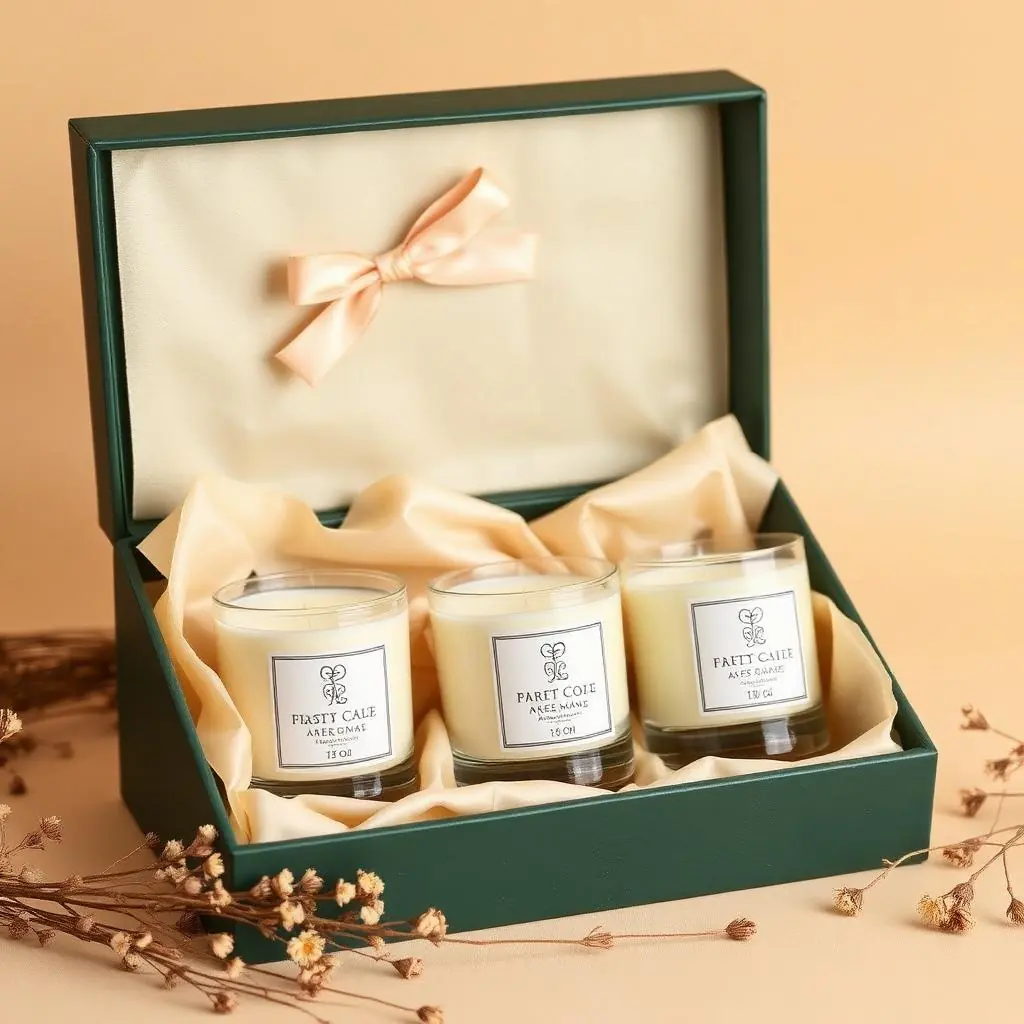
| Gifting a practice partner or studio | Boxed gift set, from $48 one-off | Gifting |
- Every order is hand-proofed for print and label quality before it ships.
- Fragrances are phthalate-free and wicks are lead-free across our candle lines.
- Personalized orders ship quickly after approval.
If you’re building out a home altar or studio corner, our gifting page is a good place to start browsing boxed sets and personalized options.
FAQ
What are the best candles for yoga?
Soy or beeswax jar candles with a lead-free wick and light or no fragrance work best for most yoga practice, since they burn cleanly and won’t compete with breath awareness. For candle-gazing or eyes-closed meditation, an unscented option is usually the safest bet for focus and sensitivity reasons.
Are candles acceptable for yoga classes?
Yes, with precautions: keep candles within a one-foot safety circle from mats and fabric, never leave them unattended, and follow local fire-permit rules for public venues, as outlined in Boston’s candle permit guidance. Many studios use enclosed votives or switch to flameless LEDs for larger public classes.
What to burn during yoga?
For most sessions, a clean-burning soy or beeswax candle in a light scent like lavender or sandalwood suits grounding and calming work, while unscented candles suit Trataka or eyes-closed meditation. Save brighter notes like eucalyptus or peppermint for short, ventilated sessions rather than a full class.
How do I make my house smell like a yoga studio?
Light a lightly scented soy or beeswax candle in a calming note such as lavender, sandalwood, or chamomile in the room where you practice, and ventilate between burns to avoid buildup. Studios typically favor mild, consistent scents over strong ones since many practitioners are sensitive to fragrance during focused practice.
How long should I burn a candle during meditation?
Beginners typically start Trataka sessions at 2 to 5 minutes per sitting, according to the Calm Blog’s guide, and extend gradually as eye comfort allows. For ambient use outside of gazing practice, shorter burns with good ventilation reduce indoor particulate buildup from scented wax.
Sources
- Candle meditation: a step-by-step guide to practice at home — Calm Blog
- Impact of scented candle use on indoor air quality and airborne microbiome | Scientific Reports
- Topical Fire Research Series Vol. 6, No. 1: Candle Fires in Residential Structures
- Open-Flame Decorative Devices | Fire and Rescue
- Candle Instructions and Permit Application — City of Boston