


Buying Guides
The Different Types of Candles, Explained
From a taper on the dining table to a sculpted gift or a flameless wax melt, the shape determines more than the look. Here is how to choose and care for each style.
Custom Candle Co Studio Team · 11 min read · Updated
A candle can be a small pool of light beside a bath, a tall line down a dining table or a sculpted gift that looks good before anyone lights it. Candles also carry fragrance and mark occasions, from weddings to religious ceremonies. Choosing one starts with the job you want it to do. Shape, holder and location matter just as much as whether you like the scent.
The simplest distinction is between container candles and free-standing candles. A container candle is poured into a vessel intended to hold its melted wax. A free-standing candle keeps its shape without a vessel while cool, but still needs a suitable holder or plate when burning. Some styles sit between those ideas: votives look free-standing but need close-fitting containers, while floating candles require a purpose-made water arrangement. Wax melts belong to a separate category because they release fragrance without a wick.
Pillar candles: substantial, free-standing shapes
Pillars are solid candles, commonly cylindrical but also made in square and other forms. Their broad shape gives them a strong presence on a mantel, dining table or bath-side surface. They may be scented or unscented; the shape alone tells you nothing about fragrance. A personalized pillar can also mark a wedding, christening or anniversary without needing the tall profile of a taper.
As a pillar burns, the wick melts a pool of wax around itself. Depending on its construction and how it is used, an outer wall may remain while the centre lowers. That wall is not a guarantee against spills. Draughts, uneven burning or an extended session can send wax over the side, so always put the candle on a heat-resistant plate with room to catch drips.
Keep the candle level and follow its own burning instructions rather than guessing from its width. Do not carve away its sides or push softened wax around while it is lit. If you group pillars, leave enough space that their heat does not soften neighbouring candles. Extinguish them before moving the plate, and let the wax cool completely. A stable, generous base is more useful than a decorative stand that barely fits.
Taper candles: height and light for the table
Tapers are slender candles designed for candlesticks. Their height and small footprint make them a natural choice for a dining table, where several flames can create a rhythm without filling the surface with jars. Unscented tapers are often the easiest partner for food because they do not add another aroma to the meal. Choose a height that keeps flames clear of faces, sleeves and anything hanging above the table.
Wax melts at the top as the candle shortens. Some tapers drip more than others, and even a candle described as dripless can run in a draught or when tilted. The practical care note is therefore simple: fit it upright in a stable holder with a drip-catching base. Do not assume that a narrow opening alone makes a candlestick a good fit; the candle should not wobble.
A wall sconce needs the same attention to stability, plus clearance from the wall and any nearby fabric. Only use one designed for burning candles, not a purely decorative bracket. As the taper burns lower, keep watching the distance between flame and holder. Follow the candle's stopping point and extinguish it before the flame reaches the fitting. Do not leave tapers burning while everyone moves to another room after dinner.
Votive candles: small lights that need containment
Votives are small candles often arranged in groups for a low, repeated glow. They work well in suitable glass holders on tables or in lanterns specifically designed for their use. Their scale is useful when a tall candle would interrupt conversation, and they can create a generous impression without one large central flame. They still need supervision, however many are in the arrangement.
Unlike a pillar intended to retain its overall form, a votive can liquefy fully as it burns. Its holder is part of the burning system, not an optional finishing touch. Use a candle-safe, appropriately sized container that can hold the entire wax pool. Burning a bare votive on a saucer can allow wax to spread, leaving the wick unsupported and the flame too close to the surface beneath it.
Check the holder for cracks and old debris before use. A drinking glass is not automatically suitable for candle heat, and a lantern is not safe simply because it encloses the flame: it also needs the right clearance and ventilation. After burning, let the holder cool before cleaning out leftover wax. Avoid sudden temperature changes to hot glass. If a votive seems too small for its holder, choose a better fit rather than improvising packing materials around it.
Jar and container candles: fragrance with a vessel
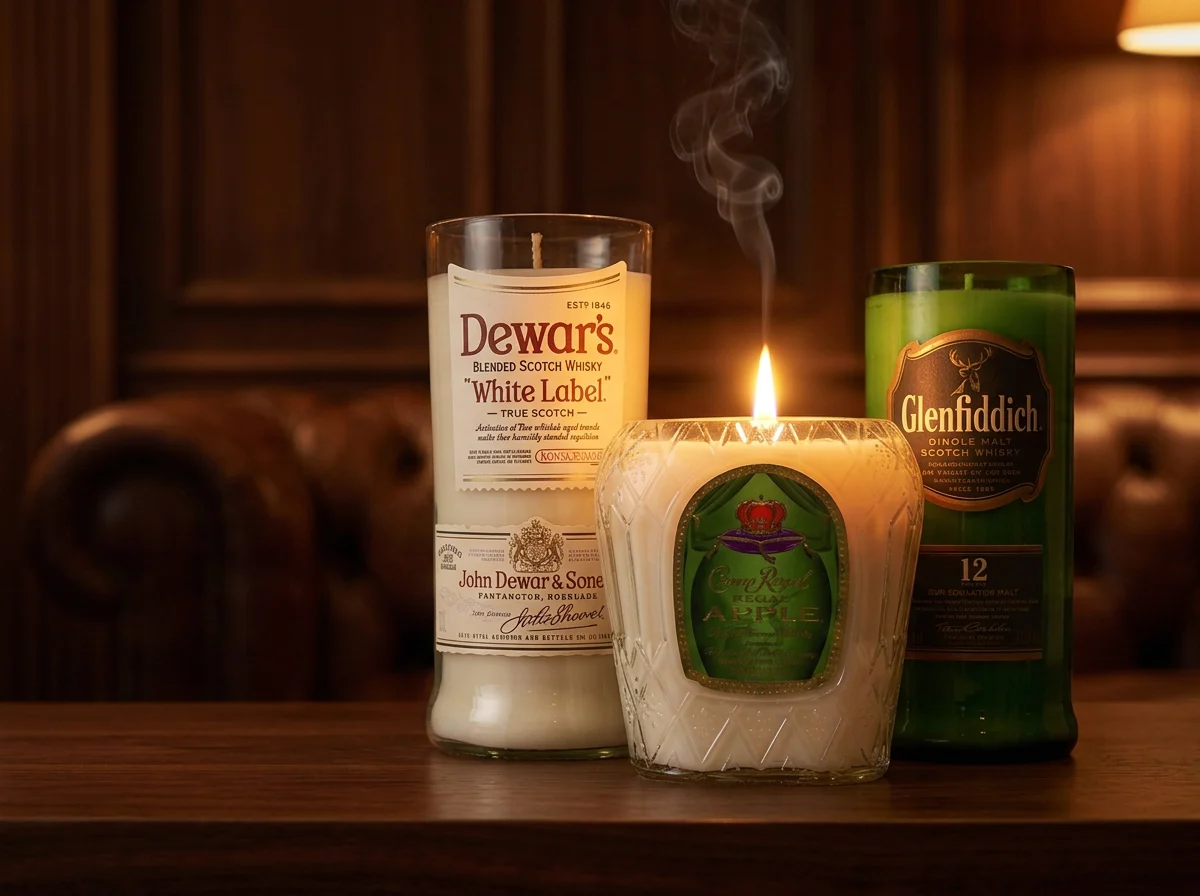
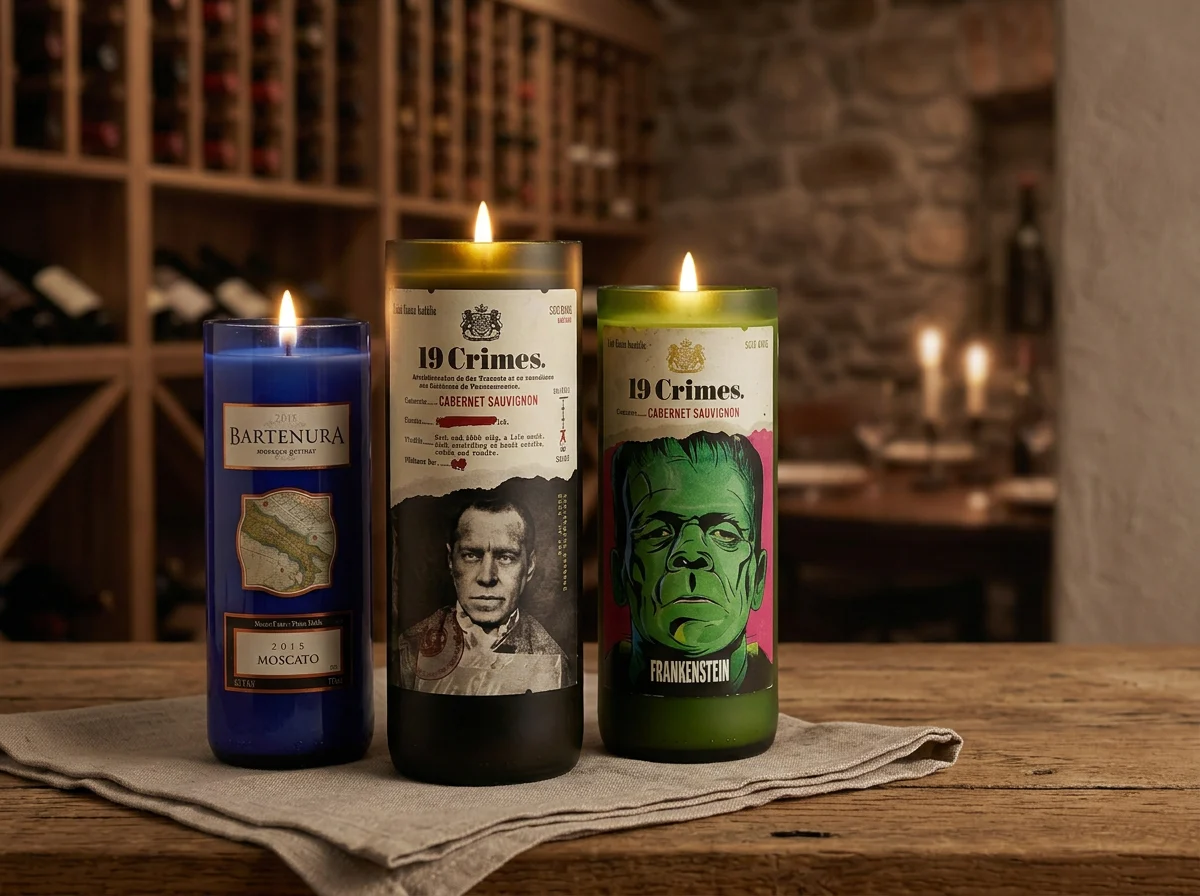
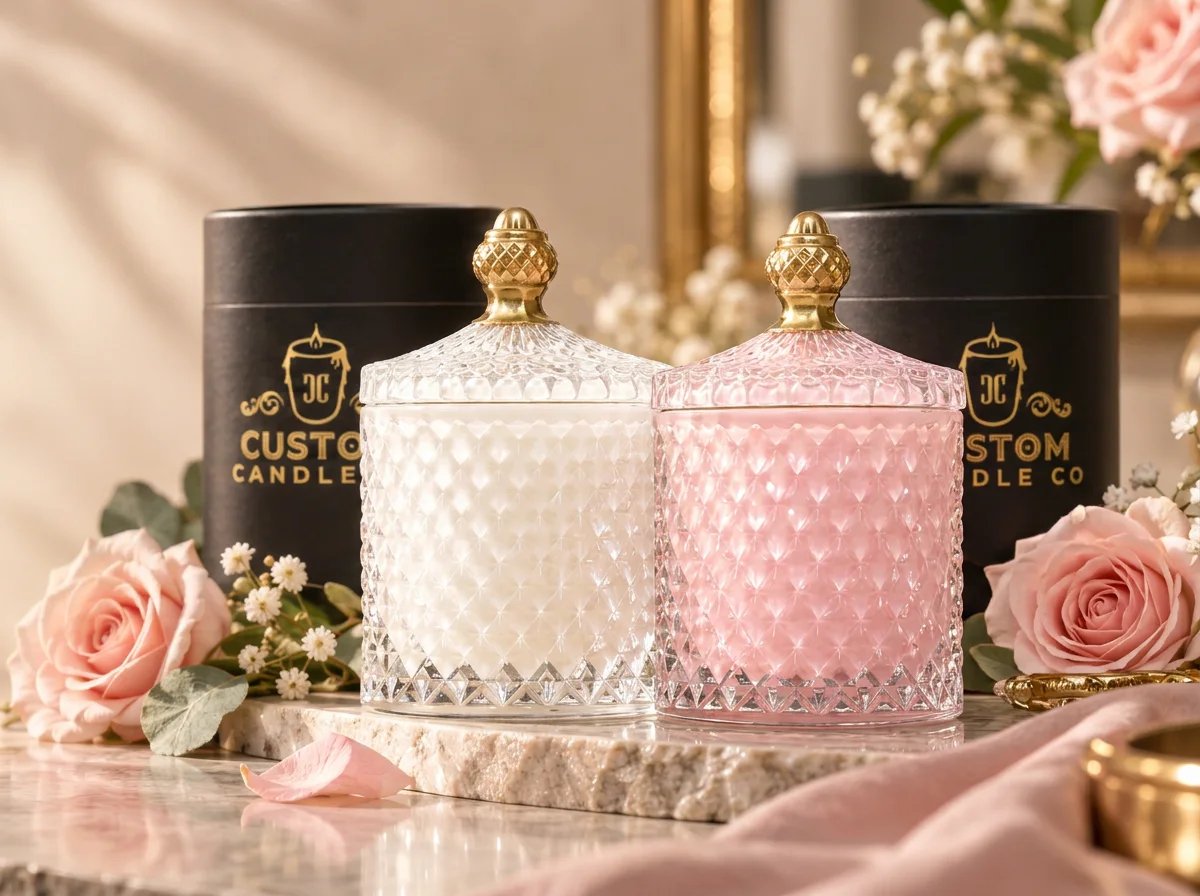
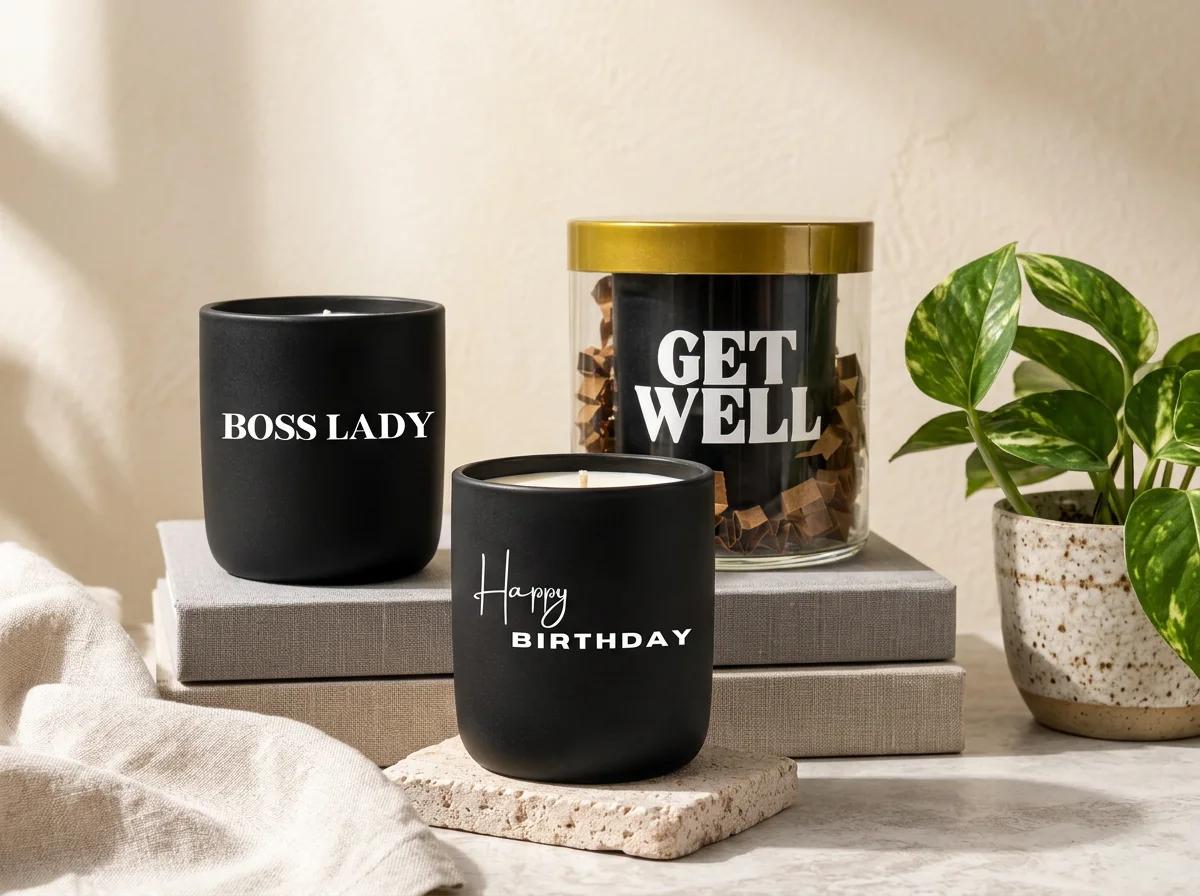
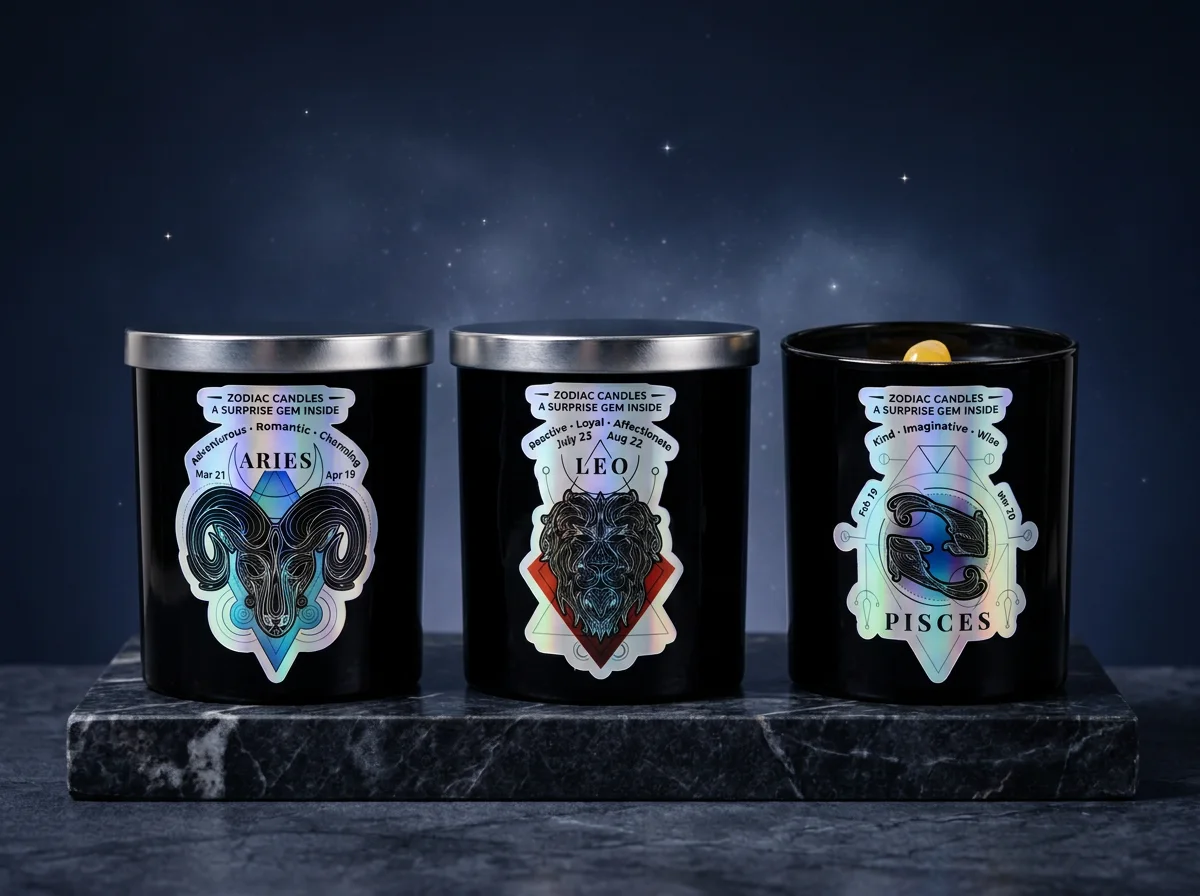
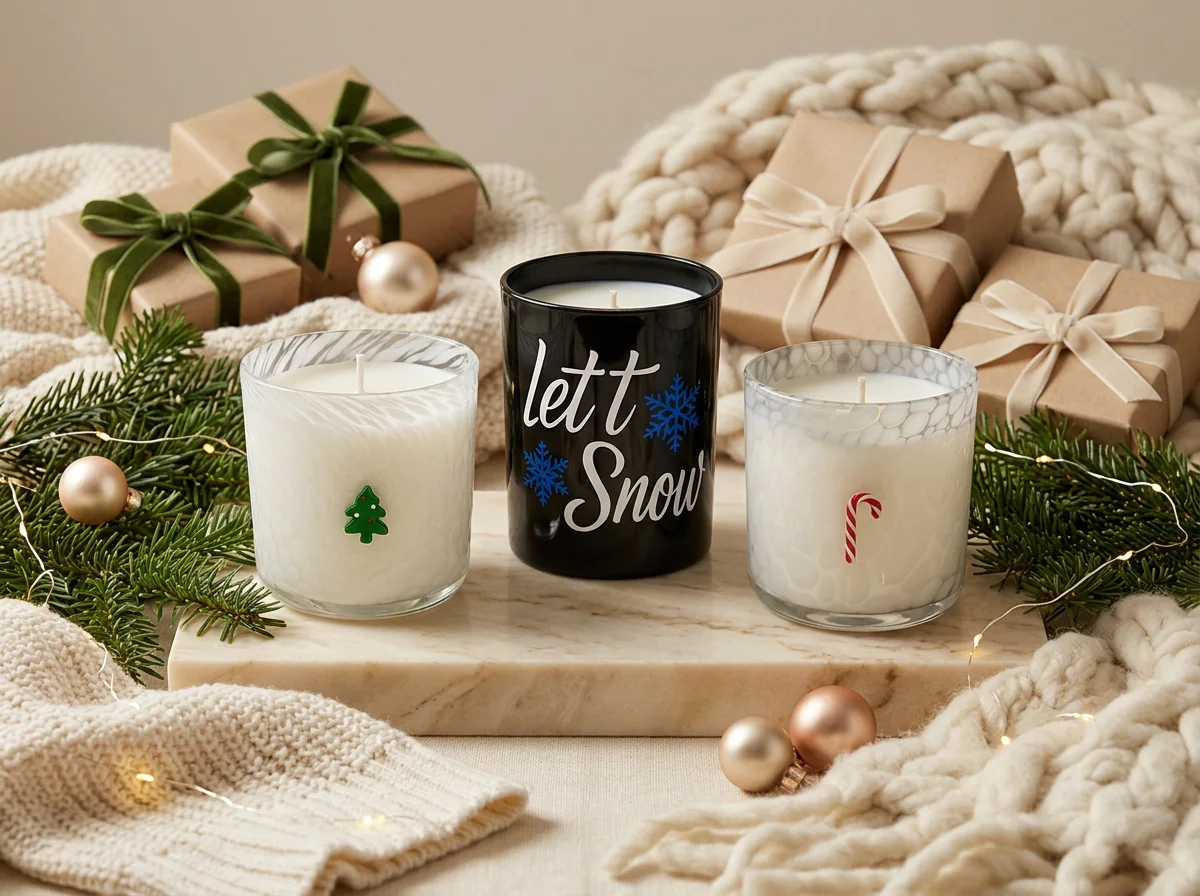
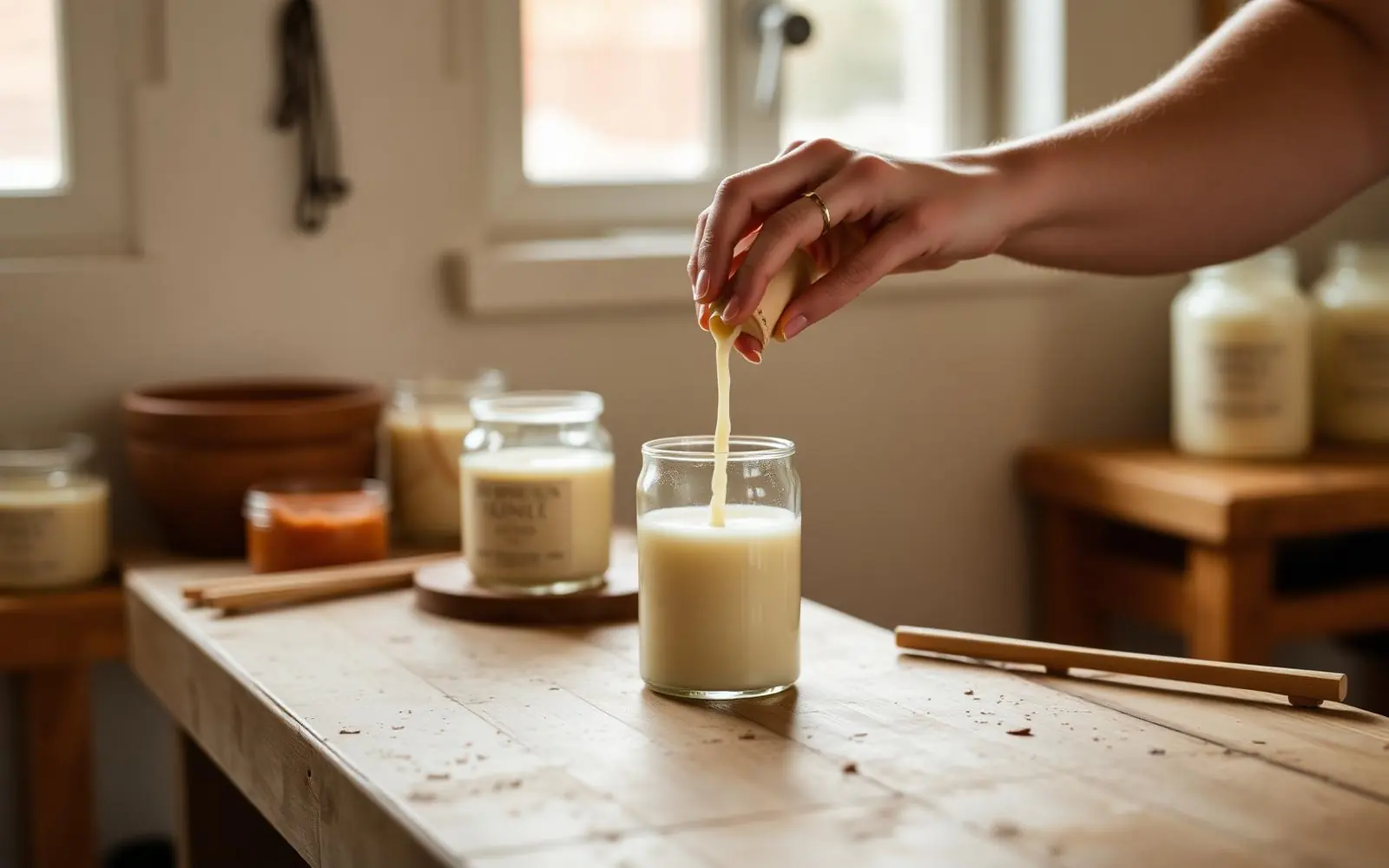
Jar candles are poured into glass or another candle-safe vessel. The container holds the melted wax, making this a convenient format for fragrance, everyday lighting and personalized gifts. Container candles can use soy, paraffin, other waxes or blends. Neither the vessel nor the wax name alone establishes quality, a particular burn time or how much soot the candle will produce.
During a burn, the wax around the wick becomes liquid and supplies fuel to the flame. Follow the maker's session guidance so the melt pool develops as intended, rather than repeatedly lighting and extinguishing after a very brief moment. A deep narrow hole around the wick is often called tunnelling, but trying to correct it with an excessively long burn can overheat the vessel. Do not improvise foil covers or other heat-trapping repairs without the maker's guidance.
The key care note is that the jar itself gets hot. Place it on a stable, heat-resistant surface, keep the wax free of wick trimmings and never move it while lit. Stop at the maker's minimum remaining-wax level instead of burning it completely dry. Check glass for cracks before each use; a damaged jar should not be relit. Let everything cool before replacing a lid or picking the candle up.
Tealights: compact cups of light
Tealights are small, shallow candles supplied in metal cups or plastic cups made for candle use. The cup contains the wax as it melts, but is not a reason to set a lit tealight directly on furniture. Use a suitable holder and a heat-resistant surface. Their low height makes them useful for table ambience, candle-safe lanterns and some fragrance warmers.
The wax commonly becomes a liquid pool across the cup during burning. That makes a lit tealight easy to spill if you carry or knock it, even though its appearance is compact and self-contained. Leave it in place until extinguished and cool. Do not cluster cups so tightly that they heat each other, and keep decorative greenery, paper and fabric well clear of both the flame and the hot holder.
If a warmer is designed for a tealight, use only the size and type the warmer's instructions specify. A larger flame is not a useful upgrade: it changes the heat reaching the dish. Keep the air openings clear and remember that a tealight-powered warmer is not flameless. An electric warmer is the appropriate distinction when the aim is to avoid an open flame, rather than merely hide one beneath a ceramic bowl.
Floating candles: reflected light for centrepieces
Floating candles are shaped to sit on water with their wicks above the surface. They can turn a plain bowl into a centrepiece, with reflections giving each flame another layer of light. Use candles sold for floating; an ordinary votive or tealight should not be assumed to work the same way. The candle needs to remain balanced as it burns and becomes smaller.
Water supports the candle and catches falling wax, but it does not make an open flame harmless. The wick still burns above the water, close to whatever surrounds the bowl. Choose a stable, suitable container, leave space between candles and keep flowers, leaves and other decorations out of reach of the flames. Do not add oils or other flammable ingredients to the water for fragrance.
Set up the bowl before lighting, on a surface where it will not be bumped or reached across. Watch for candles drifting together or towards the edge. Extinguish them before adjusting the arrangement or carrying the container; water movement can tilt a candle and spill hot wax. After use, let wax harden and remove it for disposal rather than pouring it down a drain. Reflection is the attraction here, not an exemption from ordinary candle precautions.
Sculpted and novelty candles: shape as the main event
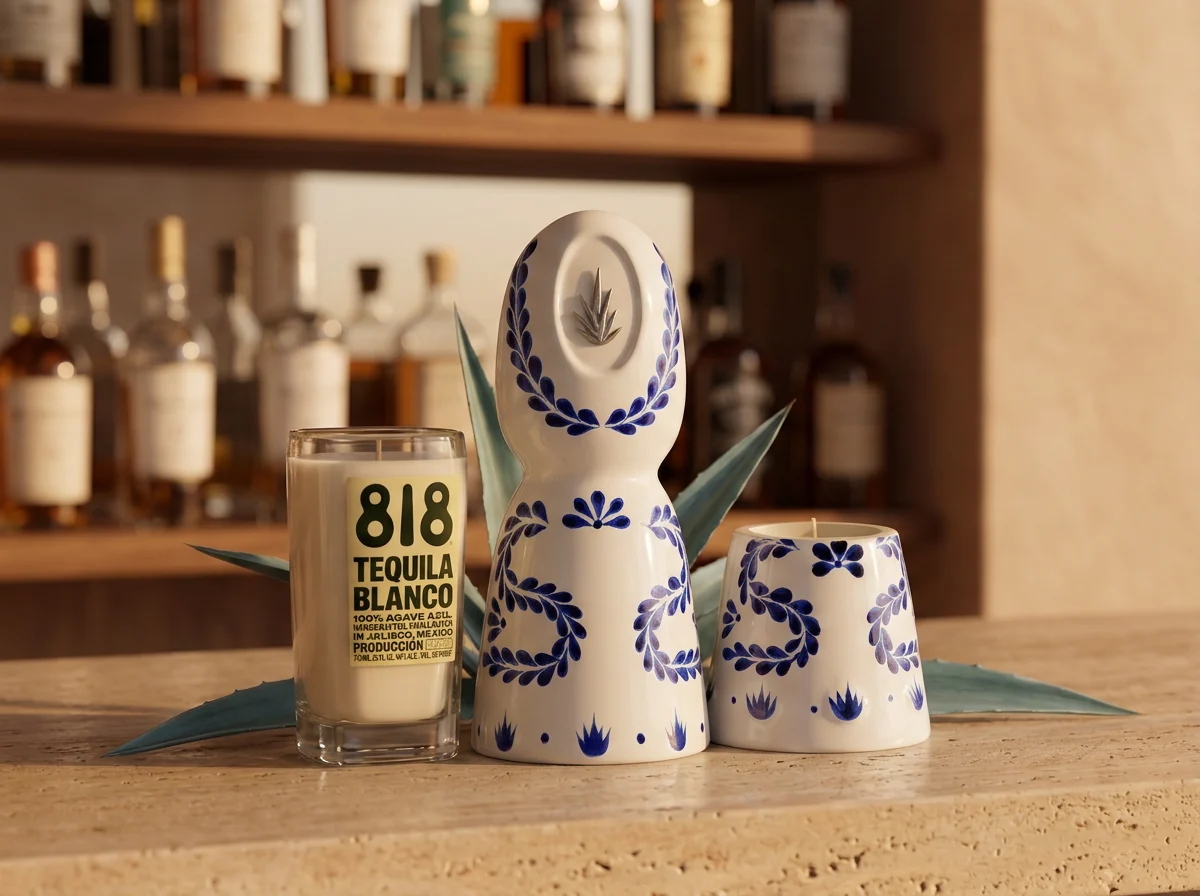
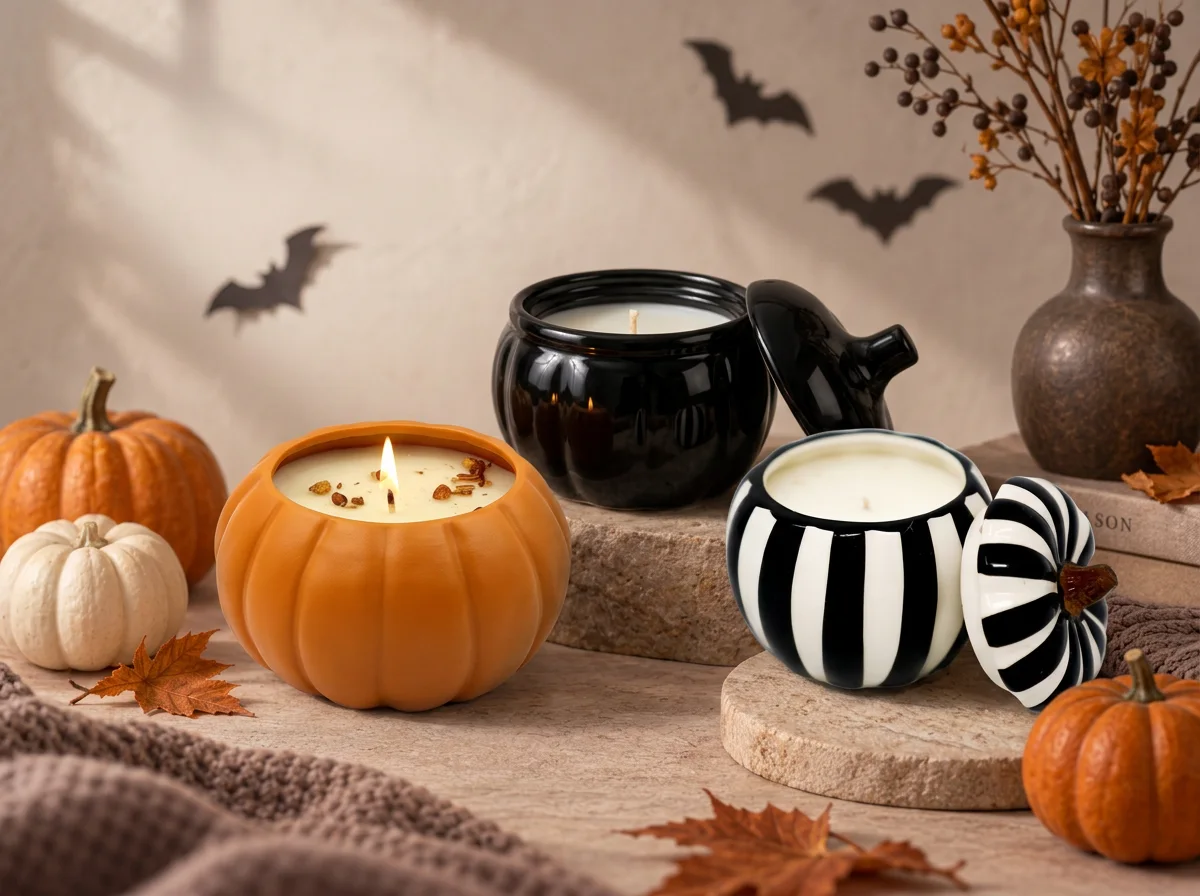
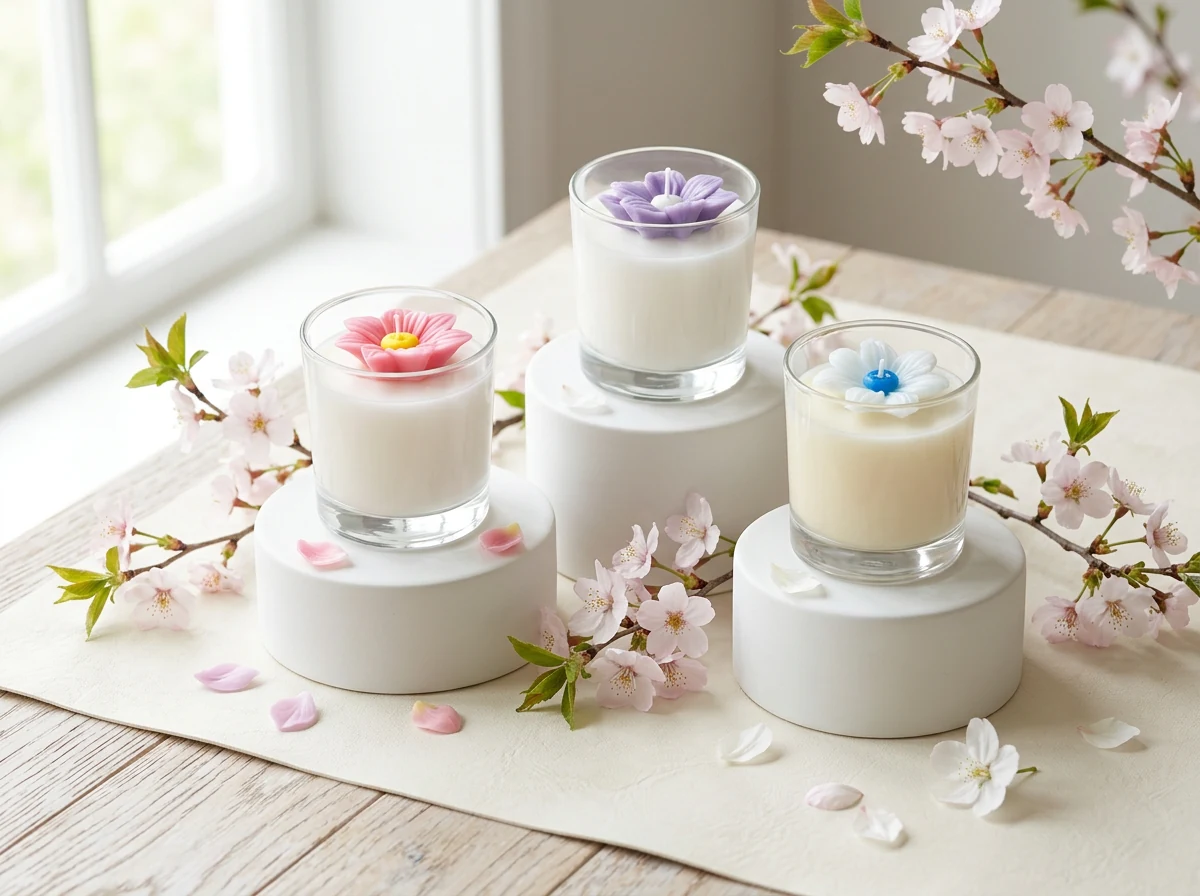
Sculpted candles are moulded into forms beyond a conventional cylinder: figurines, flowers, food and drink shapes or sneakers. Novelty designs can also use a distinctive vessel rather than shaped wax. These expressive pieces are a Custom Candle Co. specialty, alongside decorative ceramic vessels in our Ceramic Candles collection. The first question is whether you are looking at a wax shape or a container holding wax; the care requirements follow that distinction.
A moulded wax candle may melt asymmetrically as fine details soften and disappear. Give it a broad, heat-resistant plate that can catch the wax, not a base sized only to the candle's original footprint. A ceramic container candle keeps its vessel while the wax inside liquefies, but still needs protection beneath it and the maker's stopping instructions. Decorative shape never overrides the need for a stable burning position.
Follow the specific design's guidance, including whether it is intended mainly for display. Food-inspired candles are not food, and loose decorative components should not be added to the wax pool. Keep these pieces out of reach of children and pets. If preserving the sculpture matters more than having a flame, displaying it unlit is a perfectly good choice: lighting a wax sculpture changes the object you bought.
Wax melts and warmers: fragrance without a burning wick
Wax melts have no wick. A warmer heats the wax so it releases fragrance into the room, then the wax solidifies again as it cools. Unlike a candle, the wax is not consumed as fuel by a flame; the fragrance fades with use. Change it when you no longer enjoy the scent, following the warmer's cleaning instructions. Never pour melted wax down a sink or add water to the warming dish.
An electric wax warmer offers the flameless option. A warmer heated by a tealight does not. Both produce hot wax and need a stable position away from children, pets and anything that could knock them over. Use melts intended for the device and do not overfill its dish. Our wax melt bouquets are custom made to order, with floral shapes that can also be enjoyed as display pieces before individual melts are used as directed.
Candle warmers are related but different: compatible devices heat an unlit container candle from below or above to release its scent. Check the device's instructions and the candle's suitability first. Do not light the wick while warming, and do not assume every vessel tolerates the heat. Warming changes how fragrance is released, but it does not promise a particular extension of product life or remove heat-related risks. Switch off the device when finished and let it cool before moving.
Which type belongs where?
Start with the surface and the occasion rather than the biggest candle that fits. On a dining table, tapers bring height and leave room for plates; low votives work where clear sightlines matter. Unscented options keep attention on the food. For centrepieces, floating candles create reflected light in a suitable bowl, provided the arrangement leaves flames clear of decorations and guests.
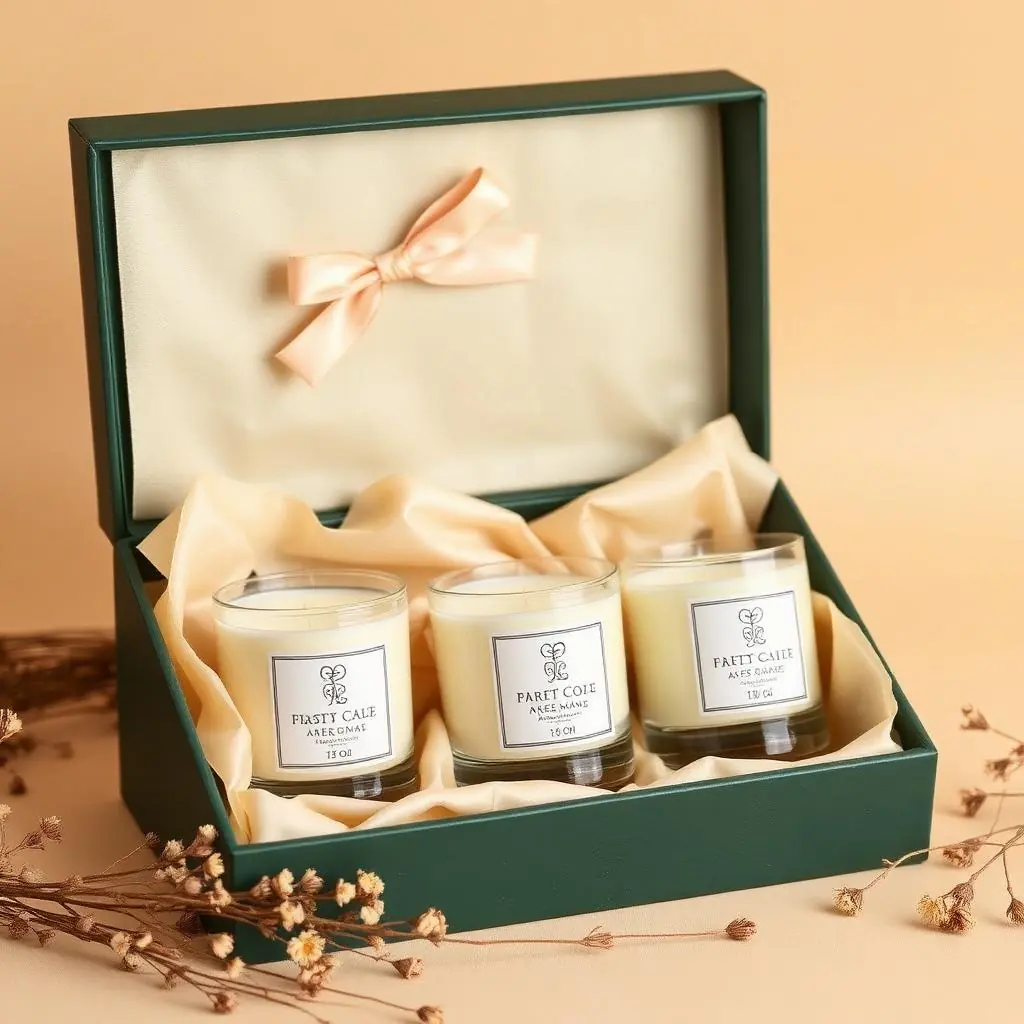
Beside a bath, a pillar on a generous plate or a jar on a heat-resistant surface can suit the quieter setting. Keep it away from towels, toiletries and places where reaching or splashing might knock it. For gifts, personalized jars or pillars connect the object to an occasion; explore custom candles for the personal angle. Choose a shape the recipient can comfortably use in their home, not only one that looks good when wrapped.
Care and safety apply to every candle style
No holder, water bowl or decorative shade makes a flame safe to leave alone. Use the maker's directions as the starting point, then make the surroundings work for the candle. Our candle care page brings together the everyday checks worth repeating before each burn.
- Never leave a burning candle unattended. Extinguish it before leaving the room or going to sleep.
- Always use an appropriate holder or heat-resistant base. Protect furniture from both heat and dripping wax.
- Keep flames clear of curtains, paper, flowers and clothing. Give neighbouring candles room rather than crowding them together.
- Keep candles away from children, pets, edges and draughts. Do not place them where someone must reach across a flame.
- Maintain the wick according to the maker's instructions and remove debris from cooled wax before lighting.
- Extinguish a candle that smokes persistently or burns unusually, and let it cool before checking the wick and location.
- Never move a lit candle or one holding liquid wax. Let hot holders and vessels cool before handling.
Do not add a shade as a universal soot remedy. Only use accessories approved for that candle; trapping heat or restricting air can create problems. The right style is the one whose appearance, care and setting all work together, whether that means a dining-table taper, a personalized jar or fragrance from an electric warmer.
Keep reading
- How to Get Candle Wax Out of Clothes
Wax on a shirt is not a ruined shirt. Harden it, lift it, then wick the rest out through paper — with the fabric-specific changes that stop the fix becoming the damage.
- Are Candles Toxic? What to Actually Look For
Most 'toxic candle' claims collapse under the evidence — and a few real quality issues get lost in the noise. Here is what wax, wick and fragrance sourcing actually change.
- Are Candles Safe for Cats? A Real Answer
Cats metabolise certain fragrance compounds differently to us, which makes some candles a real concern and most of them a non-issue. Here is the line between the two.
- How to Get Candle Wax Out of Fabric & Upholstery
Upholstery changes the method: you cannot freeze a couch or put curtains through a wash cycle. Here is the adapted sequence, and the mistakes that leave a permanent ring.
- What Makes a Candle Eco-Friendly, Explained
Four things decide whether a candle is actually eco-friendly, and none of them is the word 'natural' on the label. Here is what to check, and what to ignore.
- Are Candles Safe for Dogs? A Real Answer
Dogs get into candles differently than cats do: less inhalation sensitivity, far more chewing, nosing and tail-swiping. Here is the honest risk list and what to change.
- How to Get Candle Wax Off Walls
Walls are unforgiving: the finish damages more easily than the wax resists. Low heat, an absorbent barrier and patience beat any scraper.
- How to Get Candle Wax Off Tablecloths & Table Linens
Table linens are washable, which makes them easy — and often starched, dyed or heirloom, which makes them fussy. Here is the method adapted properly.
- How to Get Candle Wax Off Wood & Hardwood Floors
On wood the finish is the fragile part, not the wax. Cold and a plastic edge do the work; heat guns, metal blades and solvents are how floors get ruined.
- Paraffin-Free Candles: What to Know
Paraffin-free is a sourcing statement, not a safety certificate. Here is what each alternative wax actually does differently — and where the claim is oversold.
- How to Get Candle Wax Out of Furniture, Carpet & Sofas
Carpet and sofas punish the two instincts people have: scrubbing and soaking. Chill, lift, wick through paper, blot dry — and know when to stop and call someone.
- Palo Santo Wood: 5 Benefits and How to Use It
Five reasons to make room for palo santo's woody scent, with traditional uses kept separate from medical claims, safe burning steps and sourcing questions worth asking.
- The History of Candles — and How They Became Romantic
Candles spent thousands of years as purely practical light — and some of them smelled terrible. Here is how tallow, beeswax, bayberries, whale oil and paraffin slowly turned a household tool into the language of romance.
- Candle Benefits You May Not Know About
Candles show up at Christmas and on Valentine's Day tables — but their best uses are the everyday ones. Five benefits of burning candles that hide in plain sight, from ambience to ritual.