


Buying Guides
The History of Candles — and How They Became Romantic
Candles spent thousands of years as purely practical light — and some of them smelled terrible. Here is how tallow, beeswax, bayberries, whale oil and paraffin slowly turned a household tool into the language of romance.
Custom Candle Co Studio Team · 10 min read · Updated
Mention candles and romance in the same sentence and most people picture the same scene: a table for two, a low golden flame, everything else in soft shadow. Candles set moods and spark feelings so reliably that it is easy to assume they were always about love. They were not. For most of their long history, candles were strictly practical — and frankly, a bit unpleasant.
The connection between candles and romance is surprisingly recent. A closer look at where candles came from shows a household tool that had to survive bad smells, expensive ingredients, an industrial revolution and finally the light bulb before it earned its place at the dinner table. Here is that story, era by era — and why candlelight ended up meaning what it means today.
It is a surprisingly human story, too. Every chapter of candle history is really a chapter about what people needed at the time: light to work by, light to travel by, light for ceremony. Only when the candle stopped being needed at all did it become something people simply wanted. That turn — from necessity to choice — is where the romance begins.
Early candles: light first, glamour never
The earliest wicked candles date back to around 3,000 BC. The ancient Romans are credited with developing them by rolling papyrus and dipping it in melted animal fat — tallow. Other early civilizations in China and Japan made their own wicked candles from whatever natural substances were available locally. Different materials, same purpose: portable light.
That shared purpose is what makes the early history so striking. Across civilizations that had little contact with one another, people arrived at the same invention: a wick, a fuel and a flame small enough to carry from room to room. The candle was one of humanity's genuinely universal tools — and for most of that long run, nobody expected it to be beautiful. It only had to burn.
And light was the whole point. Candles lit homes after dark, helped travellers find their way and played a role in religious ceremonies. They were tools, valued for working at all — not for how they looked, and certainly not for how they smelled.
Romance, meanwhile, existed long before romantic lighting. Love appears as a theme in ancient stories and poetry, and images of couples showing affection through gestures and expressions survive in Egyptian art, just as tales of love appear in early Chinese storytelling. But nobody was lighting a tallow candle to set the mood. A flame that smelled of rendered animal fat was something you tolerated because the alternative was darkness.
It is hard to overstate how precious artificial light was in this world. Daylight set the rhythm of work, and every hour of light after sunset had to be made by hand — dipped, rolled or poured. A candle was a small piece of stored labour, burned one evening at a time. People treasured them the way we might treasure a charged battery in a power cut: useful, finite and absolutely unglamorous.
The smell problem — and the beeswax solution
It is worth pausing on the smell, because it shaped candle history for centuries. Tallow candles smoked, sputtered and gave off an odor that was, by all accounts, genuinely unpleasant. Light you could not stand to sit next to is not exactly the foundation of a romantic evening.
The Middle Ages brought the first real upgrade: beeswax candles arrived in Europe. Beeswax burned cleanly, produced little smoke and had a naturally pleasant, faintly honeyed scent. It was everything tallow was not — with one catch. Beeswax was expensive, so these better candles were reserved for the wealthy and for special church ceremonies. For most households, tallow remained the everyday option.
Romance in this era had its own language, and candles were not part of it. Medieval courtship ran on stories of chivalry, courtly love, dancing and the exchange of love tokens — rings, brooches and knightly favors. The technology of mood lighting simply had not caught up with the sentiment.
Still, beeswax planted an important idea: a candle could be a pleasure rather than a chore. The people who could afford it noticed that light could smell faintly of honey and burn without a haze of smoke. For everyone else, that experience remained out of reach for centuries — a reminder that the "romantic candle" was impossible until the candle itself was worth sitting near.
Bayberries and whale oil: the scent breakthrough
The next discovery came from colonial America, where women found that wax could be made from bayberries — and that it produced a sweet, pleasant aroma when burned. It was a genuine breakthrough: a candle that smelled good on purpose. The problem was production. Rendering bayberry wax was slow, laborious work, and the candles never became widely popular. Still, the idea mattered. Bayberry proved that a candle could be about fragrance, not just light — one step closer to the scented candles we know today.
Then, in the late 18th century, the whaling industry changed the material again. Spermaceti, a wax derived from sperm whale oil, became readily available for candle making. Like beeswax, it burned clean and without a strong odor — and it was harder, which meant candles held their shape better. Spermaceti candles are often described as the first standard candles: consistent, reliable and made at scale.
Standardization sounds dull, but it changed what a candle could be. When every candle burns roughly the same way, people can plan around candlelight — for dinners, gatherings and ceremonies — instead of simply hoping for the best. The candle was quietly becoming dependable, and dependability is what lets a practical object turn into a decorative one.
Courtship was changing in the same period. Society was drifting away from arranged marriages and beginning to encourage young people to choose their own partners, and courtship rituals evolved with it. One popular valentine of the era was a homemade love letter folded as a puzzle — each section unfolding to reveal a little more of the sender's feelings. Romance was getting more personal. Candles were getting better. The two had not met yet.
Bayberry never fully disappeared, either. Even after easier waxes took over, the idea of a naturally fragrant candle lingered in colonial memory, and bayberry candles remained a traditional treat rather than an everyday staple. The lesson candle makers took forward was the one that matters most to this story: people will go out of their way for a candle that smells wonderful. Fragrance had officially entered the craft.
Stearin, paraffin and the candle for everyone
The 19th century finally made the good candle affordable. The development of stearin and paraffin waxes meant candles could be made clean-burning, hard and durable without rare ingredients. At the same time, new machines mechanized candle production, turning what had been a slow craft into an industry. Candles became something almost any household could buy.
This is the era where the different types of candles we still recognize — tapers, pillars and the rest — became familiar household objects rather than luxuries. Cheap, clean light for everyone was a genuinely big deal.
And yet romance still belonged to paper. The love letter remained the great romantic medium of the age, exchanged, saved and reread. Candles were everywhere in the 19th-century home, but they were infrastructure — the thing you lit so you could read the letter.
Affordability changed the candle's social life, though. When only the wealthy could burn clean wax, a fine candle signaled status. Once machines could turn out consistent candles by the thousand, that signal faded — but something better replaced it. Candles became ordinary enough to use generously: a whole table of them, a roomful of them, light layered for effect rather than rationed for need. The raw material of ambience was finally cheap. It just needed a reason.
The light bulb nearly ended it all
You are almost certainly not reading this by candlelight, and that is the point of this chapter. In the late 1800s, the arrival of the light bulb began the steady decline of the candle. Once electricity reached people's homes, there was no longer any real need for flame-based light. The candle's thousand-year job simply disappeared.
But the candle did not vanish. In the first half of the 20th century, increased availability of paraffin and stearic acid kept candle making alive and gave its popularity a modest boost. Candles persisted for occasions, ceremonies and emergencies — and quietly waited for a second act.
Those occasions mattered more than they seemed at the time. Birthday cakes, religious services, holiday tables and power cuts kept the candle in daily life even as the ceiling light took over the everyday work. The candle's role shrank, but the roles that remained were the emotional ones — celebration, reverence, comfort. When the revival came, the candle had already been rehearsing for it.
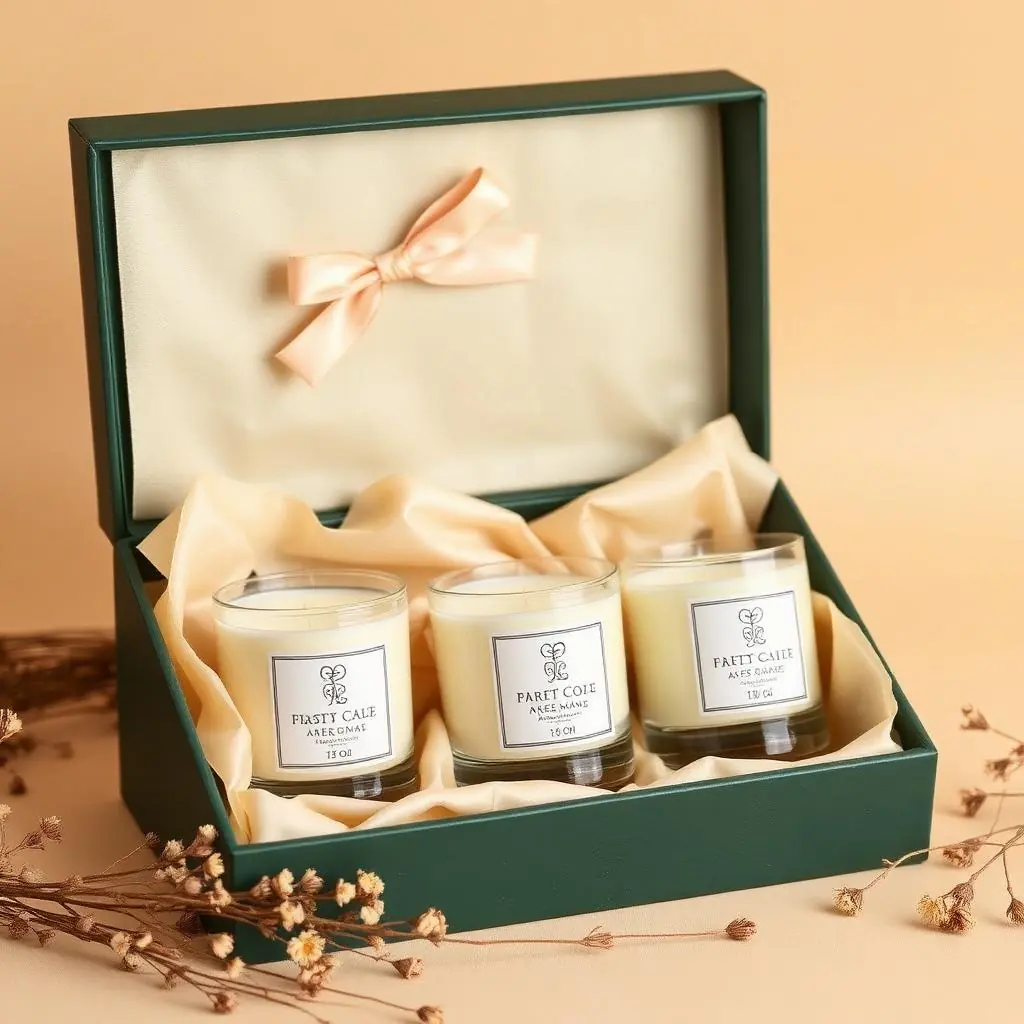
That second act arrived in the 1980s and 90s. People started finding new uses for candles that had nothing to do with needing light. Candles became gifts. They became decoration. They became a way to change how a room felt — to create ambience, to make a bath feel like a spa, to make an ordinary Tuesday dinner feel like an occasion. The gifting habit stuck: a candle is still one of the easiest ways to mark a moment for someone, which is why candle gift sets exist at all. Freed from being useful, the candle finally became enjoyable — and that is when the romance crept in.
Looking back, the light bulb may have been the best thing that ever happened to the candle. As long as candles competed with other light sources, they were judged on brightness, cost and convenience — and they lost. Once nobody needed them for light, they were free to be judged on the one thing electric light has never managed: the feeling of a living flame in a darkened room. The candle stopped being a tool and became an experience, and experiences are what gifts and romantic evenings are made of.
Why candlelight reads as romantic today
Today candles are gifts, decorations, ceremony staples and relaxation aids — and yes, shorthand for romance. But why does candlelight work on us the way it does? A few reasons, none of which our ancestors enjoying tallow fumes would recognize:
- It tells your body to relax. Candlelight is far dimmer than typical room lighting, and your body responds to that. Low light mimics the natural light of evening, the signal that it is time to wind down. Shoulders drop, stress eases and a night in becomes more comfortable — a better starting point for connection.
- It creates an intimate space. A candle's light only reaches a small area, which effectively shrinks the room to the two people sitting in it. Distractions fade into the dark at the edges, and it becomes easier to focus entirely on each other.
- It feels warm. Candles give off little actual heat, but a living flame still creates a sense of warmth — and that physical cue blends easily into emotional warmth and closeness.
- It stimulates the senses. Scent is tied closely to memory and mood. The right fragrance can calm a busy mind, bring back a shared memory or simply make a room feel special — and a romantic scented candle works on that pathway directly.
- It is flattering. In reduced light, pupils dilate — and dilated pupils are associated with excitement and attraction. Candlelight quite literally gives everyone bedroom eyes.
There is also the ritual of it. Lighting a candle is a deliberate act — you choose the candle, choose the moment and strike the match. That small ceremony says the next hour is different from the hours before it. An overhead light just turns on; a candle is lit, and everyone at the table notices the difference. Romance thrives on exactly that kind of intention.
Put together, candlelight is a small piece of stage design: it softens the room, narrows the world and nudges everyone's nervous system toward calm. No wonder it became the default setting for romance.
Let's light that fire
Candles and romance have both changed enormously across the centuries. The candle went from rolled papyrus and animal fat to clean-burning waxes in every shape, size and scent imaginable. Romance went from arranged matches and folded puzzle letters to, well, whatever your group chat is doing. Somewhere in the last few decades, the two finally found each other.
That is what makes the modern candle such an easy romantic tool. It asks for nothing — no wiring, no playlist, no reservation — and instantly changes a room. It works for a first date at home and a fiftieth anniversary, for a proposal and for an ordinary evening that deserves a little ceremony. It is also why candles keep showing up at weddings themselves, from the ceremony to the tables; if you are planning one, our post on unity candle alternatives looks at how couples are reworking that tradition.
Three thousand years ago, a candle was the thing you burned because the sun went down. Today it is the thing you light because the moment matters. If you are planning a night in with someone special, browse Custom Candle Co and find the candle that sets your mood — the tallow era is safely behind us.
And if the history here has a moral, it is a hopeful one: the things we love longest are rarely the ones we need. The candle outlived every technology that was supposed to replace it, not by competing, but by meaning something. Five thousand years after the first rolled papyrus caught a flame, we are still lighting them — just for better reasons.
Keep reading
- How to Get Candle Wax Out of Clothes
Wax on a shirt is not a ruined shirt. Harden it, lift it, then wick the rest out through paper — with the fabric-specific changes that stop the fix becoming the damage.
- Are Candles Toxic? What to Actually Look For
Most 'toxic candle' claims collapse under the evidence — and a few real quality issues get lost in the noise. Here is what wax, wick and fragrance sourcing actually change.
- Are Candles Safe for Cats? A Real Answer
Cats metabolise certain fragrance compounds differently to us, which makes some candles a real concern and most of them a non-issue. Here is the line between the two.
- How to Get Candle Wax Out of Fabric & Upholstery
Upholstery changes the method: you cannot freeze a couch or put curtains through a wash cycle. Here is the adapted sequence, and the mistakes that leave a permanent ring.
- What Makes a Candle Eco-Friendly, Explained
Four things decide whether a candle is actually eco-friendly, and none of them is the word 'natural' on the label. Here is what to check, and what to ignore.
- Are Candles Safe for Dogs? A Real Answer
Dogs get into candles differently than cats do: less inhalation sensitivity, far more chewing, nosing and tail-swiping. Here is the honest risk list and what to change.
- How to Get Candle Wax Off Walls
Walls are unforgiving: the finish damages more easily than the wax resists. Low heat, an absorbent barrier and patience beat any scraper.
- How to Get Candle Wax Off Tablecloths & Table Linens
Table linens are washable, which makes them easy — and often starched, dyed or heirloom, which makes them fussy. Here is the method adapted properly.
- How to Get Candle Wax Off Wood & Hardwood Floors
On wood the finish is the fragile part, not the wax. Cold and a plastic edge do the work; heat guns, metal blades and solvents are how floors get ruined.
- Paraffin-Free Candles: What to Know
Paraffin-free is a sourcing statement, not a safety certificate. Here is what each alternative wax actually does differently — and where the claim is oversold.
- How to Get Candle Wax Out of Furniture, Carpet & Sofas
Carpet and sofas punish the two instincts people have: scrubbing and soaking. Chill, lift, wick through paper, blot dry — and know when to stop and call someone.
- Palo Santo Wood: 5 Benefits and How to Use It
Five reasons to make room for palo santo's woody scent, with traditional uses kept separate from medical claims, safe burning steps and sourcing questions worth asking.
- The Different Types of Candles, Explained
From a taper on the dining table to a sculpted gift or a flameless wax melt, the shape determines more than the look. Here is how to choose and care for each style.
- Candle Benefits You May Not Know About
Candles show up at Christmas and on Valentine's Day tables — but their best uses are the everyday ones. Five benefits of burning candles that hide in plain sight, from ambience to ritual.