


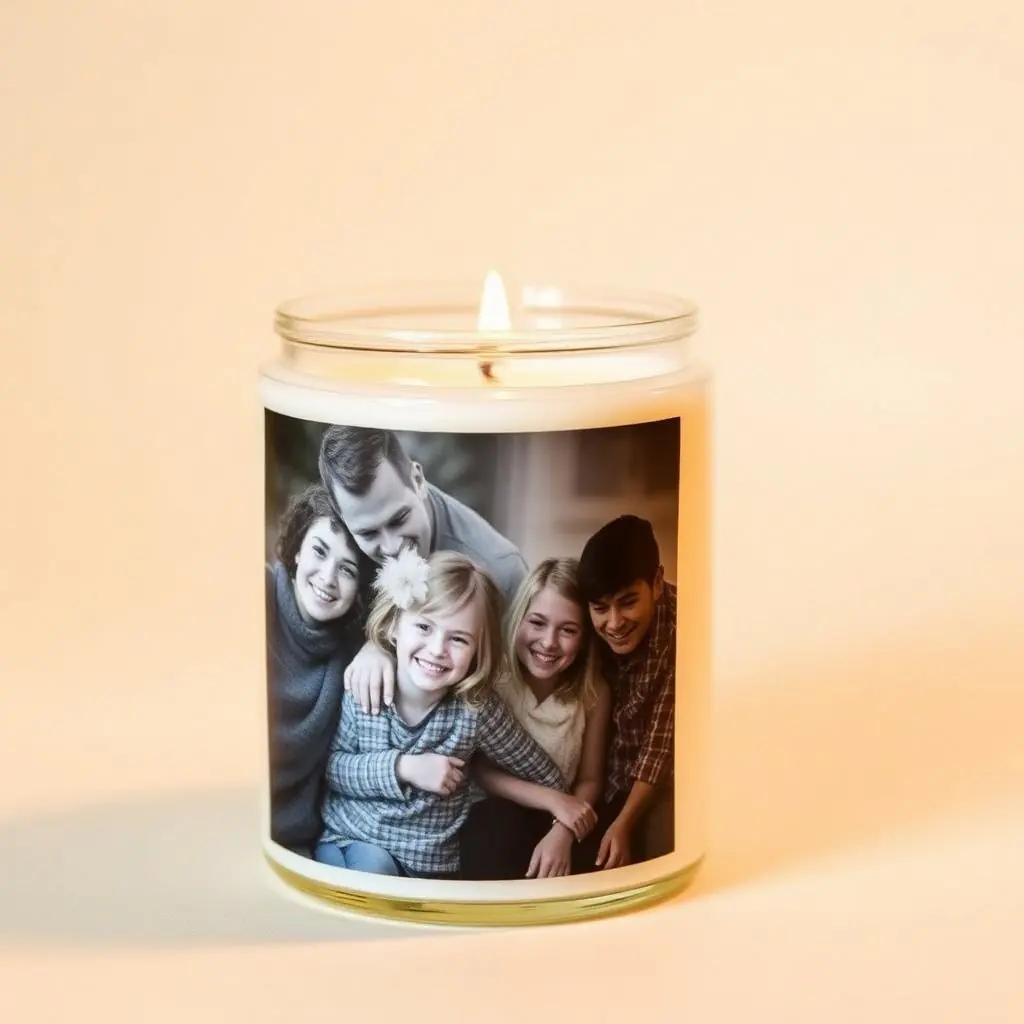
Soy Candle After Burning: What to Expect and What to Do

A soy candle that has been burned once rarely looks like the one you unwrapped. The top may be bumpy, frosty or pitted, a little wax may cling to the glass, and the jar is still half full. Most of this is normal for natural wax. What you do in the hours after the flame goes out decides how the candle looks, smells and lasts next time. This guide covers what the wax should look like, how to put a candle away, what to do with the last of the wax, and what happens to soy wax once it is thrown out.
If you are giving a personalized candle as a gift, this is also the care note worth passing on. Every candle we make is hand-poured soy with a hand-proofed label, so the label and the wax stay presentable for the whole life of the candle.
TL;DR
- A rough, bumpy, frosty or pitted top after a burn is a common look for soy wax and is cosmetic. A pool of wax that never reaches the jar’s edge is a different matter, and is about the wick.
- Let the wax set, put the lid back on, and keep the candle somewhere cool, dark and dry, away from direct sunlight.
- Leftover wax can be scooped out, and the jar can often be recycled once it is empty. Never pour wax down a drain.
- Soy wax is a vegetable-based wax and is biodegradable, but the speed depends on conditions, and a finished scented candle may not behave like pure wax in a lab.
Table of Contents
- What a soy candle looks like after the first burn
- Putting a soy candle away after burning
- Wax on the glass, spills and fabric
- What to do with the last of the wax
- Is soy wax biodegradable?
- What the leftovers mean for pets and households
- Our view on soy and the second life of a candle
- A candle made to be kept
- FAQ
- Sources
What a soy candle looks like after the first burn
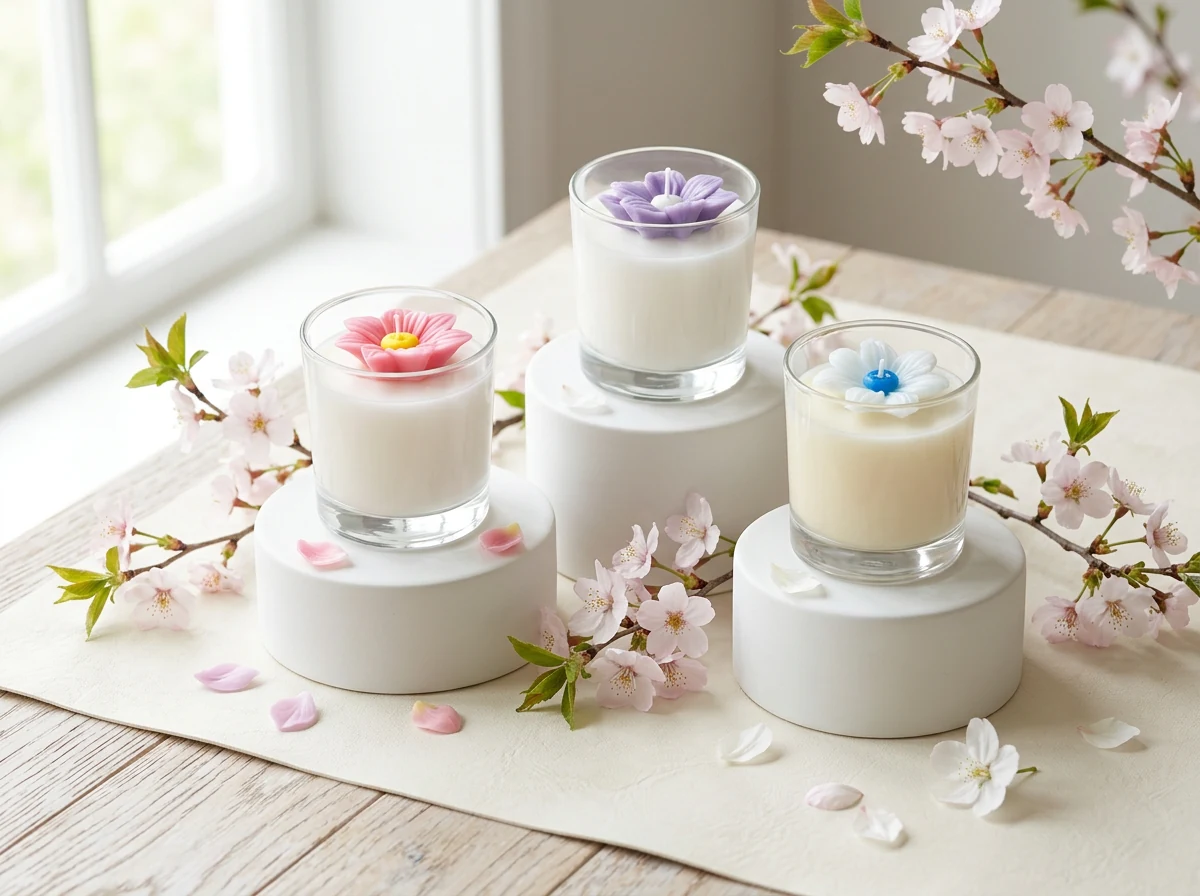
Soy wax is a natural material. It is made from hydrogenated soybean oil, and it cools and sets differently from the paraffin most people grew up with. That is why a candle that was perfectly smooth in the box can look different once it has melted and re-set.
Three looks are common:
- A rough or bumpy top. Hot wax cools unevenly and sets in ridges or small peaks. The candle burns the same way it did before.
- White, frosty patches. Natural wax can form fine crystals as it cools, which shows up as a chalky white film on the top or against the glass. It is a surface effect and does not change how the candle burns or smells.
- Small pits or sinkholes. As the pool shrinks while cooling, the surface can dip or crack. Nothing is wrong with the candle.
Every personalized candle we ship is proofed by hand for print and presentation before it leaves us, so the label arrives crisp. After the first burn, though, the wax in the jar behaves like any natural soy wax, and the look of the top is not a sign of a flawed candle.
When it is not just cosmetic
The one thing worth watching is the melt pool. If you burn a candle long enough for the surface to liquefy and the wax still stops well short of the edge, leaving a tunnel down the middle, the cause is usually the wick, not the cooling. A tall, smoky or flickering flame is the opposite wick problem. Cosmetic flaws come from how the wax cools. Burn behavior comes from the wick and the candle’s design.
The practical rule: do not judge a candle by its cooled top. Judge it by how the flame and the pool behaved while it was lit. Our candle care guide walks through the burn habits that keep the pool even, and our post on how long soy candles last explains what to expect from burn time.
Putting a soy candle away after burning
The aim is simple: let the wax set fully, protect the scent, and keep the candle away from heat.
- Let it cool and set. Leave the candle where it burned until the wax has hardened. Do not move a jar of liquid wax.
- Put the lid back on. Once the wax is cool, the lid keeps dust off the surface and helps hold the fragrance in.
- Store it somewhere cool, dark and dry. The National Candle Association’s expert tips say to avoid direct sunlight and harsh indoor lighting. Warmth softens soy wax, and light can fade labels and color.
- Leave some wax in the jar. The same trade association notes that residual wax can help stop a candle from getting too hot, and how much is left varies with burn time and room temperature. Burning a candle right down to the glass is not needed.
For a keepsake candle, such as a photo candle or a wedding favor you want to keep on a shelf, storage matters even more. Heat is what harms scent and print over time, and our note on candle storage and the 85°F threshold explains why a sunny windowsill or a hot car is the wrong place.
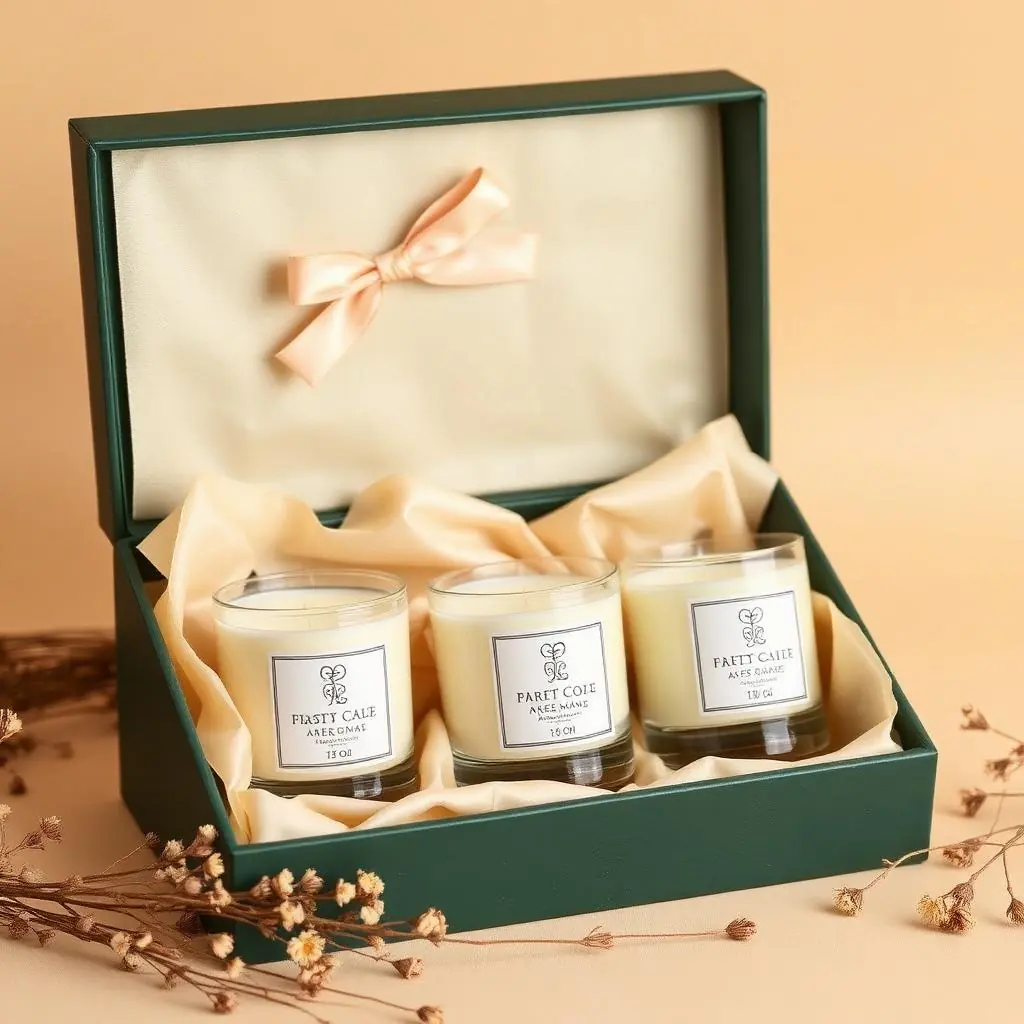
All our orders ship in keepsake packaging with a handwritten card, so the box the candle arrives in is also a good place to keep it between burns.
Wax on the glass, spills and fabric
Soy wax is softer than paraffin, so drips and smears on glass or a table are usually easy to lift once the wax has set. If wax gets onto fabric or a hard surface, our guide to removing candle wax from anything covers the methods by material.
What to do with the last of the wax
When a candle has burned low, you have three sensible options.
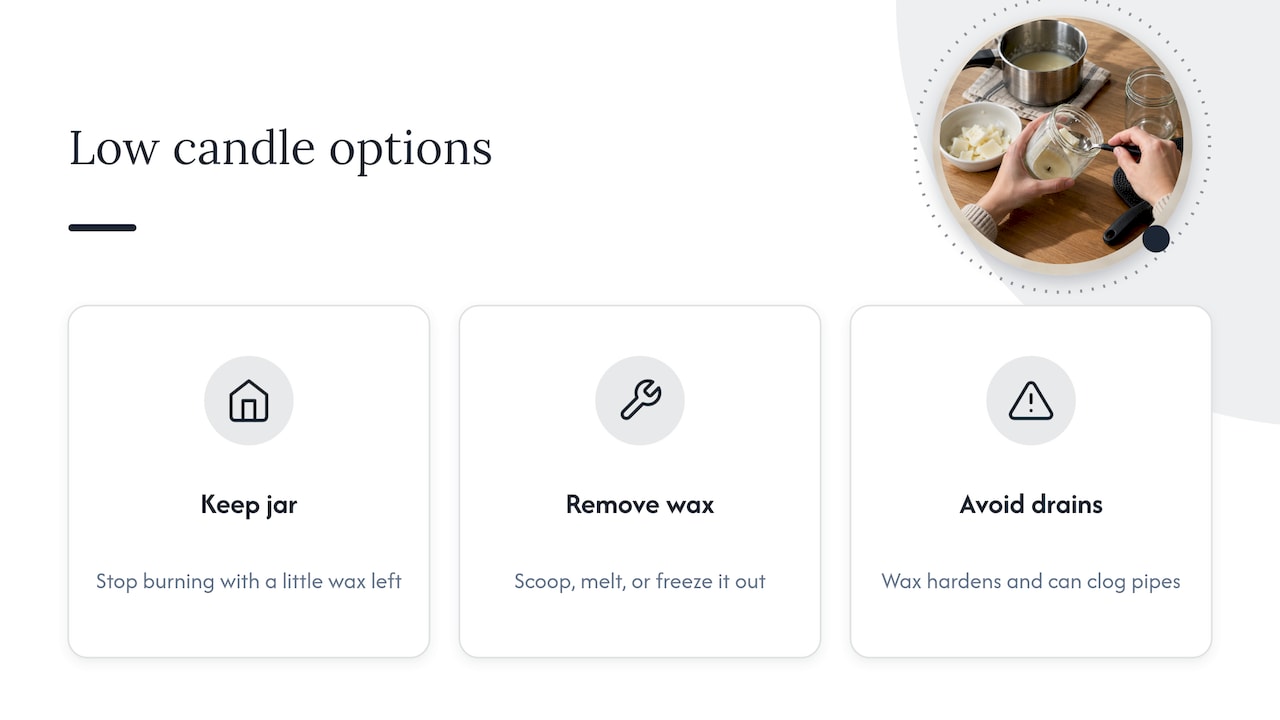
Stop burning and keep the jar. A clean, empty jar is a reusable container. We suggest stopping while there is still a little wax at the bottom, then following our steps to clean, reuse and recycle candle jars.
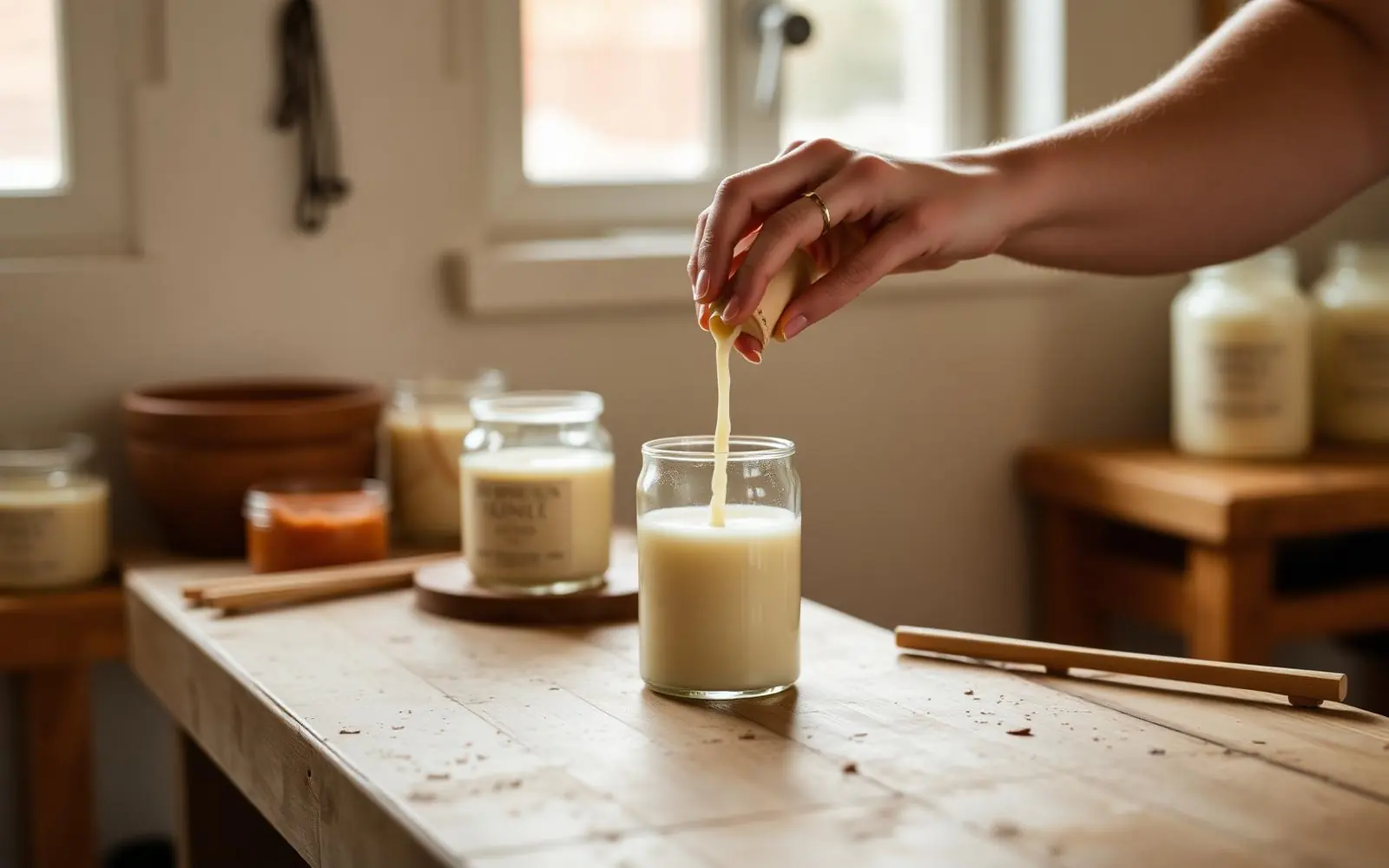
Scoop or melt out the remainder. San José’s city recycling guide says candle wax itself is not recyclable, but tins and jars often are once the wick and remaining wax are removed. It suggests scooping the wax out, melting it, or freezing it so it releases from the container more easily.
Keep it out of the sink. The same city page warns never to pour candle wax down a drain, because it cools, hardens and can clog pipes. Let it set first, then lift it out and bin it.
Recycling rules differ from city to city, so check your local program’s page for the jar and for any metal lid or label before you put it in the bin.
Can you remelt leftover soy wax?
Soy wax can be melted and set again, which is why it is popular with people who like to craft. For a finished candle, though, there is little reason to. The wax in your jar has already been scented and blended for that wick, and a remelted blend will not burn the way the original was designed to. If you want a fresh scent and a clean burn, a new candle is the better route. If you just want to use up the last bit of fragrance, our wax melts are made for that.
Is soy wax biodegradable?
Yes, in the sense most readers mean. Soy wax is a vegetable-based wax, and the National Candle Association states that studies have shown vegetable-based waxes are biodegradable. It also describes soy candles as made from vegetable oil and biodegradable in its sustainability tips.
How fast it happens depends on the setting. A peer-reviewed study in the journal Sustainability, published in January 2026, tested wax beads in simulated compost at 40°C and 60% humidity. Soy wax lost 74% of its mass by day 45 and reached 99% degradation by day 180. The authors link this to the triglycerides in hydrogenated plant oils, which microorganisms can use as food.
Three points help you read that result sensibly:
- Conditions drive the pace. The U.S. EPA’s solid waste guide describes biodegradation as an ongoing biological process whose rate depends on the environment, and it notes that too much moisture can create oxygen-poor conditions. A warm, managed compost behaves differently from a landfill or a garden bed.
- The study used plain soy wax. The test beads had no fragrance or dye. A finished scented candle is a different product, so treat the 180 days as a picture of the wax itself, not a promise about every candle.
- “Soy candle” can mean a blend. The National Candle Association explains that candle waxes are often used in blends and customized formulations, so a candle labeled soy is not always made from soy alone.
In short, the wax is plant-based and breaks down far more readily than petroleum-derived wax. For a deeper look at ingredients and environmental impact, see our guide to soy wax and eco-friendly candles.
What the leftovers mean for pets and households
Pet owners often ask whether a used candle is safer than a burning one. The honest answer is that the care steps matter most: keep candles, wax and melted pools out of reach of curious animals, and never leave a flame unattended. Our candles use phthalate-free fragrances and lead-free wicks, and pet owners can check the essential oil content of what they buy. Our post on soy, phthalate-free, lead-free candles for cat owners goes through the specifics. If a pet has swallowed wax or you are worried about a reaction, call your veterinarian.
If you are pregnant and wondering about burn times and ventilation, our guide to safe candle choices in pregnancy covers it, and your doctor or midwife is the person to confirm what suits you.
Our view on soy and the second life of a candle
We hand-pour every candle in soy because we want the part of the candle people keep to be worth keeping. The wax, the jar, the label and the card all stay in the house long after the flame is out.
The frosty top, the ridges, the little dip in the middle: we think of those as the fingerprints of a natural wax, not flaws. What matters is a clean burn while it is lit, and that comes from a good wick and honest ingredients. That is why we use lead-free wicks and phthalate-free fragrances, and why every order is proofed by hand before it ships.
A personalized candle is often the one people do not want to throw away, because it carries a photo or a few words that mean something. So we send it in keepsake packaging with a handwritten card, and we would rather you stop burning early and keep the jar than burn it to the bottom.
Jake
A candle made to be kept
If you are choosing a candle as a gift, the after-burn story is part of the gift. A candle with a printed photo or a message on the jar becomes a keepsake once the wax is gone. Our photo candles are printed on soy jars, and you can build one from scratch, choosing wax, scent, label and packaging, on our customize a candle page. Personalized orders ship within two days, with a handwritten card included as standard.
Planning a wedding or a client gift? Our weddings and favors start from $18 per candle, corporate and client gifting from $22 per candle, and boxed gift sets from $48.

For a gift that is meant to be burned slowly and kept, the same page lists the sets with the keepsake box and handwritten card that come with every order.
FAQ
Is it normal for soy wax to look white or bumpy after burning?
Yes. Natural soy wax often sets with a rough, frosted or pitted surface after it melts and cools. This is a cosmetic effect of how the wax crystallizes and does not change how the candle burns or smells. A melt pool that never reaches the edge of the jar is a separate wick matter.
Should I put the lid back on after the candle cools?
Yes, once the wax has fully set. A lid keeps dust off the surface and helps protect the fragrance. Store the candle somewhere cool, dark and dry, away from direct sunlight, as the National Candle Association recommends.
Is soy wax biodegradable?
Soy wax is a vegetable-based wax and the National Candle Association says studies show vegetable waxes are biodegradable. In a 2026 lab test in simulated compost, plain soy wax reached 99% degradation by day 180. Real-world speed depends on moisture, temperature and what else is in the candle.
How do I get rid of the leftover wax and jar?
Let the wax set, scoop or lift it out, and put it in the trash, never down the drain. Once the jar is clean of wick and wax, it can often go in the recycling, depending on your local program. Our guide on reusing and recycling candle jars has the steps.
Sources
- National Candle Association: Expert Tips
- National Candle Association: FAQs
- National Candle Association: Earth Day sustainability tips
- National Candle Association: Elements of a Candle, Wax
- Sustainability (MDPI), 2026: Biodegradation of Hydrophobic Coatings Based on Natural Wax
- U.S. EPA: Decision-Maker’s Guide to Solid Waste Management
- San José Recycles: Candles