






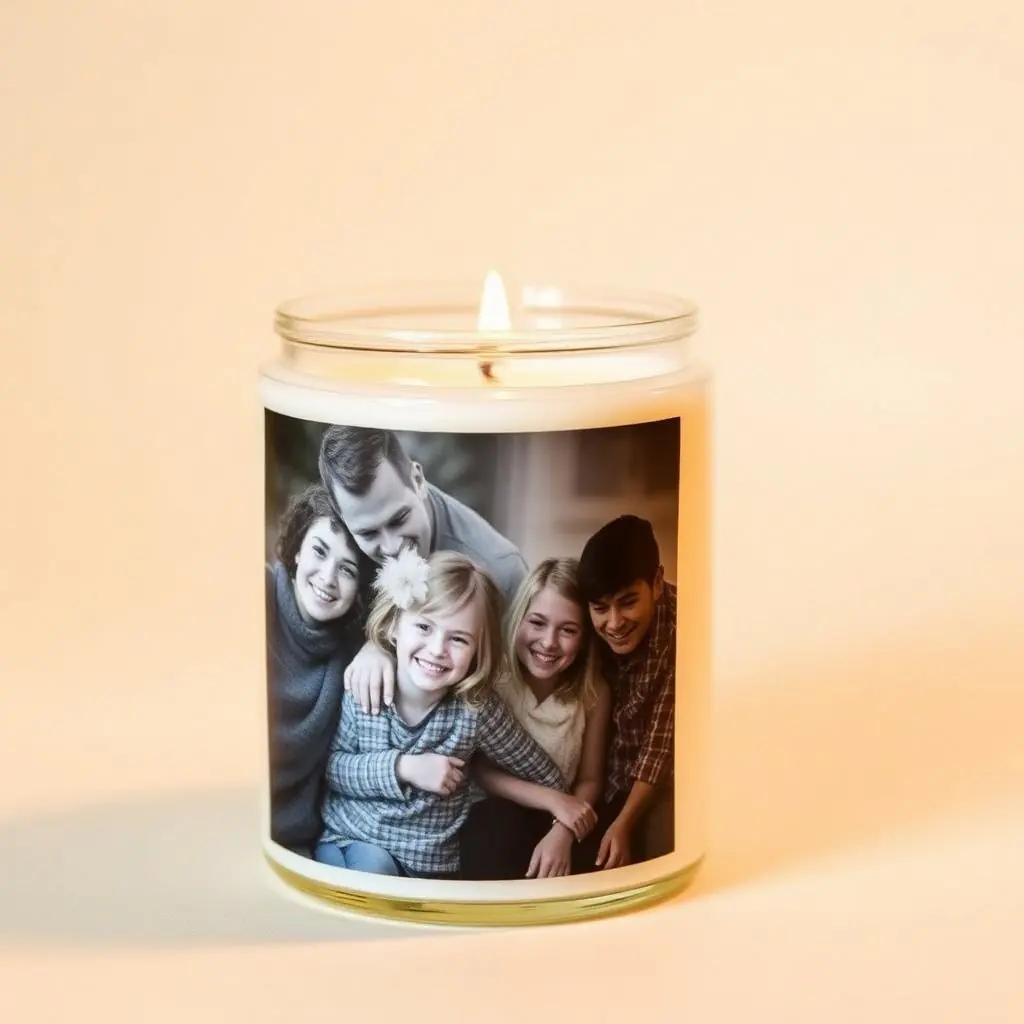
Safe Candle Placement: Where to Put Candles at Home

The safest spot for a lit candle is a sturdy, heat-resistant, uncluttered surface, at least 12 inches from anything that can burn, out of drafts, out of reach of children and pets, and in a room where you are awake and present. Fire agencies agree on that, and the rest of this guide shows how to apply it to a coffee table, a mantel, a dinner table, or a wedding reception. If you burn photo candles, gifted keepsakes or favors, the same rules apply, and they protect the candle as well as the room.
TL;DR
- Keep every lit candle at least 12 inches from curtains, bedding, books, paper, and decorations, as the U.S. Fire Administration advises.
- Set it on a flat, stable, heat-resistant surface, inside a sturdy holder that cannot tip, never under a shelf and never in a draft.
- Skip bedrooms, bathrooms, and any place where you might fall asleep. Blow the flame out when you leave the room.
- Choose spots children and pets cannot reach or knock over, and leave space between multiple candles.
- Stop burning before the wax reaches the bottom of the jar, because the heat can crack the container.
Table of Contents
- The 12-inch rule: the number that matters most
- What a safe surface and holder look like
- Room by room: where to put candles
- Placement mistakes that cause problems
- Placement around kids and pets
- Placing candles for weddings and parties
- How likely is a candle fire, really?
- Does the 8:10 rule affect placement?
- A quick pre-light checklist
- Our view on placement
- Give a candle worth placing well
- FAQ
- Sources
The 12-inch rule: the number that matters most
If you remember one measurement, make it twelve inches. The U.S. Fire Administration says to keep candles at least 12 inches from anything that burns. The Texas Department of Insurance and NFPA, the National Fire Protection Association, give the same one-foot buffer. Canadian provincial guidance uses its metric equivalent: Ontario and Québec both say 30 centimetres.
The distance applies in every direction, including up. Think of a 12-inch bubble around the flame, and look for anything inside it: a curtain edge, a stack of mail, a dried floral arrangement, a throw blanket, a framed print with a paper mat, a loose sleeve when you lean across the table.

Why this one rule gets so much attention: NFPA’s 2020 to 2024 candle-fire analysis found that over half of candle fires started when flammable décor or other combustible material was too close to the flame. Placement is the most common thing that goes wrong, which also makes it the most fixable.
What a safe surface and holder look like
A candle needs two things underneath it: a holder that will not tip, and a surface that can take the heat.
The holder
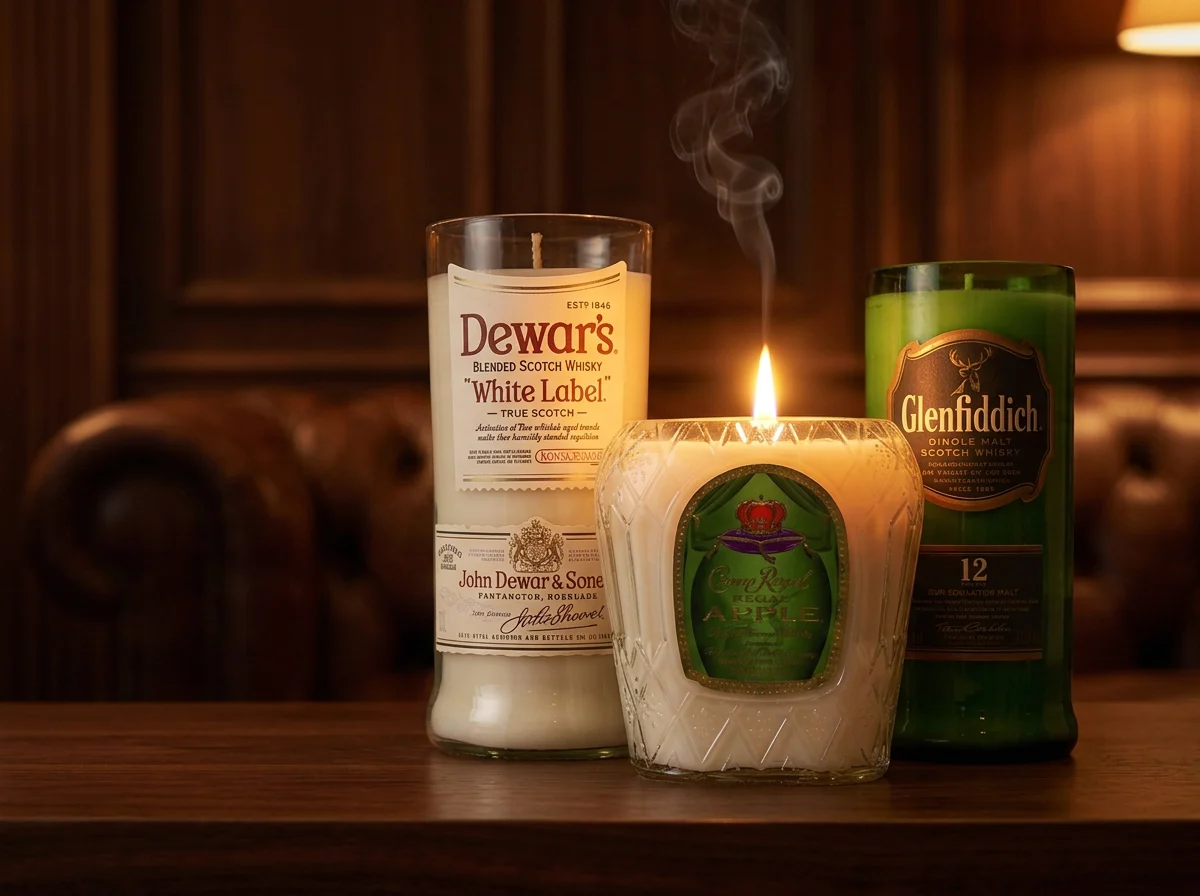
The Scottish Fire and Rescue Service says holders should be sturdy, non-flammable, and heat-resistant, and the candle should fit securely so it cannot fall over. Ontario’s guidebook likewise asks for sturdy non-burning containers that will not tip. A candle poured into a heavy glass jar, ceramic vessel, or recycled bottle already has a stable base. A taper or pillar needs a proper holder.
Tealights are the exception that catches people out. The Scottish guidance says they need a purpose-designed, sturdy, non-flammable holder on a flat, stable surface, because hot wax can spill and the little cup can fall over.
The surface
The Texas Department of Insurance recommends a sturdy, heat-resistant surface. Cambridgeshire Fire and Rescue Service adds a detail most guides miss: the landing surface matters as much as the holder. It warns against putting candles directly on a television or on polished surfaces and suggests a heat-resistant support such as a ceramic plate.
In practice:
- Good: a solid wood or stone table, a ceramic tray or plate, a metal or stone trivet, a clear countertop.
- Questionable: a glass-top table that is not rated for heat, a polished or varnished sideboard, a stack of books, a wobbly side table.
- Never: on top of a television or speaker, on a windowsill with curtains, on a surface piled with clutter.
A tray or trivet earns its place for a second reason. Wax, soot, and glass heat can mark finishes, and a base protects your furniture along with your home.
Room by room: where to put candles
Living room
The coffee table is usually the best spot: it is low, stable, and central. Clear the books and remote controls first. Mantels work if nothing hangs above the flame. Avoid placing a candle right beside a sofa arm where a throw blanket or cushion can drift into the 12-inch zone.
Dining room and kitchen
A dining table suits candles well because you are sitting there, awake, and watching. Keep taller flames away from floral arrangements and napkins, and keep candles away from the stove, where sleeves and towels move. Avoid putting a candle on a counter where someone will reach across it.
Bedrooms and bathrooms
Here is where the official advice is firmest. The U.S. Fire Administration advises against lit candles in bedrooms, bathrooms, and sleeping areas, and says to blow them out when you leave the room or go to bed. NFPA’s data points the same way: 36% of candle fires began in bedrooms, and 21% of the fires in the earlier federal study involved an unattended or unsupervised person, with 12% beginning after the user fell asleep.
That does not mean a candle has no place near the bath. Enjoy the candle in the living room or dining room, then bring the calm elsewhere: unlit, a candle is still a lovely bedside or bathroom decoration.
Entryways and hallways
These are traffic zones. Coats, bags, and swinging doors all pass through the 12-inch bubble. Use them for unlit display candles and keep your burning candles where people are sitting still.
Placement mistakes that cause problems
Drafts, windows, and vents
The Texas Department of Insurance says to keep candles away from windows, fans, vents, and drafts. The South Australian Metropolitan Fire Service explains why: drafts can melt wax unevenly, which makes the candle unstable and more likely to fall. It also advises against windows where blinds or curtains may touch the flame.
The window is a tempting spot for a pretty photo candle. Move it to a table a few feet from the glass instead.
Under shelves and cabinets
The Scottish Fire and Rescue Service warns against placing candles under shelves, because rising heat can cause a fire. Heat travels up, so check the space above the flame as carefully as the space beside it. A candle on a bookshelf with another shelf two inches above it fails this test.
Clusters of candles
Buckinghamshire Fire & Rescue Service says not to put several burning candles or tealights close together, because heat can build up and cause flaring. If you want a grouped display, leave a few inches between each jar so the flames do not heat each other’s wax.
Moving a lit candle
Do not carry or shift a candle while the wax is liquid. Let it burn in place, then blow it out, wait until it cools, and move it.
Burning to the bottom
The Scottish guidance says not to burn a candle to the bottom, since the heat can crack or break the container. Retire a jar candle when a small layer of wax remains.
Power outages
Montgomery County, Maryland Fire and Rescue Service recommends flashlights or battery-powered lighting rather than candles during an outage, and says not to use a candle in a home where oxygen is used.
Placement around kids and pets
The Québec government calls for a stable candleholder on a stable surface, more than 30 centimetres from flammable objects, and out of reach of children and pets. The Metropolitan Fire Service in South Australia names the same risk: flames where children or pets could knock them over.
For a house with a wagging tail or a climbing cat, think in terms of heights and paths:
- Use the center of a deep, heavy table instead of the edge.
- Skip low coffee tables if a dog sweeps its tail across them.
- Keep candles off shelves a cat can jump to.
- Put the candle in a spot the pet does not cross at all, such as a closed-off room you are sitting in with the animal supervised, or a high, deep mantel.
Placement is half of pet-friendly burning. The other half is what the candle is made of. Our guides on which candles are safe for cats and dogs and candle safety for cat owners go through ingredients, and our dog article covers real risks and warning signs. Every Custom Candle Co. candle uses phthalate-free fragrances and lead-free wicks, and pet owners can verify the essential oil content of a candle they are considering.
Placing candles for weddings and parties
Events bring crowds, long dresses, and moving arms, so the same rules need more planning.
- Confirm venue rules early. Many venues have their own candle policies, so ask before you order favors or centerpieces. Our guide to venue-safe wedding candle centerpieces walks through this.
- Use the middle of the table. Centerpiece candles in stable jars are away from sleeves, programs, and guests reaching for glasses.
- Leave space around florals. Greenery and dried arrangements count as combustibles, so keep the 12-inch bubble clear.
- Keep flames away from drapes and linens. Ceremony backdrops, curtains, and table runners are the usual culprits.
- Assign someone to watch. Candles should never burn unattended, and a named person to snuff them at the end of the night is part of the plan.
- Give favors as keepsakes. A candle your guests take home is placed by them, so a short card about where to burn it is a thoughtful addition.
Our wedding candles start from $18 per candle on the weddings and favors page, and each one is proofed by hand for print and presentation before it ships.
How likely is a candle fire, really?
The numbers explain why fire services repeat the same advice. The U.S. Fire Administration says an average of 20 home candle fires are reported each day. NFPA’s candle-fire statistics say U.S. fire departments responded to an estimated annual average of 5,894 home structure fires started by candles during 2020 to 2024. Those fires averaged 63 civilian deaths and 532 civilian injuries a year, with $286 million in property damage.
Behind those figures sits the same short list: combustibles too close, a candle left unattended, someone falling asleep. All three are things a placement habit can solve. Pick the right spot, and stay in the room.

Does the 8:10 rule affect placement?
Not for safety. Elle Decor describes the “8:10 rule” as scenting advice: roughly one 8-ounce candle for every 10 feet of room. It helps you decide how many candles a space needs. Fire-safety placement follows the 12-inch rule and the surface rules above. If you want help choosing a scent by room, see our guide to choosing candle scents by room, mood, and memory.
A quick pre-light checklist
Before you strike a match, run through this in ten seconds:
- Is the candle on a flat, stable, heat-resistant surface?
- Is anything that burns within 12 inches, above or beside it?
- Is there a shelf, cabinet, or vent overhead or a draft nearby?
- Can a child, a pet, or your own elbow knock it over?
- Are you staying in the room?
If the answers are yes, no, no, no, yes, you are set. When you finish, blow the candle out and let it cool before you move it. Unlit candles keep best when stored cool, and our note on candle storage and heat explains what happens near 85°F.
Our view on placement
A candle with someone’s photo or words on it tends to become a display piece, and that is where placement goes wrong. People want the keepsake front and center: on the mantel, beside the frames, in the window where everyone sees it. We would rather you enjoy it safely.
Our advice is simple. Give the candle a place of honor that is also a safe one: a clear table, a tray, a spot at least a foot from anything that burns. Light it when you are there to enjoy it, and blow it out when you leave. Then keep it on display, unlit, between burns.
That is the thinking behind how we make our candles. We pour them in soy, use phthalate-free fragrances and lead-free wicks, and proof every print and presentation by hand before it ships. Each order arrives in keepsake packaging with a handwritten card, so a gift reaches its recipient ready to be placed well and enjoyed.
Jake
Give a candle worth placing well
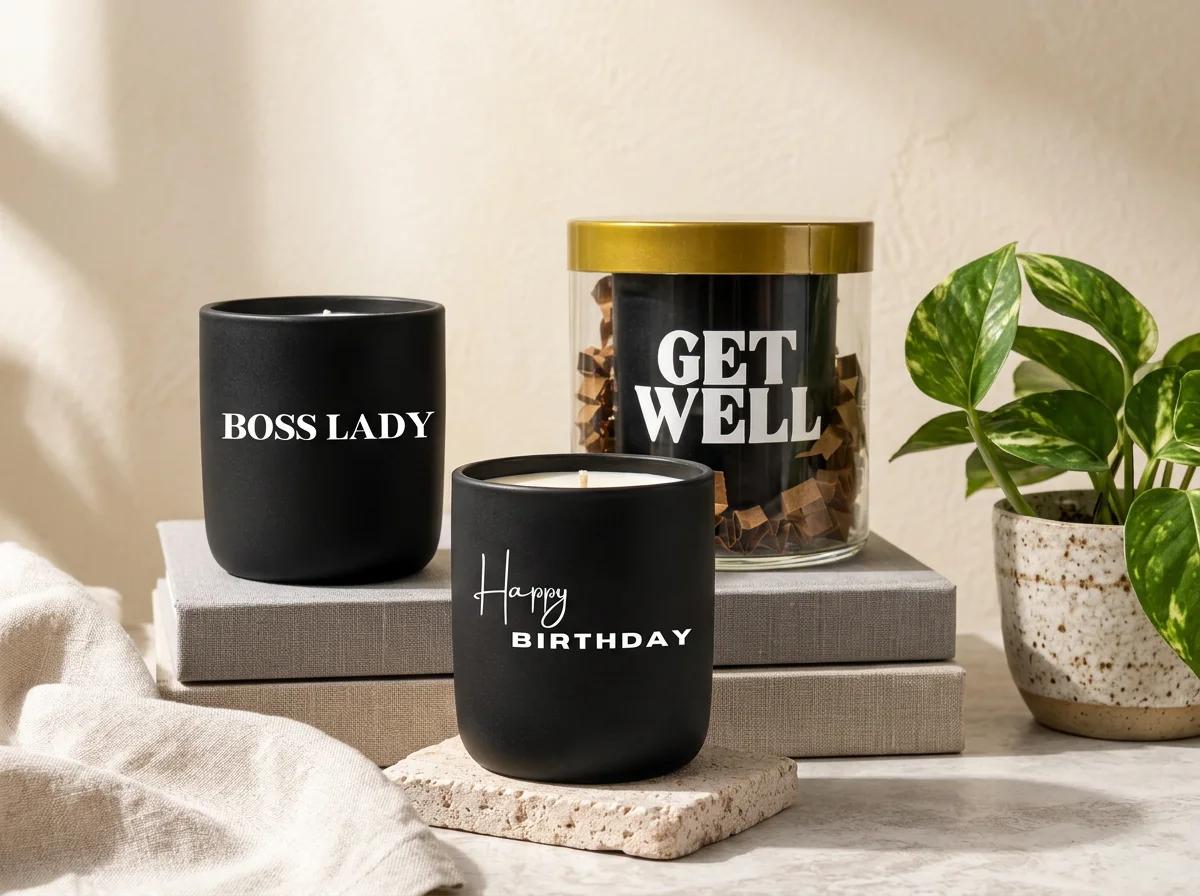
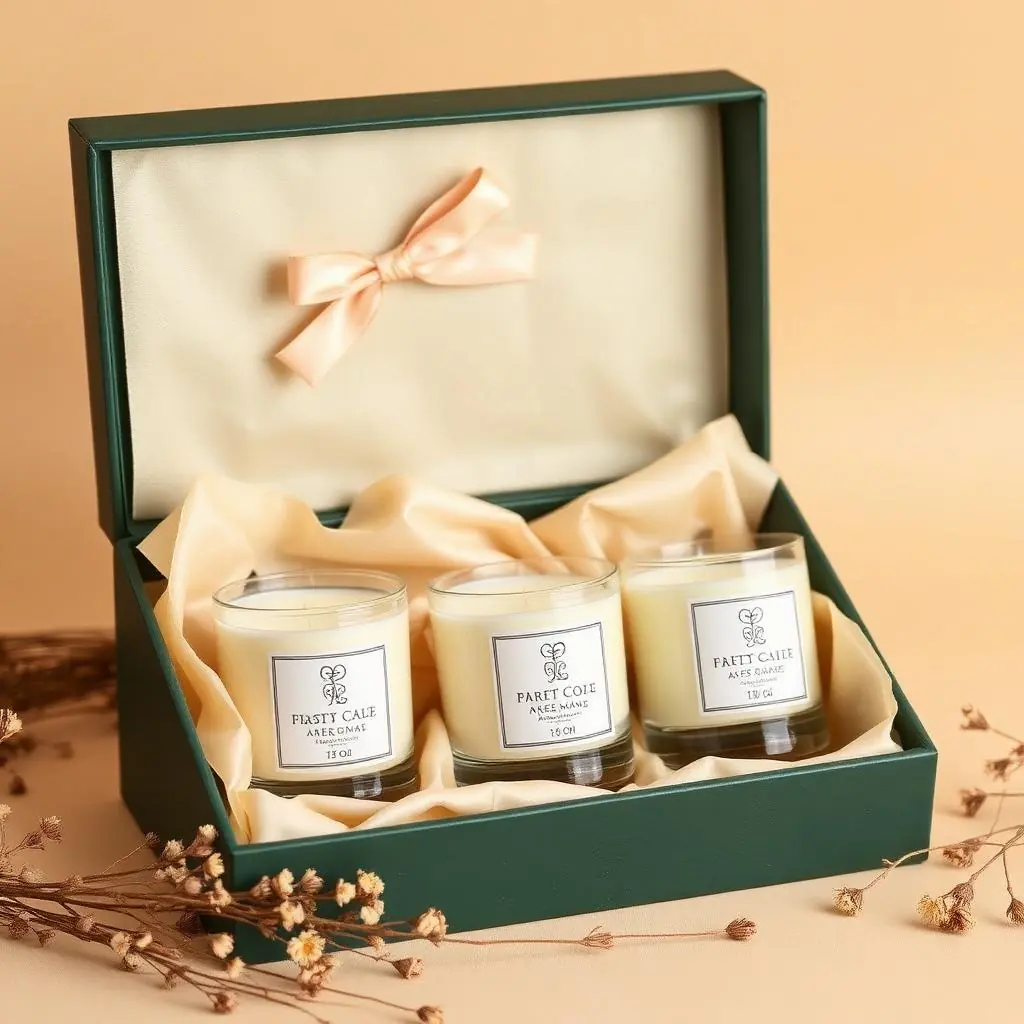
If you are choosing a gift, a candle printed with a photo or a few meaningful words is one the recipient will want to display. Our photo candles and personalized candles are hand-poured in soy, proofed by hand before every print, and shipped within two days. Boxed gift sets start from $48 on our gifting page.

For home decor, our custom candles and the photo home decor ideas guide show how to build a vignette that looks good and leaves room around the flame.
FAQ
Where is the safest place to put a candle?
On a flat, stable, heat-resistant surface, in a sturdy holder, at least 12 inches from anything that burns. Choose a room where you are awake and present, away from drafts, vents, and windows. The U.S. Fire Administration also says to blow out candles when you leave the room or go to bed.
Where should you not place a candle?
Avoid bedrooms, bathrooms, and sleeping areas, as well as spots under shelves, near curtains, on televisions, and in drafts. Keep them off edges and low tables where children and pets can knock them over, and away from clutter such as paper or fabric.
Can I put a candle on a windowsill?
It is better not to. Blinds and curtains can touch the flame, and drafts can melt the wax unevenly and make the candle unstable. Place it on a table a few feet from the window.
Is it safe to burn several candles together?
Yes, with space between them. Fire services warn that burning candles or tealights close together can build up heat and flare, so leave a few inches between each jar and keep the whole group at least 12 inches from anything flammable.
Does a jar candle still need a holder?
A sturdy jar is its own holder, but it still needs a flat, heat-resistant surface. Stop burning before the wax reaches the bottom, since the heat can crack or break the container.
Sources
- Candle Fire Safety, U.S. Fire Administration
- Candle safety, Ontario Fire Safety Guidebook
- Candle safety, Scottish Fire and Rescue Service
- Candles, Cambridgeshire Fire and Rescue Service
- Candles, Metropolitan Fire Service (South Australia)
- Protecting against fire hazards when using candles, Québec
- How to stay safe with candles, Texas Department of Insurance
- Cook and use candles with caution on Valentine’s Day, NFPA
- Safety with candles, NFPA
- Candle Fires in Residential Buildings, U.S. Fire Administration
- Candles, Incense and Oil Burners, Buckinghamshire Fire & Rescue Service
- Candle Safety Tip Sheet, Montgomery County Fire and Rescue Service
- Candle Care Guide, Elle Decor