


From $18: Venue Safe Wedding Candle Centerpieces for Couples

The best wedding candle centerpieces mix at least two formats, usually layered taper clusters or pillar-and-votive groupings, floating bowls, or lantern clusters, so the tablescape has visual height and low glow at once. Choose real flame when your venue allows open fire and you want authentic warmth; switch to high-quality LED when the venue bans open flame or you’re outdoors somewhere breezy. Either way, confirm your venue’s fire rules before you order a single wick.
TL;DR:
- Use layered candle formats such as tapers, pillars, votives, or floating candles matched with the venue’s fire rules for safety and aesthetic cohesion.
- Build a full mock table to test flame clearance, height variation, and sight lines before making bulk orders or finalizing candle selections.
- Match wax types across the room to avoid subtle inconsistencies in flame color, with beeswax lasting longer and soy burning cleaner for personalized scents.
- Confirm in writing whether open flames are permitted, what enclosure types are required, and if permits are necessary to avoid last-minute restrictions or safety violations.
- Order candles 4 to 6 weeks ahead, store in climate-controlled spaces, and transport carefully to prevent wax damage or label scuffs, ensuring timely delivery and safe setup.
Table of Contents
- Wedding Candle Centerpiece Ideas by Style
- Which Candle Formats and Wax Types Work Best?
- What Venue Safety Rules Apply to Wedding Candles?
- How Many Candles Do You Need, and What Do They Cost?
- Setting Up and Managing Candles on the Wedding Day
- Why Proofed, Personalized Candles Reduce Day-Of Risk
- How Do You Transport and Store Candles Before the Wedding?
- What Actually Matters When You’re Planning This
- Order Your Wedding Candle Centerpieces
- Sources
- FAQ
Wedding Candle Centerpiece Ideas by Style
Candles read differently depending on the wedding aesthetic around them, and the fastest way to get a cohesive tablescape is to pick one format combination and repeat it across every table. Stylists who work receptions for a living rarely rely on a single candle type. They layer.
For a classic or formal wedding, tall taper clusters in gold or silver candlesticks (or a full candelabra down the table’s center) deliver the drama associated with ballroom weddings. Group tapers in odd numbers, three or five per cluster, and vary the heights slightly so the flames don’t sit in a flat line. This is one of the clearest applications of a rule floral and event designers keep repeating: layering at least three distinct candle heights is what separates a professional-looking table from a flat one.
For rustic or boho weddings, pillar candles inside lanterns or set directly on wood slices, surrounded by loose votives, feel unfussy without looking accidental. The wood grain and the uneven candle heights do most of the work.

For modern or minimalist tables, low floating candles in clear glass cylinders paired with a single greenery sprig or a mirrored base plate keep the eye at table level, which suits a room that’s already visually busy with lighting or architecture.
For intimate or micro weddings, a dense ring of votives around a single low pillar, with a scattering of tealights between place settings, creates warmth without demanding a large tablescape budget.
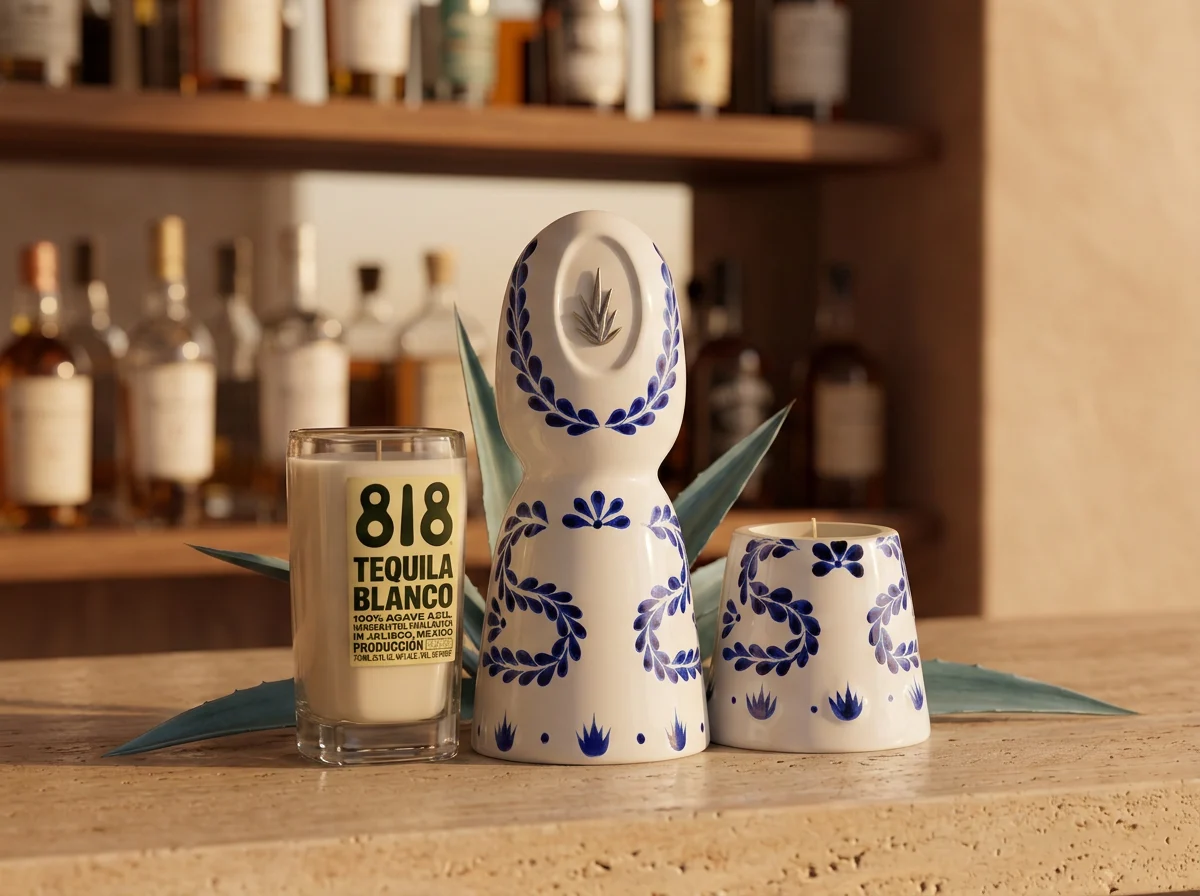
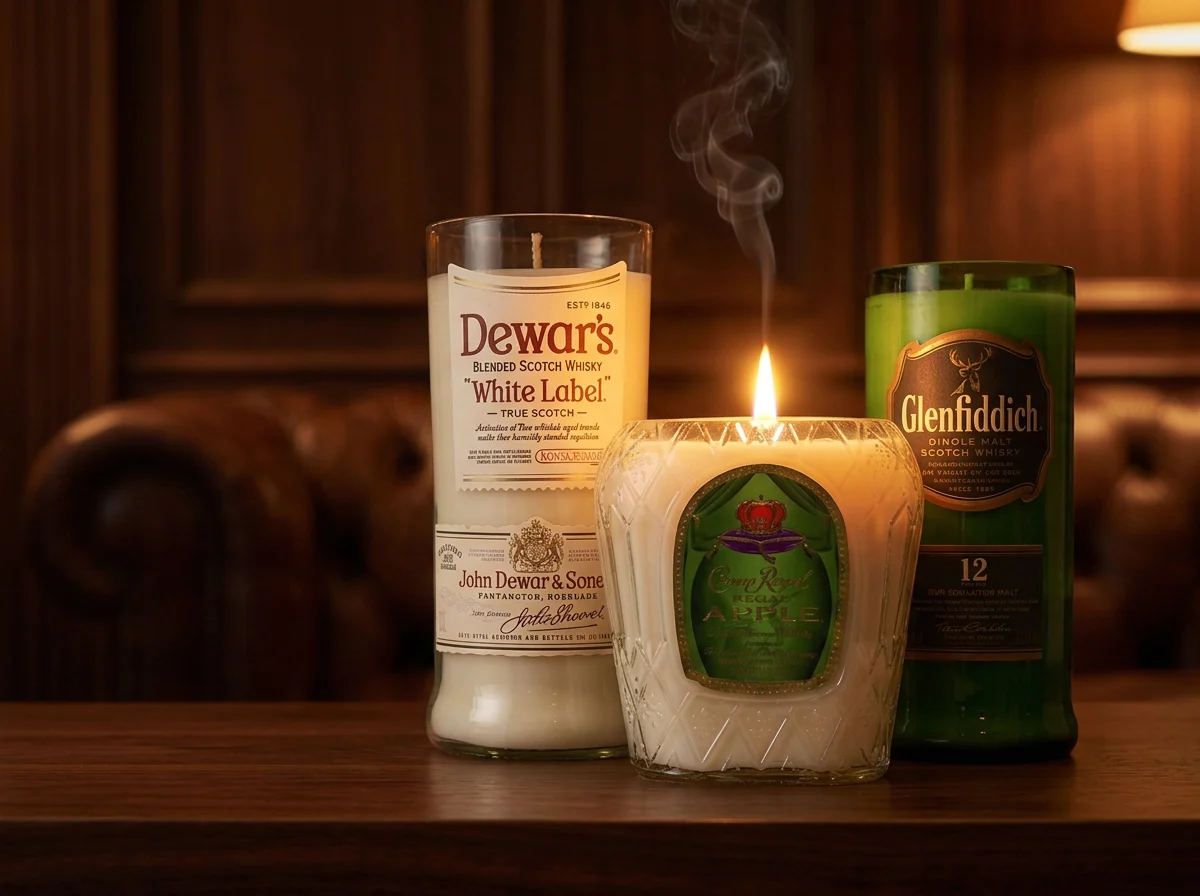
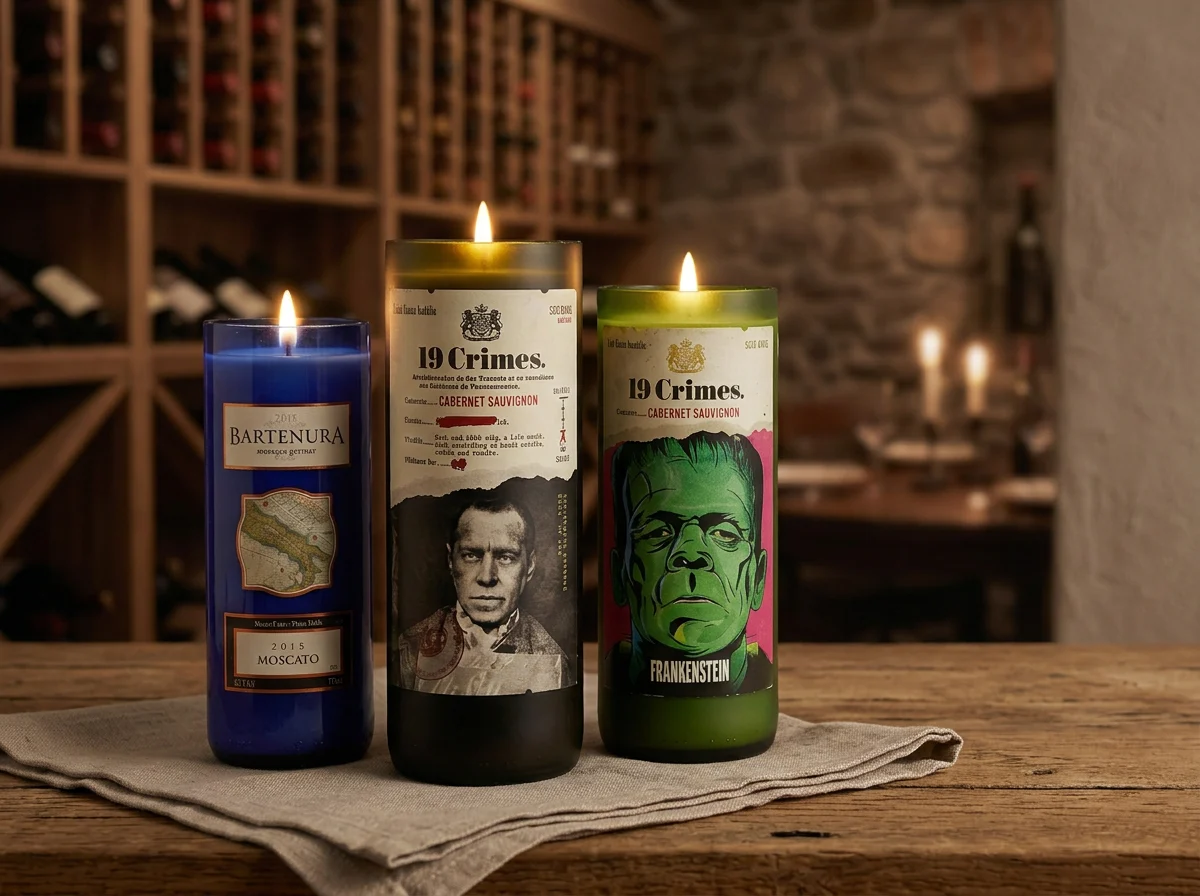
Two DIY variants consistently show up in real wedding budgets. Mason jars filled with votives or tealights cost almost nothing and look intentional when you add a ribbon or twine wrap. Recycled wine bottles, cleaned and fitted with drip pillar candles, make striking centerpieces for wineries, barns, or outdoor receptions.
Quick reference by style:
- Classic/formal: tapers + candelabra, odd-numbered clusters, varied heights
- Rustic/boho: pillars in lanterns or on wood slices + scattered votives
- Modern/minimal: floating candles in clear cylinders + single sprig or mirror base
- Intimate/micro: votive ring + one low pillar + tealights between settings
- DIY/budget: mason-jar votives or wine-bottle pillar holders
Design pros advise treating candles as a planned element, not an afterthought, and testing a full mock table before committing to a bulk order across ten or more tables.
Which Candle Formats and Wax Types Work Best?
Format decides the shape of your light; wax decides how long it lasts and what color the flame throws. Tapers give you vertical drama and work best in candlesticks or candelabras where height matters more than burn time. Pillars are heavier, slower burning, and double as a stable focal point when you don’t want a delicate flame near florals. Votives and tealights fill in low-level glow between larger pieces and are the cheapest way to add flicker across a big table. Floating candles sit flat in bowls or cylinders and reflect light off water or mirrored surfaces, which photographs beautifully but limits how tall the arrangement can go.
Wax matters more than most couples expect. Beeswax burns warmer and, size for size, roughly 25% longer than paraffin, which makes it the better choice for a long cocktail hour into dinner. Soy wax burns cleaner than paraffin and holds fragrance well in jar candles, a good fit if you’re personalizing scents for the reception. Paraffin is the budget option, but its flame runs slightly bluer and can look mismatched next to warmer waxes on the same table.
- Beeswax: warm flame, longer burn, higher cost
- Soy: clean burn, holds scent well, ideal for jars
- Paraffin: least expensive, cooler flame tone
- Blends: often used to balance cost against burn quality
Match wax type across a room rather than mixing beeswax centerpieces with paraffin tapers at the bar; the difference in flame color is subtle but visible in photos.
Pro Tip: Trim every wick to about a quarter inch before lighting. A long, untrimmed wick produces a bigger flame, faster wax pooling, and more smoke, none of which you want near a bridal party in white linen.
What Venue Safety Rules Apply to Wedding Candles?
Fire codes treat reception halls as assembly occupancies, and most of them do not allow unrestricted open flame on guest tables. Before you order anything, get these answers in writing from your venue or a fire marshal:
- Is open flame permitted at all in this room, or only enclosed flame?
- What enclosure type is required (hurricane glass, lantern, sealed votive holder)?
- What clearance distance is required between the flame and any linens, florals, or programs?
- Does the venue or municipality require a permit for candle use?
One municipal fire specification lays out exactly what “adequate safeguards” means in practice: table candles need stable, noncombustible bases and protected enclosures, and many assembly spaces won’t approve open flame at all without that setup. Other municipal guidelines go further, requiring votives and tealights to sit inside enclosures with a minimum clearance between the flame tip and the container rim, and reserving the right to restrict candles entirely depending on the venue’s fire history and permit status.
For holders, deep hurricane cylinders and sealed lanterns are the safest bet because they contain the flame and shield it from draft or fabric contact. Weighted votive holders prevent tipping on uneven outdoor surfaces. If your venue restricts flame outright, high-quality flameless LED candles solve the problem entirely and can look nearly identical in photos, while also avoiding $150 to $300 in potential permit or liability costs some venues charge for open-flame approval.

How Many Candles Do You Need, and What Do They Cost?
Planners commonly use 3 to 6 votives per guest table as the baseline, then layer in focal pillars or tapers for centerpiece height. For an 80-guest reception split across 10 tables, a typical order looks like this:

Buying holders once and reusing them across formats saves more money than shopping for cheaper candles, since holder rentals or purchases are usually the bigger line item. Order a 5% to 10% buffer above your table count to cover breakage, wax pooling issues, and last-minute seating changes.
Setting Up and Managing Candles on the Wedding Day
Build one full sample table, place settings included, well before the wedding. This is the single fastest way to catch sight-line problems and flame proximity to napkins or place cards before you’ve bought sixty of the same candle.
- Trim every wick and confirm clearance between flame and any florals or drapery on the sample table.
- Assign a lighting lead who lights all tables roughly 30 to 45 minutes before guests are seated.
- Assign a relighting lead who does a sweep during dinner service for candles that blew out or burned low.
- Assign an extinguishing lead who puts out flames after food service ends or at a set time you agree on in advance.
- Let wax fully solidify before anyone moves candles, and use protective plates under holders on any rented linens.
Keep a small box of spare holders and candles on site. A cracked votive holder or a wick that won’t relight is a five-minute fix if supplies are on hand, and a scramble if they aren’t.
Pro Tip: Assign the extinguishing role to someone other than a bridal party member or a family guest. Vendors and coordinators remember the flip time; guests having a good night usually don’t.
Why Proofed, Personalized Candles Reduce Day-Of Risk
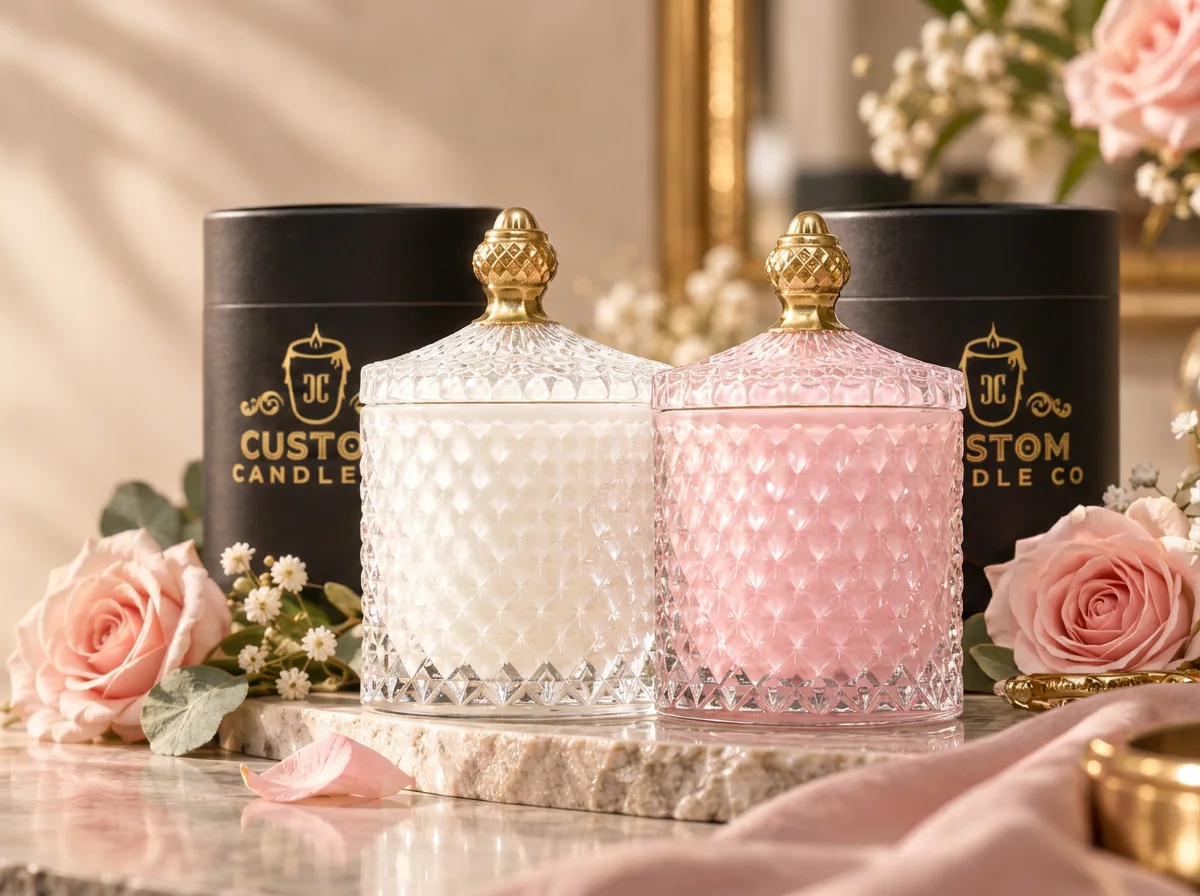
A candle that arrives with the wrong photo, a smudged label, or an untested wick is a day-of problem you don’t have time to solve. Custom Candle Co. runs every personalized candle through a hand proofing process before it ships, checking print quality and label accuracy so what you see in the proof is what shows up on your reception tables.
Every candle uses phthalate-free fragrance oils and lead-free wicks, which matters when open flames are burning for hours next to florals and linens all evening. Personalized orders ship within two days of approval, a turnaround that matters when a headcount change or a seating swap happens two weeks out, not two months out.
How Do You Transport and Store Candles Before the Wedding?
Wax softens in heat and cracks in cold, so timing your candle purchase matters almost as much as the styling itself. Order candles 4 to 6 weeks ahead, but don’t unpack them until closer to the event.
Store candles upright in their original boxes in a climate-controlled space, ideally between 60 and 75 degrees Fahrenheit. A hot car trunk on a summer afternoon can warp pillars and melt labels; a cold garage in winter can make wax brittle enough to crack when handled. Keep tapers flat or in tall boxes so they don’t bend under their own weight, a common problem with beeswax left standing in warm rooms for weeks.
On transport day, pack candles upright in divided boxes or crates rather than loose in a bin, and use packing paper or bubble wrap between pieces so glass holders don’t chip against each other. Transport glass cylinders and lanterns separately from the candles themselves when possible, then assemble on site. This also protects any custom labels or personalized text from scuffing against other items in the box.
Load candles into the vehicle last and unload them first, so they spend the least time sitting in a hot or cold car. If you’re shipping candles to a venue ahead of the wedding, confirm someone on site can receive and store them properly rather than letting a box sit in a loading dock all week.
What Actually Matters When You’re Planning This
Most wedding blogs treat candle centerpieces as a pure styling decision, all mood boards and Pinterest boards, and barely mention that a venue’s fire marshal has the final say. That’s backwards. The venue’s open-flame policy should be the first phone call you make, not something you discover after ordering 200 tapers.
The conventional advice to “just pick candles you like” also skips the wax-consistency point almost everyone overlooks: mixing beeswax and paraffin on the same table looks slightly off in photos, even when guests can’t name why. Match your wax across a room before you match anything else.
If you take one thing from this guide, prioritize the test table over the candle order. A single mock-up with real place settings catches more problems, clearance issues, sight-line blocks, mismatched heights, than any amount of scrolling inspiration photos will. Order after you’ve seen it lit, not before.
— Jake
Order Your Wedding Candle Centerpieces
Custom Candle Co. built its wedding collection around exactly the two things this guide keeps coming back to: proofed accuracy and fast turnaround. You get personalized photo candles for sweetheart tables, custom-label jar candles for centerpiece groupings, and bulk options sized for reception tables without waiting weeks between order and delivery.
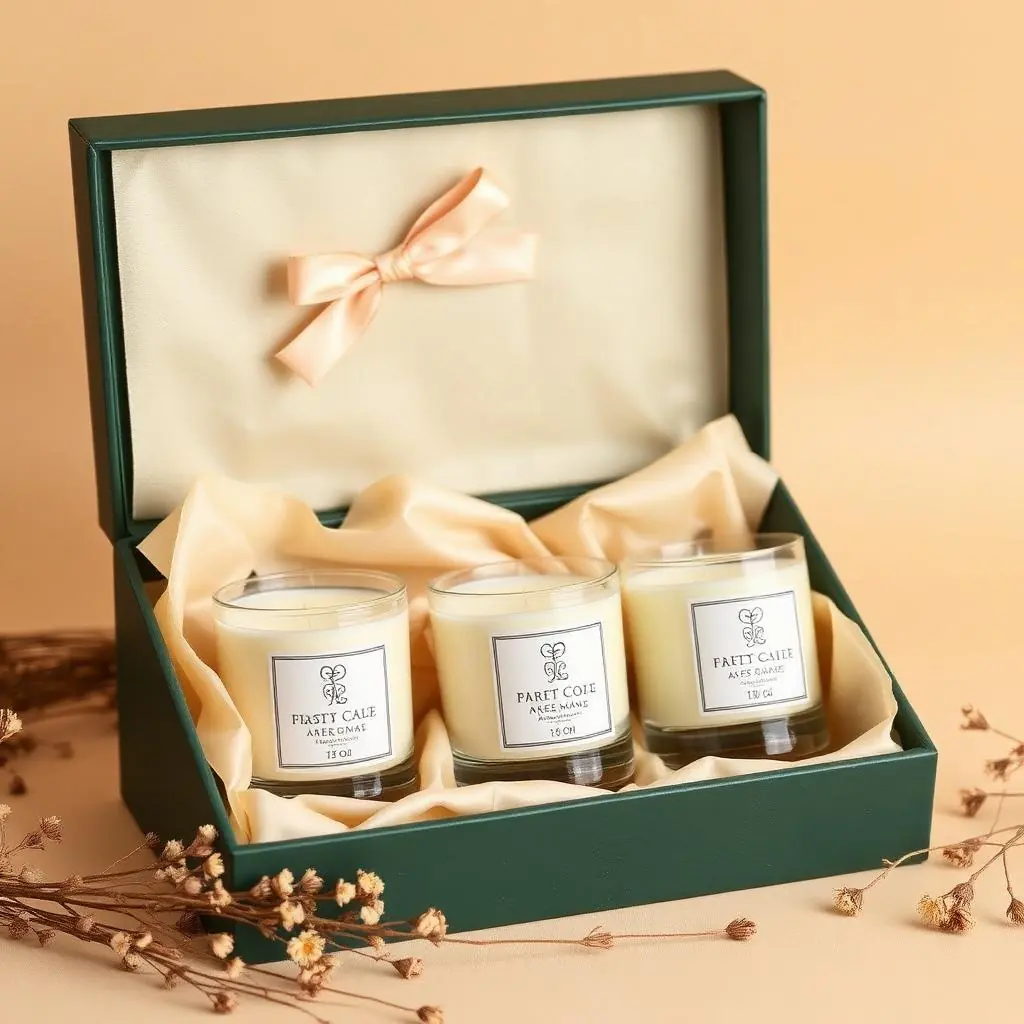
Every order goes through the same hand proofing process before it prints, so a custom label or engraved message arrives exactly as approved, no reprints, no day-before surprises. Orders ship within two days, phthalate-free fragrances and lead-free wicks are standard, and every piece comes packaged with keepsake boxes and a handwritten card, useful if you’re doubling centerpieces as takeaway favors. For weddings and bulk gifting, pricing on the Weddings & favours collection starts from $18 per candle, with corporate and client gifting available from $22 per candle and boxed gift sets from $48.
If you’re planning bulk quantities for 10 tables or more, browse the full collections page to compare holder styles and jar formats before you commit to a count. Start by requesting a sample proof for your table design today.
Sources
- How to choose wedding reception candles like a pro: Your ultimate styling guide - Bespoke Bride
- Candlelight 101: How to Create Romantic Wedding Ambiance with Candles - Fountainhead Floral Design
- FD Specification #14 - Candles & Other Open-Flame Devices - LHCaz
- Bulk candles for wedding planning: what to buy - Kisco Candles
FAQ
What Are Good Candle Centerpiece Ideas for a Wedding?
Layered taper clusters in candlesticks, pillar-and-votive groupings inside lanterns, low floating candles in clear cylinders, and dense votive rings for intimate tables all work well. Pick one combination and repeat it across every table for a cohesive tablescape rather than mixing several unrelated styles.
How Do You Arrange Candles for a Wedding Centerpiece?
Cluster candles in odd numbers with varied heights, three or five pieces per grouping is a common starting point, and layer at least two formats such as tapers with votives for visual depth. Build one sample table first to check flame clearance and sight lines before ordering in bulk.
What Is the Average Cost of Wedding Candles?
Costs vary widely by format: bulk unscented votives and tealights run roughly $0.50 to $1.50 each, mid-grade pillars cost $3 to $8, and premium beeswax tapers run $4 to $10 each. Custom Candle Co.'s personalized wedding candles start from $18 per candle for weddings and favors, with current pricing listed on the site.
How Do You Make Floating Candle Centerpieces for a Wedding?
Fill a clear glass bowl or cylinder with water and float low-profile candles or floating votives on top, adding a single greenery sprig or petals for detail. Keep the water level a few inches below the rim and confirm your venue allows this format, since some fire codes still require enclosed flame even on water.
Should You Choose Real Candles or LED for a Wedding?
Choose real flame when your venue permits open fire and you want authentic warmth and scent; choose high-quality LED when the venue restricts flame or the reception is outdoors in wind. Modern flameless LED candles can look nearly identical to real wax in photos and avoid permit costs some venues charge for open-flame approval.