






Affirmation Candle Ritual: A Simple, Safe Way to Practice

An affirmation candle ritual is a short, repeatable routine. You choose one present-tense sentence, light a candle, say the sentence with attention, and put the flame out on purpose. It takes five to ten minutes. You need a candle, a steady holder and a phrase that feels true enough to say out loud.
Below you will find the steps, how to write the affirmation, what intention colors are said to mean, the fire-safety rules that matter, and what the research does and doesn’t say about self-affirmation.
TL;DR
- Pick one affirmation in the present tense (“I am…”), light the candle, and say it slowly three to seven times while you watch the flame.
- Keep the session short. NFPA guidance says to burn a candle no more than 4 hours at a time and keep it 12 inches (30 cm) from anything flammable.
- Intention and color meanings come from tradition, not science. Use them as prompts that help you focus, not as guarantees.
- Self-affirmation can shift intentions, but it does not always change behavior. Pair the ritual with one small action.
- Put the flame out with a snuffer, and stop burning when about 1/2 inch of wax is left.
Table of Contents
- What an affirmation candle ritual is (and isn’t)
- How to do an affirmation candle ritual, step by step
- How long should you burn it?
- Intention candle meanings: what colors and symbols are said to represent
- Choosing the right candle and holder
- Make the candle say your words
- Our perspective: the sentence matters more than the candle
- What the research says about self-affirmation
- A 7-day starter plan
- Care tips so the candle lasts
- FAQ
- Sources
What an affirmation candle ritual is (and isn’t)
The idea is simple: a flame gives your eyes and attention something to rest on while you repeat a statement you want to take seriously. Spiritual practitioners describe this as activating a candle with your own intention. One candle brand explains that the candle only becomes meaningful once you add your own words and intent. That is the core of the practice. The wax, the label and the scent set a mood. The ritual is what you bring.
It is also not a safety exemption. A candle used for meditation is still an open flame, and the same rules apply whether you light it for relaxation or for a ritual. The Buckinghamshire Fire & Rescue Service makes this point plainly: candles used for fragrance, relaxation or religious reasons can all cause a serious fire if used carelessly.
People also use different words for what is essentially the same thing: an affirmation ritual, an intention ritual, a manifestation ritual. The differences are mostly emphasis.
| Practice | Main focus | Typical phrase |
|---|---|---|
| Affirmation | Who you are or how you want to see yourself | “I am calm and capable.” |
| Intention | A direction for the day, week or season | “I choose patience in my conversations.” |
| Manifestation | A specific outcome you are working toward | “I am building a steady, creative career.” |
The steps below work for all three.
How to do an affirmation candle ritual, step by step
1. Choose the moment
Morning is popular because it sets a tone before the day pulls at you. Evening works if you want to wind down. Pick a time you can repeat, because a ritual works through repetition. Five minutes at the same hour beats an hour once a month.
Don’t do it in bed, and don’t do it when you are likely to fall asleep. Fire officials are clear that a burning candle should never be left unattended or burned where you could doze off.
2. Prepare the space and the candle
Clear a table or shelf. Keep the candle at least 12 inches (30 cm) from curtains, paper, books and anything else that can burn. Use a sturdy, heat-resistant holder that won’t tip. Trim the wick to 1/4 inch (6 mm) before lighting, which helps prevent uneven burning and excess soot.
Keep pets in mind. If you share your home with a cat, dog or bird, place the candle where tails and paws can’t reach it, and check the fragrance ingredients before you buy.
3. Write your affirmation
Write the sentence on paper first. Practitioners suggest phrasing it in the present tense, such as “I am” instead of “I will,” because it frames the desired state as already true. Keep it short enough to say in one breath.
A few examples by theme:
- Calm: “I am steady, and I can handle what comes today.”
- Confidence: “I am prepared, and my voice matters in the room.”
- Self-love: “I am allowed to rest without earning it.”
- Abundance: “I am open to steady, fair income that matches my work.”
- Gratitude: “I am noticing what is already good.”
If a sentence feels like a lie, soften it: “I am learning to trust myself.” You will say it more honestly, and that is the point.
4. Light the candle and settle
Light the wick and sit down. Take a few slow breaths. One simple pattern is box breathing: in for four, hold four, out for four, hold four. A morning, midday and evening candle routine isn’t required; one calm minute is enough to start.
5. Say the affirmation
Speak it aloud, slowly, three to seven times. Watch the flame between repetitions. If your mind wanders, return to the flame and the sentence. You can also write the phrase in a journal while the candle burns. Many people end by naming one concrete thing they will do today that fits the sentence.

6. Close the ritual
Extinguish the flame deliberately. A snuffer is the better tool: blowing out a candle can spatter hot wax onto surfaces or skin. Say a closing line such as “Thank you, that is enough for today,” and write down anything that came up.
How long should you burn it?
You may have heard of a “3-hour rule.” The figure fire-safety guidance actually uses is different: NFPA’s 2026 educational messages say not to burn a candle for more than 4 hours at a time and to let it cool for at least 2 hours before relighting.
For a ritual, this is rarely a problem. A 10-minute session uses a fraction of that. If you want to run a candle across several days, relight it for short sessions and let it cool between them.
One piece of common ritual advice conflicts with safety guidance: letting a candle “burn out” completely. The same NFPA document advises stopping when about 1/2 inch of wax remains, to avoid overheating the vessel and possible breakage. Retire the candle then, and thank it if you like.
Intention candle meanings: what colors and symbols are said to represent
Meanings vary by tradition, and there is no single authority. Treat these as a starting vocabulary. A beginner’s guide to candle magic suggests choosing a color that reflects your vision, such as green for wealth. Other common associations are widely repeated by practitioners, though they differ from one source to the next:
| Color | Commonly associated with |
|---|---|
| White | Clarity, fresh starts, peace |
| Green | Money, growth, renewal |
| Pink | Self-love, friendship, tenderness |
| Red | Courage, passion, energy |
| Blue | Calm, communication, trust |
| Yellow | Confidence, focus, creativity |
| Black | Protection, boundaries |
The most useful rule: choose the meaning that resonates with you. A pink candle for self-love only works if pink feels like self-love to you. If you want a candle already made for this purpose, our intention candles collection includes color options such as blue, pink and red.
Choosing the right candle and holder
The candle matters less than the habit, but a few practical points make the ritual easier.
Scent. Pick something light if you plan to sit near the flame. Heavy fragrance can distract you or bother others. Our guide to choosing a clean-burning meditation candle covers scent strength for short sessions, and our relaxation candles are a natural fit for evening practice.
Ingredients. Look for soy wax, phthalate-free fragrance and lead-free wicks. If pets share your space, ask the maker for the essential oil content so you can check it against your vet’s advice.
Container or holder. Jar candles are the simplest: the glass contains the flame. If you prefer tapers or tealights, use a stable holder made for the job. A design such as a triple candle holder can anchor a three-candle setup for a more ceremonial look. Whatever you choose, NFPA guidance calls for sturdy, heat-resistant holders that won’t tip over.
Flameless option. If you can’t be sure of supervision, NFPA lists battery-operated flameless candles as the safer choice. The ritual still works: the focus is on your words and breath.

Make the candle say your words
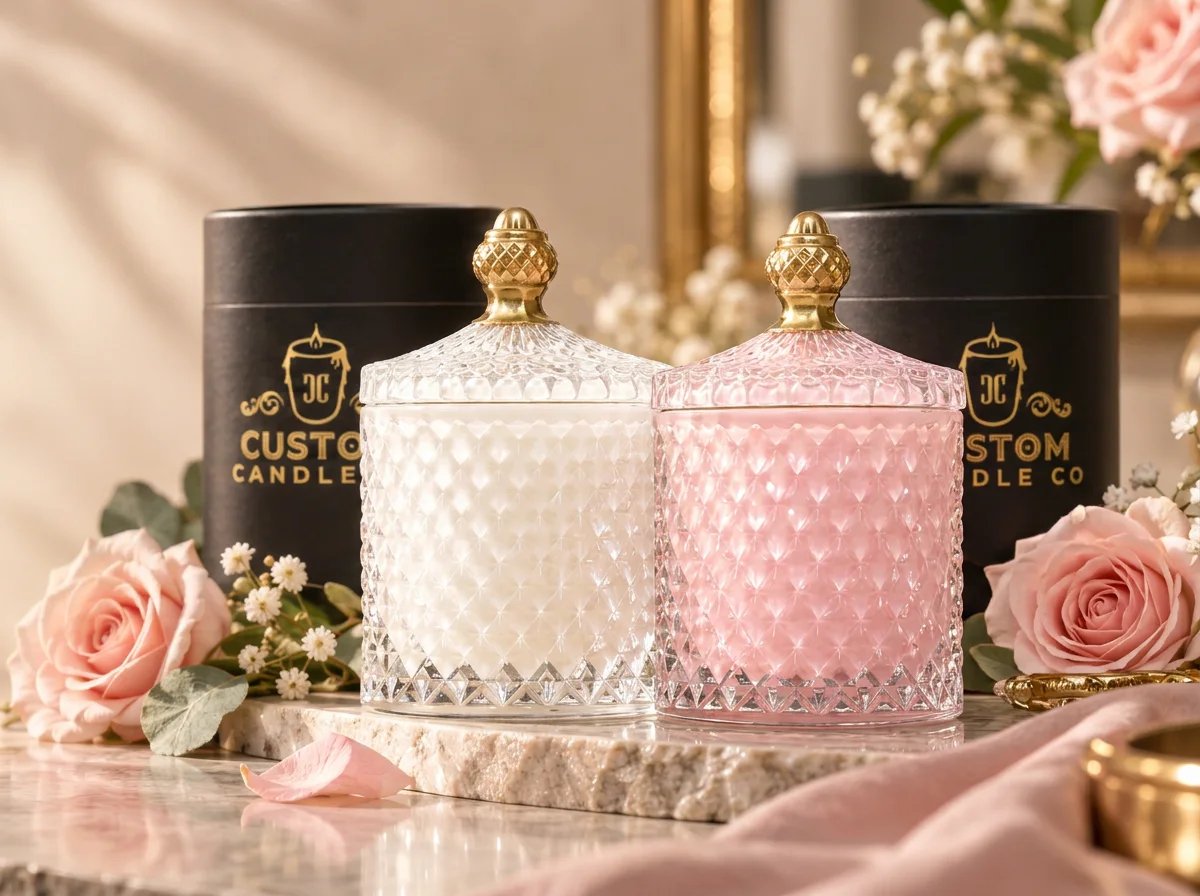
A stock affirmation is somebody else’s sentence. A candle printed with your own sentence, a name, a date or a photo of the person you are doing the ritual for turns the object into a daily reminder.
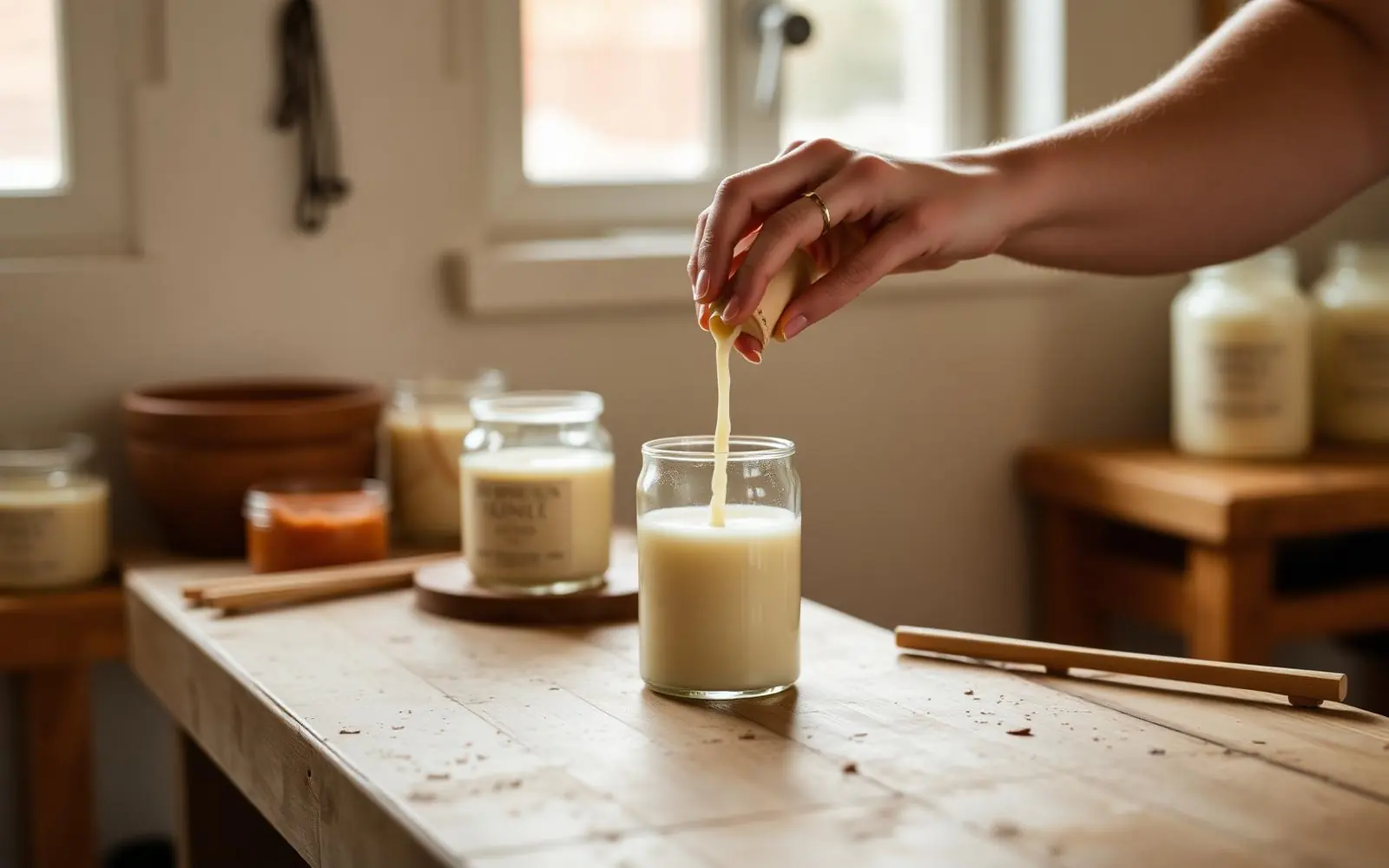
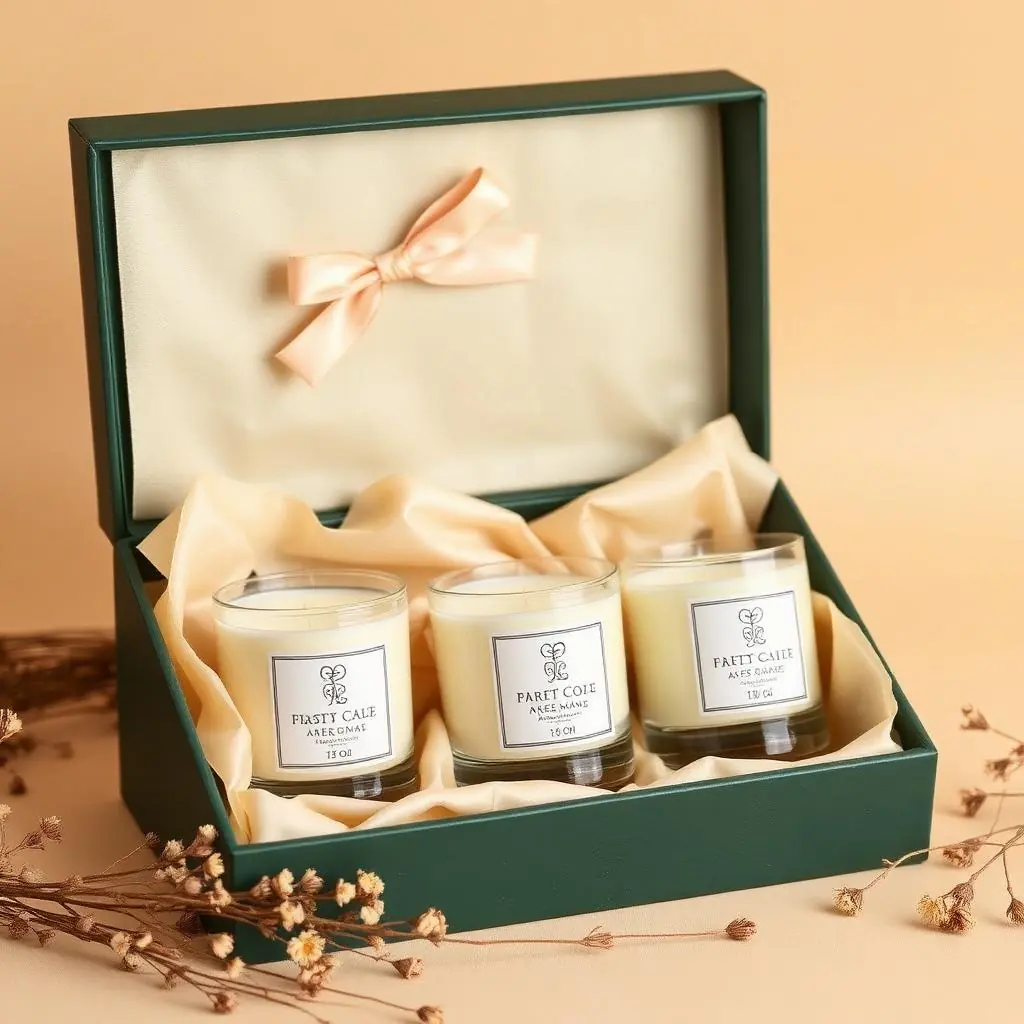
At Custom Candle Co., we make hand-poured soy candles with your text or photo on the label. Every order is proofed by hand for print and presentation quality before it ships, and personalized orders ship within two days. You can start with our personalized candles for custom names and messages, or the photo candles if an image is part of your intention. Each order comes with keepsake packaging and a handwritten gift card as standard.
If you are planning ritual candles for a group, such as a bridal party or a team retreat, our weddings and favours and corporate gifting options start from $18 and $22 per candle respectively. Boxed gift sets start from $48.
Our perspective: the sentence matters more than the candle
We make candles for a living, so it may surprise you that we think the wax is the least important part of an affirmation ritual. What people tell us they keep is the sentence on the label. When someone prints “I am enough for today” or a line from a late grandmother’s handwriting on a jar, they light it differently. They slow down.
That is why we proof every order by hand. If a name is misspelled or a photo prints muddy, the object works against the ritual. It has to look the way you pictured it.
We also care about what’s in the candle. Phthalate-free fragrance and lead-free wicks are standard for us, because a ritual meant to calm you shouldn’t add a worry. And we would rather tell you to snuff the flame and retire a candle at 1/2 inch of wax than let you push it. The practice should be safe enough to repeat for years.
Our advice: pick one sentence, one candle, one time of day. Do it for two weeks. Then decide whether to change anything.
— Jake
What the research says about self-affirmation
The candle is symbolic. The affirming part has some research behind it, and it has limits.
In a 2014 study of 80 students, a self-affirmation task, focusing on a valued part of one’s self-concept, increased positive attitudes and intentions toward physical activity. That suggests a short, low-effort practice can nudge motivation.
But the effect is not unlimited. A meta-analysis on self-affirmation and health messages looked at both intentions and actual behavior, and the evidence shows that shifting intentions doesn’t always translate into lasting behavior change. Another line of work found a “dark side” of self-affirmation: after affirming themselves, people showed more confirmation bias when handling threatening information.
What that means for your ritual:
- Treat the affirmation as a starting point, not a result.
- Attach one small action to it: send the email, take the walk, make the call.
- Stay open to feedback. Affirming yourself shouldn’t make you stop listening.
- If you are dealing with persistent anxiety, depression or trauma, a ritual can support professional care but isn’t a replacement for it. Talk to a licensed therapist or your doctor.
A 7-day starter plan
| Day | Affirmation focus | Small action |
|---|---|---|
| 1 | Calm | Three slow breaths before opening email |
| 2 | Confidence | Say one opinion in a meeting |
| 3 | Self-love | Take a real lunch break |
| 4 | Abundance | Review one bill or goal with clear eyes |
| 5 | Gratitude | Text someone a thank-you |
| 6 | Courage | Do the task you have been avoiding for ten minutes |
| 7 | Review | Journal what changed and keep or swap the phrase |
For each day, burn the candle only for the session, trim the wick before relighting, and let it cool.
Care tips so the candle lasts
Short burns are good for ritual use, but they can leave wax unevenly melted. To limit tunneling, let the wax pool melt close to the edge when you do a longer burn (staying within the 4-hour limit). Store the candle away from heat. Our notes on candle storage explain why heat near 85°F can affect scent, and our candle care guide covers wicks, burn times and cleanup. If trataka, or flame gazing, is part of your routine, see our guide to keeping flame-gazing focused.
FAQ
How do I use an affirmation candle?
Write a present-tense sentence, trim the wick to 1/4 inch, and light the candle on a stable surface. Say the sentence slowly several times while watching the flame, then snuff it out. Five to ten minutes is plenty.
What is the 3-hour candle rule?
It is a popular rule of thumb, but fire-safety guidance uses a different number. NFPA says to burn a candle no more than 4 hours at a time and to let it cool at least 2 hours before relighting. A ritual session is usually far shorter than either.
Do manifestation and intention candle rituals work?
There is no evidence that a candle changes outcomes by itself. Research on self-affirmation suggests that focusing on your values can shift intentions, though it doesn’t always change behavior. The ritual helps most when it leads to a small, real action.
Should I let the candle burn all the way down?
No. NFPA guidance recommends stopping when about 1/2 inch of wax remains, because an overheated vessel can break. Retire the candle at that point and start a new one for your next intention.
What should I say when I light a candle?
Say something short, true and in the present tense, such as “I am calm and ready.” Choose words that fit your values, not a stranger’s script. A simple thank-you line works well to close.
Sources
- NFPA Educational Messages, 2026 edition
- Candles, Incense and Oil Burners, Buckinghamshire Fire & Rescue Service
- Self-Affirmation Promotes Physical Activity
- Self-affirmation and responses to health messages: a meta-analysis
- The Dark Side of Self-Affirmation
- Candle Magic 101, wikiHow
- Activating your Affirmation Candles, Wild Luna Botanicals