


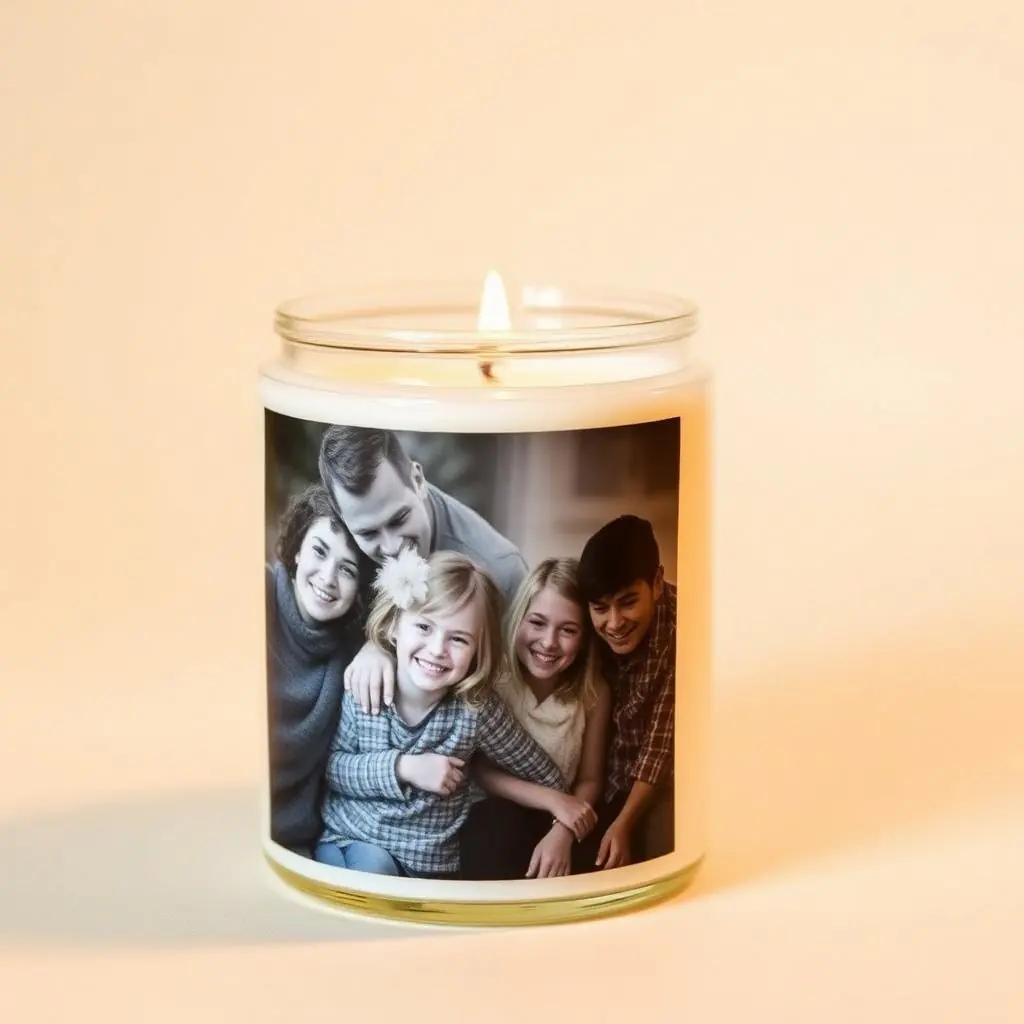
Copyright on Photos for Gifts: What You Can Use

If you took the photo yourself, you can put it on a gift. If someone else took it, you generally need that person’s permission, and that includes a professional portrait, a wedding photographer’s proofs and a picture you found online. The US Copyright Office says that when you use a work you did not create, you must work out its copyright status and, unless a legal limitation applies, get a license from the copyright owner. A photo printed on a gift is easy to get right once you know who owns the picture, and that is what this guide covers.
It is written for people ordering something personal: a photo candle for a parent, favors for a wedding, a keepsake for a pet owner’s home. If you want a photo candle made from your own pictures, our photo candles are printed on soy jars and proofed by hand before they ship.
TL;DR
- Whoever pressed the shutter usually owns the copyright, not the person in the picture and not the person who paid for the session.
- Your own snapshots are fine to use on a gift. Professional photos, social media images and anything pulled from a search engine need the owner’s permission.
- Free stock sites and public-domain images can work, but each has its own license terms, and a recognizable person or a logo can bring other rights into play.
- Gifts you make for yourself and gifts you sell are different situations: selling or mass-producing raises the stakes.
- When in doubt, ask the photographer. A short written yes settles the question.
Table of Contents
- Who owns a photo, and why it matters for a gift
- Your own photos: the simplest path
- Photos someone else took
- Photos you can use without asking
- Gift for one person or product for many
- Rules differ by country
- Why we think about photos before we print
- Make your photo into a gift
- FAQ
- Sources
Who owns a photo, and why it matters for a gift
Copyright is the legal right to copy, share and adapt a creative work. Photographs count as creative works. In the US, the person who took the photo is generally the owner from the moment it is taken, with no registration or copyright notice needed to make that true. That is why a picture with no watermark can still be protected.
This catches people out in a few common situations:
- Professional portraits. A family session, a school photo or a engagement shoot usually comes with a print package and a license for personal use. The license terms are in your contract or on the delivery page. Printing the images on a product may or may not be covered.
- Wedding photos. The photographer typically owns the images unless your contract says otherwise. Many contracts include a print release, which is the document that says you may reproduce the photos. Check yours before ordering favors or keepsakes.
- Pictures of you taken by a friend. Strictly, the friend owns it. In practice a quick text saying “yes, print it” is enough, and it is worth having.
- Images from the internet. Being easy to save does not make a picture free. The Copyright Office’s guidance is that securing permission is the most certain way to make sure a use is not an infringement.
The person in the photo is a separate question. They do not own the copyright by being in it, but if you plan to sell a product featuring an identifiable person, their right to control commercial use of their likeness can come into play. For a gift you are giving to that person or their family, that is rarely a practical issue.
Your own photos: the simplest path
If you took it on your phone or camera, you own it and can use it on a gift. A few details still matter:
- Check who else is in the frame. A friend’s child at a birthday party is fine for a private keepsake, but think twice before putting a photo of someone else’s family on something that will be shared widely.
- Look for third-party art in the background. A mural, a poster or a branded T-shirt in the shot is someone else’s work or trademark. It is rarely a problem in a small incidental way, but a photo of a painting is a copy of that painting.
- Use the original file. A screenshot or a social media download is lower quality and can be someone else’s edit. Our guide to why 300 PPI matters for photo candles explains how resolution affects how sharp your photo looks on a label.
For ideas on which photos work well on a gift, the photo candle ideas guide walks through options and photo tips.
Photos someone else took
Here the rule is simple and the exceptions are narrow. Unless the use falls under a limitation in the law, you need a license from the owner. The most common limitation people raise is fair use, which is a case-by-case judgment, not a checklist you can pass in advance. The Copyright Office explains that fair use allows limited use for purposes such as commentary, criticism and news reporting. Courts weigh the purpose of the use, the nature of the work, how much is used and the effect on the market for the original. Copying an entire photograph onto a gift is the opposite of a limited portion, so do not rely on fair use for a gift.

How to get permission
The Copyright Office notes that if you know who owns the work, you can ask for permission directly. In practice:
- Find the photographer’s name or studio. It is often in the file name, the delivery email or the gallery page.
- Write a short message saying which photo you want, what you will put it on (for example, one candle as a gift for your grandmother) and whether you will sell any.
- Keep the reply. An email saying yes is a written record of the permission.
- If the photographer wants a fee, treat it as a license fee, usually cheaper than a custom piece of art.
The Copyright Office itself cannot grant permission for you, so the step lies between you and the owner.
Photos you can use without asking
Some images are free to use, but “free” always comes with terms. Here are the main categories.
Public domain and government images
Harvard Kennedy School’s library guide says images made by the US federal government, images in the public domain and images under Creative Commons licenses may be royalty-free, though some carry conditions such as attribution. Works fall into the public domain when copyright has expired or never applied. Because term lengths differ by country, an image that is public domain in one place may not be in another.
Creative Commons licenses
Creative Commons is a family of licenses where the creator says in advance what you may do. For a gift, the differences matter. According to the same Harvard guide:
| License | Commercial use | Attribution | Edits |
|---|---|---|---|
| CC0 (public domain dedication) | Yes | Not required | Yes |
| BY | Yes | Required | Yes |
| BY-SA | Yes | Required | Yes |
| BY-ND | Yes | Required | No |
| BY-NC and BY-NC-SA | No | Required | Varies |
Source: Harvard Kennedy School Library. If you are selling or giving away products at an event, avoid the non-commercial (NC) licenses. If you can’t print a credit line on the gift, avoid anything that requires attribution.
Free stock photo sites
Stock sites publish their own licenses, and the details differ. Pexels says its photos are free to use with no attribution, but it does not allow you to sell an unaltered photo as a poster, print or other physical product, and it does not allow you to show identifiable people in a bad light or imply they endorse your product. Pixy states that its images are CC0 or public domain, and it adds that the license covers the photograph only: a person, logo, building or artwork in the picture can involve other rights such as trademarks or a person’s right to their image.
The lesson is to read the license page of the specific site before you print, and to remember that a stock license is not the same as the copyright in everything shown in the image. If you want to see how a free image is used on a retail product in practice, this guide on creating wine labels with public-domain images shows the idea on a gift item.

Gift for one person or product for many
Copyright rules are less forgiving as the quantity goes up. A single gift for a loved one is a low-risk personal situation when you have permission or own the photo. A batch of wedding favors, a set of corporate gifts or anything for resale is a commercial use, and the owner’s permission needs to say so.
There is also a question of who is responsible when a business prints a customer’s picture. Guides for printers of other photo products cover copyright responsibilities when printing customer photos, and the core idea carries over to every personalized item: the person supplying the photo should be sure they have the right to use it.
A quick check before you order
| Situation | Likely status | What to do |
|---|---|---|
| You took the photo | You own it | Use the original file |
| A friend or relative took it | They own it | Ask for a quick written okay |
| Professional portrait or wedding photographer | Photographer owns it, license varies | Read your contract or request a print release |
| Photo from a website or social media | Owner is protected by copyright | Get the owner’s permission or choose another image |
| Stock site CC0 or public domain | Free to use, other rights may apply | Read the site’s license and avoid identifiable people |
| Image in a book, magazine or on a product | Protected | Do not copy |
Rules differ by country
The law here is American, but gifts cross borders. The Library of Congress explains that works made outside the US may be protected under US law, another country’s law, international agreements or a combination. In the UK, the government’s guidance says photographs are generally protected as artistic works, so you will usually need the owner’s permission to copy an image. Australia is stricter on one point: the University of Melbourne’s guide says that gifting reproductions is not allowed under the country’s personal-use provisions. If you are sending a gift abroad, the safest course is to hold permission from the photographer in writing.
Why we think about photos before we print
We make personalized candles from our customers’ pictures, so photos are the center of what we do. Our labels are only as good as the image they start from, and that is why every order is proofed by hand for print and presentation quality before it ships.
A photo candle is a gift, and a gift should be a pleasure to give with nothing hanging over it. The photos that work best are the ones you took yourself: the dog on the porch, the first apartment, the family at the lake. They are personal, they are yours, and they look great on a soy jar.
For weddings and larger orders, we suggest you think about the photographer’s license early, the same way you think about the guest list. A short message to your photographer before you order is a small step that keeps a keepsake worry-free.
Jake
Make your photo into a gift
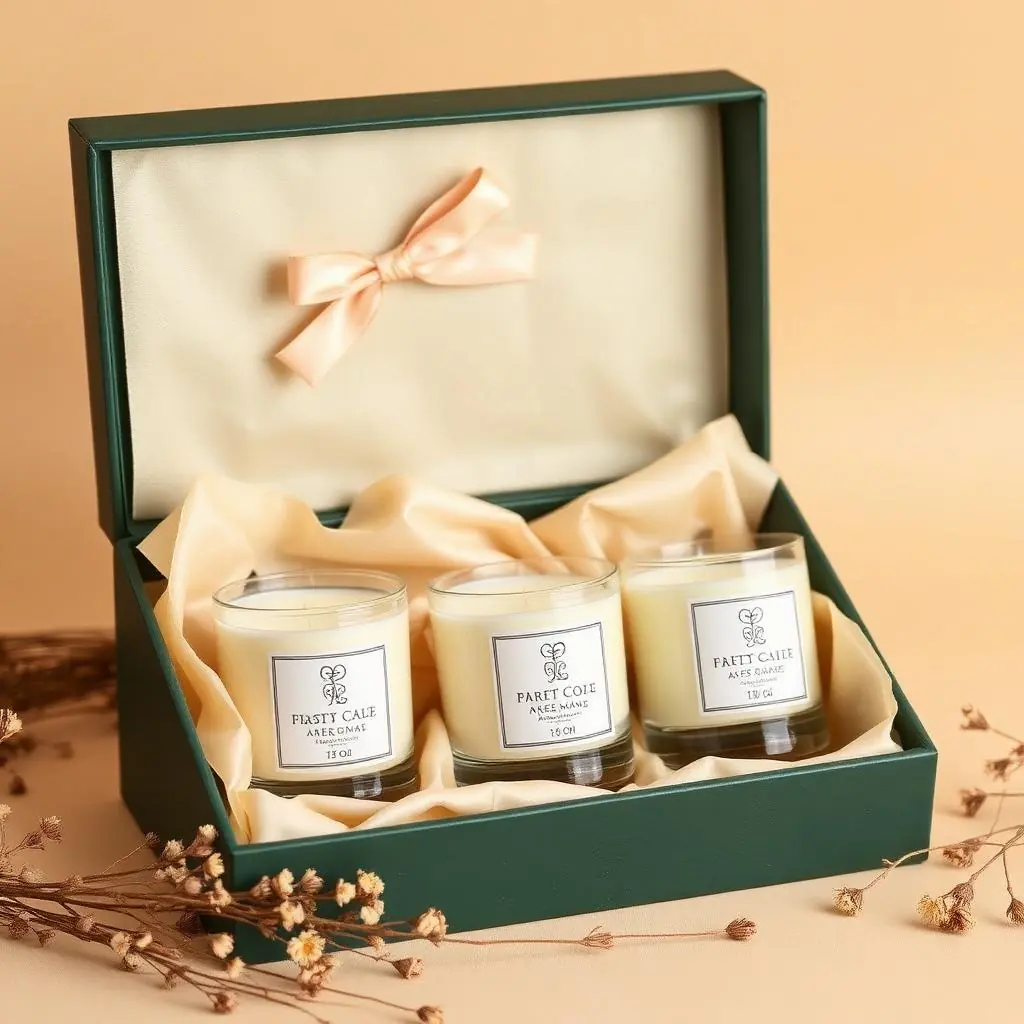
Once you have a photo you have the right to use, the rest is easy. Our Customizable Photo Candles put your picture and your words on a hand-poured soy candle. We use phthalate-free fragrances and lead-free wicks, we proof every order by hand and personalized orders ship within two days. Orders come with keepsake packaging and a handwritten gift card as standard.
For events, our weddings and favors start from $18 per candle, corporate and client gifting starts from $22 per candle and boxed gift sets start from $48. If you want to choose the wax, scent, label and packaging yourself, start on the Customize a Candle page. If you are planning wedding photos, the wedding photo gift ideas guide covers print prep and candle ideas.
FAQ
Can I use a copyrighted photo on a personalized gift?
Only with the owner’s permission, unless a legal limitation such as fair use applies. The Copyright Office says you need a license from the copyright owner unless a limitation applies. For a gift, the practical answer is to use your own photo or get a written okay from the photographer.
What pictures can I use without copyright?
Images in the public domain, works by the US federal government and CC0 images can be used without permission. Some Creative Commons images require credit or forbid commercial use, as the Harvard guide explains. Always read the license on the page where you found the picture.
Does it matter if the gift is only for personal use?
It can. A one-off gift is lower risk than something sold, but personal use does not automatically make copying okay. The Australian example shows that gifting reproductions is excluded in some countries even when personal copying is allowed. Permission from the photographer removes the question.
Do I need permission from the people in the photo?
The person in a photo does not own its copyright, but their image can bring other rights, especially if the product is sold. Pixy’s license notes that a person’s right to their image can apply even to free pictures. For a private gift to someone in the picture, this is rarely an issue.
Can I use a photo my wedding photographer took?
Check your contract for a print release. Photographers usually own the images and grant you a license, which may or may not cover reproducing them on products. If it does not say, ask in writing.
Sources
- US Copyright Office, Circular 16A: How to Obtain Permission
- US Copyright Office, Circular M10
- US Copyright Office, Fair Use FAQ
- Harvard Kennedy School Library: finding images not subject to copyright
- Pexels license
- Pixy licences
- Library of Congress: Understanding copyright
- GOV.UK: Copyright notice on digital images and photographs
- University of Melbourne: personal use
- Create wine labels for gifts
- Printing photos on balloons